
West Bengal ·
Bardhaman
Bardhaman or Barddhaman, also known as Burdwan, is the headquarters of the namesake Purba Bardhaman district of West Bengal. It is the largest agricultural centre in the state, located in what has been traditionally called the "granary of Bengal".
Bardhaman at a Glance
Why Bardhaman?
The highlights, landmarks and experiences that make this destination worth visiting.
- Curzon Gate
- Ramnabagan Wildlife Sanctuary
- Christ Church Bardhaman
- Bardhaman Science Centre
- Christ Church
- Golapbag
Bardhaman at a Glance
Essential travel information to understand Bardhaman before planning your visit.
Can be combined with
Explore Bardhaman
Places to Visit
- Curzon Gate: The Curzon Gate, also known as the Bijay Toran, is a prominent landmark in Bardhaman city in Purba Bardhaman district in West Bengal, India. It is located at the crossing of Bijoy Chand Road and Grand Trunk Road.
- Ramnabagan Wildlife Sanctuary: Ramnabagan Wildlife Sanctuary is in Bardhaman, West Bengal, India. The animals found include spotted deer and common langur.
- Christ Church Bardhaman: Christ Church Bardhaman is the oldest Church of undivided Bardhaman district. It is situated beside Grand Trunk Road in Bardhaman in the Indian state of West Bengal.
- Bardhaman Science Centre: Founded in 1994, the Science Centre aims at promoting the amazing facts and mechanisms of science through various models and displays.
- Christ Church: The oldest church in Purba Bardhaman district, built in 1816 under the auspices of Charles Stuart. It is a small church with a brick-red facade.
- Golapbag: Literally "rose garden", Golapbag is a botanical garden built in 1883 by Raja Bijoy Chand Mahtab. Once a place of retreat for the Rajas, Golapbag later became the main campus of the University of Burdwan.
Things to Do
- Krishnasayer Park: One of the most famous natural attractions in the city. It is surrounds by an artificial lake, which was dug way back in 1691 by Raja Krishnaram Ray.
- Meghnad Saha Planetarium: Named after the famous scientist Meghnad Saha, the planetarium came up in 1994 with the major instruments being gifted from Japan. The planetarium has a capacity of 90.
- Sadarghat: Literally "primary ghat", Sadarghat provides an amazing view of the Damodar River. A lot of people arrive at the sandy area to enjoy picnic.
- Town Hall: It was built somewhere between 1890 and 1894. It preserves the legacy of Lala Bansogopal Nandey.
- Bardhaman Science Centre: Founded in 1994, the Science Centre aims at promoting the amazing facts and mechanisms of science through various models and displays.
- Golapbag: Literally "rose garden", Golapbag is a botanical garden built in 1883 by Raja Bijoy Chand Mahtab. Once a place of retreat for the Rajas, Golapbag later became the main campus of the University of Burdwan.
Sightseeing Places
- Curzon Gate: The Curzon Gate, also known as the Bijay Toran, is a prominent landmark in Bardhaman city in Purba Bardhaman district in West Bengal, India. It is located at the crossing of Bijoy Chand Road and Grand Trunk Road.
- Ramnabagan Wildlife Sanctuary: Ramnabagan Wildlife Sanctuary is in Bardhaman, West Bengal, India. The animals found include spotted deer and common langur.
- Christ Church Bardhaman: Christ Church Bardhaman is the oldest Church of undivided Bardhaman district. It is situated beside Grand Trunk Road in Bardhaman in the Indian state of West Bengal.
- Bardhaman Science Centre: Founded in 1994, the Science Centre aims at promoting the amazing facts and mechanisms of science through various models and displays.
- Christ Church: The oldest church in Purba Bardhaman district, built in 1816 under the auspices of Charles Stuart. It is a small church with a brick-red facade.
- Golapbag: Literally "rose garden", Golapbag is a botanical garden built in 1883 by Raja Bijoy Chand Mahtab. Once a place of retreat for the Rajas, Golapbag later became the main campus of the University of Burdwan.
Places That Define Bardhaman
Explore the most iconic landmarks and sacred sites.
Curzon Gate
The Curzon Gate, also known as the Bijay Toran, is a prominent landmark in Bardhaman city in Purba Bardhaman district in West Bengal, India. It is located at the crossing of Bijoy Chand Road and Grand Trunk Road.
Ramnabagan Wildlife Sanctuary
Ramnabagan Wildlife Sanctuary is in Bardhaman, West Bengal, India. The animals found include spotted deer and common langur.
Christ Church Bardhaman
Christ Church Bardhaman is the oldest Church of undivided Bardhaman district. It is situated beside Grand Trunk Road in Bardhaman in the Indian state of West Bengal.
Bardhaman Science Centre
Founded in 1994, the Science Centre aims at promoting the amazing facts and mechanisms of science through various models and displays.
Christ Church
The oldest church in Purba Bardhaman district, built in 1816 under the auspices of Charles Stuart. It is a small church with a brick-red facade.
Golapbag
Literally "rose garden", Golapbag is a botanical garden built in 1883 by Raja Bijoy Chand Mahtab. Once a place of retreat for the Rajas, Golapbag later became the main campus of the University of Burdwan.
Sarbamangala Temple
Established by Maharaja Kirtichand Ray, the temple is dedicated to Ma Sarbamangala, the family deity of the Bardhaman royal family. The temple followed the navaratna (nine-pinnacled) plan.
Mazhar of Pir Baharam
It houses the tomb of a Persian Sufi saint Pir Bahram Sakka. He was known for providing water to thirsty travellers and was called Sakka (Persian word for one who gives water).
Nawab Bari
A Mughal-era tomb complex housing the grave of Khaja Anwar, the amir of Azim-us-shaw. Khaja Anwar was killed in an ambush in 1698.
108 Shiva Temples
The complex consists of 108 temples dedicated to Lord Shiva and they are arranged in a rectangular formation around two ponds. The temples follow the at-chala style of architecture, the four corner temples are octagonal.
Bardhamaneswar Temple
A Shiva temple housing a huge Shivalinga. The Shivalinga is not very high but has a huge circumference and is often referred to as Moṭā Śib Mandir.
Bardhaman Railway Overbridge
One of the longest cable-stayed bridges in West Bengal, the four-lane railway overbridge connects Bardhaman to Katwa. It was constructed by Rail Vikas Nigam Limited (RVNL) and was inaugurated in 2019, replacing the century-old two-lane railway overbridge.
Explore Destination on Map
Discover all sub-destinations, routes and detailed navigation information on an interactive map.
Explore Bardhaman on Map
Open the destination map to discover attractions and routes.
Plan Your Trip
Plan Your Way
- When to Visit: Climate-based guidance for choosing your dates.
- Getting Around: How to reach and move around.
- Budget & Practical Tips: Costs and safety notes from local guidebook sources.
All Itineraries
- 1 Day in Bardhaman: 1 days with detailed day plans
- 2 Days in Bardhaman: 2 days with detailed day plans
How to Reach
- By Air: The nearest airport is Kazi Nazrul Islam Airport (RDP), about 77 km from Bardhaman.
- By Train: The nearest railway station is Barddhaman Junction railway station, about 2 km from central Bardhaman.
- By Road: Bardhaman is well connected by bus with numerous places all around. South Bengal State Transport Corporation (SBSTC) and private operators operate buses from Esplanade and Karunamoyee in Kolkata, which takes 2-2½ hours.
Best Time to Visit
- Summer: Summer in Bardhaman (Apr, May, Jun) averages 25–34°C with about 155 mm of rain per month.
- Monsoon: Monsoon in Bardhaman (Jul, Aug, Sep) averages 26–32°C with about 374 mm of rain per month.
- Post-monsoon: Post-monsoon in Bardhaman (Oct, Nov) averages 21–30°C with about 78 mm of rain per month.
- Winter: Winter in Bardhaman (Dec, Jan, Feb) averages 13–26°C with about 2 mm of rain per month.
Weather
- Summer: Average highs of 34°C and lows of 25°C.
- Monsoon: Average highs of 32°C and lows of 26°C.
- Post-monsoon: Average highs of 30°C and lows of 21°C.
- Winter: Average highs of 26°C and lows of 13°C.
Suggested Itinerary
Choose the perfect duration for your Bardhaman trip.
Spiritual & Religious
History
- Summary: Bardhaman or Barddhaman, also known as Burdwan, is the headquarters of the namesake Purba Bardhaman district of West Bengal.
- Overview: Bardhaman or Barddhaman, also known as Burdwan, is the headquarters of the namesake Purba Bardhaman district of West Bengal. It is the largest agricultural centre in the state, located in what has been traditionally called the "granary of Bengal". It is a major transport centre with rail and road connections all around.
- Ancient History: The city owes its historical importance to being the headquarters of the Maharajas of Burdwan, the premier noblemen of lower Bengal, whose rent-roll was upwards of 300,000.
Festivals
- Overview: Bardhaman or Barddhaman, also known as Burdwan, is the headquarters of the namesake Purba Bardhaman district of West Bengal. It is the largest agricultural centre in the state, located in what has been traditionally called the "granary of Bengal". It is a major transport centre with rail and road connections all around.
- Best Festival Time: The most comfortable months are January, February, March, November and December.
Planning Guide
- Overview: Bardhaman or Barddhaman, also known as Burdwan, is the headquarters of the namesake Purba Bardhaman district of West Bengal. It is the largest agricultural centre in the state, located in what has been traditionally called the "granary of Bengal". It is a major transport centre with rail and road connections all around.
- Accommodation: Listed options include Hotel Siddhartha, BU Guest House and Hotel Kalyani.
- Best Way To Explore: Cycle rickshaws and electric rickshaws (locally known as totos) are available for travel within the city. As all the tourist attractions are near the major roads, walking is also a good option.
The Sacred Heart of Bardhaman
A timeless journey of faith and devotion.
Significance
Bardhaman has a multi-cultural heritage. The deuls (temples of rekha type) found here are reminiscent of Bengali Hindu architecture.
Historical Significance
Bardhaman has a multi-cultural heritage. The deuls (temples of rekha type) found here are reminiscent of Bengali Hindu architecture.
Architectural Legacy
The city owes its historical importance to being the headquarters of the Maharajas of Burdwan, the premier noblemen of lower Bengal, whose rent-roll was upwards of 300,000.
Artistic Heritage
Bardhaman (BAWR-dhoh-mahn), the administrative headquarters of Purba Bardhaman district, is the fifth largest city in West Bengal and growing fast. Since independence, it has emerged as a higher education hub.
Frequently Asked Questions
Bardhaman is most comfortable in January, February, March, November and December, when average daytime highs stay at or below 32°C and rainfall is low. The hottest month is June (average high 35°C) and the wettest months are April, May, June, July, August, September and October.
The nearest airport is Kazi Nazrul Islam Airport (RDP), about 77 km away. The nearest railway station is Barddhaman Junction railway station, about 2 km away. See the How to Reach page for road, rail and air details.
Main attractions include Curzon Gate, Ramnabagan Wildlife Sanctuary, Christ Church Bardhaman, Bardhaman Science Centre, Christ Church and Golapbag.
A stay of 2 days covers the main sights. Ready-made 1-day and 2-day itineraries are linked on this page.
Average highs range from 25°C to 35°C over the year, with about 1823 mm of rain in total.
Tour Packages for Bardhaman
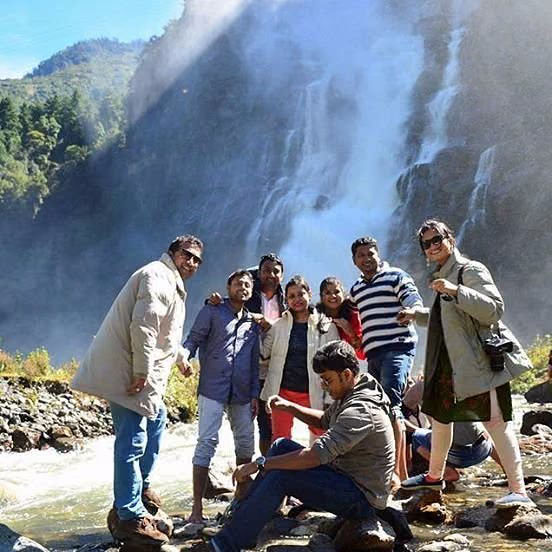


Your Bardhaman Journey Starts Here
Explore top attractions, local culture, and the experiences that make this destination worth visiting.