
Pilgrimage
Bodh Gaya
Bodh Gaya, in Bihar, India, is the most sacred site in Buddhism—the place where Siddhartha Gautama attained enlightenment under the Bodhi Tree and became the Buddha. Home to the Mahabodhi Temple Complex, a UNESCO World Heritage Site, it draws pilgrims and seekers from across the globe to walk the path of awakening.
The Story of Bodh Gaya
**Identity and Significance** Bodh Gaya is the epicenter of the Buddhist world, a place of profound spiritual resonance comparable to Mecca for Muslims or Jerusalem for Christians and Jews. It was here, on the banks of the Niranjana River (now the Lilanjana), that Siddhartha Gautama, a prince who had renounced his kingdom, engaged in deep meditation beneath a peepal tree. After 49 days of intense contemplation, he attained nirvana—the end of suffering and the cycle of rebirth—and became the Buddha. This event, occurring around the 6th century BCE, gave birth to a religion that would spread across Asia and the world. The site's sanctity was recognized early: Emperor Ashoka, in the 3rd century BCE, built the original temple and the Vajrasana to mark the spot. The current Mahabodhi Temple, a masterpiece of Gupta architecture, has stood for over 1,500 years, making it one of the oldest brick structures in India and a testament to the enduring power of the Buddha's message. **Practical Visitor Experience** Visiting Bodh Gaya is a journey into the heart of Buddhist history and living practice. The Mahabodhi Temple Complex is open from early morning to evening, with the most atmospheric times being dawn, when the air fills with chanting, and dusk, when the temple is illuminated and pilgrims light butter lamps. The complex is a serene oasis amidst the bustling town. You can walk clockwise around the main temple, pausing at the Bodhi Tree to meditate or offer prayers. The Vajrasana, protected by a small canopy, is the focal point of reverence. The seven sacred sites (Saptasthana) are located within the complex, each marked by a shrine or plaque. Beyond the temple, the Great Buddha Statue, an 80-foot masterpiece consecrated by the Dalai Lama in 1989, stands in a nearby park. The town itself is dotted with monasteries and temples built by Buddhist communities from Thailand, Japan, Bhutan, Tibet, Myanmar, and Vietnam, each a unique architectural gem. The Thai Monastery, with its golden-roofed temple, and the Tibetan Monastery, with its prayer wheels and colorful murals, are highlights. Plan to spend at least a full day, and consider two days to absorb the atmosphere. **Closing Note** Bodh Gaya is not merely a historical monument; it is a living, breathing center of faith where the past and present converge. Pilgrims from every corner of the globe come to sit under the Bodhi Tree, to chant, to meditate, and to connect with the transformative experience that occurred here over 2,500 years ago. The town's international monasteries create a unique tapestry of Buddhist cultures, offering visitors a chance to witness the religion's global reach. Whether you are a devout Buddhist, a spiritual seeker, or a traveler fascinated by history, Bodh Gaya offers an experience that is both humbling and uplifting. It is the heart of the Buddhist Circuit, which also includes Sarnath, Kushinagar, and Lumbini, but it is here that the Buddha's enlightenment took place—a moment that changed the world.
bestTime
bestTime
Ideal Duration
idealDuration
Nearest Airport
Gaya Airport (~12 km)
Nearest Railway Station
Gaya Junction Railway Station (~13 km)
Traveler Suitability
A compact, flat, walkable pilgrim town; the Mahabodhi Temple complex is calm and accessible for all ages.
Hot summers (Apr-Jun, up to 42°C), monsoon (Jul-Sep), mild pleasant winters (Nov-Feb, most comfortable and the main pilgrimage/tourist season).
Why Visit
Experience the ultimate Buddhist pilgrimage
Walk the same ground where the Buddha achieved enlightenment—a once-in-a-lifetime spiritual journey for Buddhists and seekers alike.
Witness the Mahabodhi Temple's architectural grandeur
The 5th-century temple is a masterpiece of Gupta brick architecture, rising 55 meters with intricate carvings and a serene Buddha statue.
Meditate under the sacred Bodhi Tree
Sit beneath the descendant of the original Bodhi tree, feeling the profound stillness that has drawn meditators for millennia.
Explore international Buddhist monasteries
Visit the Thai, Tibetan, Japanese, and Bhutanese monasteries to see diverse architectural styles and cultural expressions of Buddhism.
Participate in a global spiritual community
Join pilgrims from across the world in chanting, offering butter lamps, and walking meditation—a powerful reminder of Buddhism's universal reach.
Combine with other Buddhist Circuit sites
Bodh Gaya is the perfect starting point for a journey to Sarnath, Kushinagar, and Lumbini, tracing the Buddha's life.
Weather & Best Time to Visit
Overview
Bodh Gaya is the holiest of all Buddhist pilgrimage sites, revered as the place where Prince Siddhartha Gautama, after years of ascetic practice, sat beneath a Bodhi tree and resolved not to rise until he had attained ultimate truth. Around 528 BCE, he achieved enlightenment, becoming the Buddha—the 'Awakened One.' The Mahabodhi Temple Complex, a UNESCO World Heritage Site since 2002, preserves this sacred ground. The present temple, dating largely to the 5th–6th century Gupta period, rises 55 meters and houses a gilded statue of the Buddha in the 'touching the earth' posture. The Bodhi Tree that stands today is a direct descendant of the original, brought back from Sri Lanka where a sapling had been taken by Ashoka's daughter. The Vajrasana, or Diamond Throne, a stone slab placed by Emperor Ashoka in the 3rd century BCE, marks the exact spot of enlightenment. Surrounding the complex are seven sites where the Buddha spent a week each in meditation, including the Animeshlochan Chaitya and the Lotus Pond. With monasteries from Thailand, Japan, Tibet, and many other nations, Bodh Gaya is a living, international center of Buddhist faith and practice.
Highlights
- Mahabodhi Temple Complex (UNESCO World Heritage Site)
- The sacred Bodhi Tree, a direct descendant of the original
- Vajrasana (Diamond Throne) marking the exact spot of enlightenment
- Seven sacred sites (Saptasthana) of the Buddha's post-enlightenment week
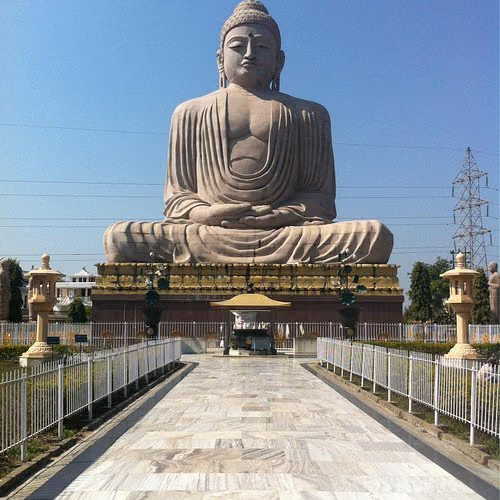
- Great Buddha Statue (80 feet, consecrated by the Dalai Lama in 1989)
- International monasteries: Thai, Tibetan, Japanese, Bhutanese, and more
Places That Define Bodh Gaya
Discover the iconic attractions that make this destination unforgettable
Mahabodhi Temple Complex
The Mahabodhi Temple Complex is the most sacred site in Buddhism, marking the location where Siddhartha Gautama attained enlightenment and became the Buddha. The current main temple, dating largely to the 5th-6th century CE Gupta period, rises to 55 meters and is a UNESCO World Heritage Site. Pilgrims from around the world come to pay homage at this architectural masterpiece, which encloses the Bodhi Tree and the Vajrasana.
Bodhi Tree
The Bodhi Tree is a direct descendant of the original tree under which the Buddha meditated and attained enlightenment. The present tree was propagated from a sapling of the original that was taken to Sri Lanka by Emperor Ashoka's daughter Sanghamitta and later brought back to Bodh Gaya. It stands at the same spot as the original, making it the most venerated tree in the Buddhist world.
Vajrasana (Diamond Throne)
The Vajrasana is a stone slab placed by Emperor Ashoka to mark the exact spot where the Buddha sat in meditation under the Bodhi Tree. Its name means 'Diamond Throne', symbolizing the unshakable stability of the Buddha's enlightenment. This sacred seat is the focal point of pilgrimage within the Mahabodhi Temple Complex.
Great Buddha Statue
The Great Buddha Statue is an 80-foot (24-meter) tall seated Buddha statue located in Bodh Gaya, consecrated by the Dalai Lama in 1989. It depicts the Buddha in a meditation posture (dhyana mudra) and is one of the largest Buddha statues in India. The statue is surrounded by landscaped gardens and attracts both pilgrims and tourists.
Thai Monastery (Wat Thai Bodhgaya)
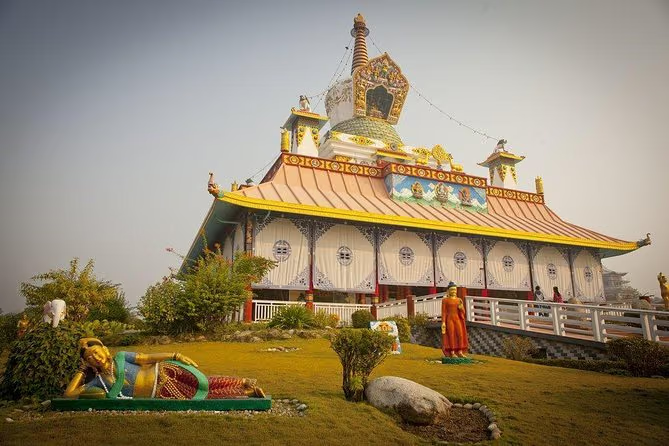
The Thai Monastery is a striking example of traditional Thai architecture, built by the government of Thailand in the 1950s. It features a curved, golden-roofed temple and a reclining Buddha statue, offering a serene atmosphere for meditation. The monastery also provides accommodation for monks and pilgrims, reflecting the international character of Bodh Gaya.
Japanese Temple (Indosan Nipponji)
The Japanese Temple, also known as Indosan Nipponji, was built in 1973 in traditional Japanese architectural style, featuring a pagoda and a meditation hall. It is the first Japanese Buddhist temple in India and is maintained by the Japanese Buddhist community. Visitors can experience Japanese Zen practices and enjoy the quiet garden surroundings.
Religious & Cultural Overview
Significance
Bodh Gaya is the most sacred pilgrimage destination in Buddhism, as it is the site of the Buddha's enlightenment, which is the foundational event of the religion.
Enlightenment Significance
Under the Bodhi Tree, Siddhartha Gautama attained perfect knowledge and became the Buddha, teaching the Four Noble Truths and the Eightfold Path that guide Buddhists to liberation.
Buddhist Circuit Significance
Bodh Gaya is the first stop on the Buddhist Circuit, which also includes Sarnath (first sermon), Kushinagar (death), and Lumbini (birth) in Nepal—together covering the major events of the Buddha's life.
International Monasteries Significance
Monasteries built by Buddhist communities from Thailand, Japan, Bhutan, Tibet, Myanmar, and Vietnam reflect the global spread of Buddhism and offer visitors a unique cultural mosaic.
Practices
- •Meditation under the Bodhi Tree
- •Offering of butter lamps and incense
- •Chanting of Buddhist sutras
- •Walking meditation (kankramana) at the jewel walk
- •Circumambulation of the Mahabodhi Temple
Traditions
- •Buddha Jayanti festival (full moon in May)
- •Kalachakra initiations by the Dalai Lama (periodic)
- •Monastic prayers and rituals from various traditions
- •Bodhi tree watering ceremony by pilgrims
- •Lighting of the temple at dusk
Important Temples
Getting There
Things To Do
Explore the Mahabodhi Temple Complex
Spend time in the main temple, admire the 5th-century architecture, and see the gilded Buddha statue. The complex includes the Bodhi Tree, Vajrasana, and the seven sacred sites.
2-3 hours
Meditate under the Bodhi Tree
Join pilgrims and monks in silent meditation beneath the sacred tree, the descendant of the original. The atmosphere is deeply peaceful and contemplative.
1-2 hours
Visit the Great Buddha Statue
See the 80-foot statue consecrated by the Dalai Lama in 1989, located in a park with manicured gardens. It is one of the largest Buddha statues in India.
30-45 minutes
Tour the International Monasteries
Visit the Thai Monastery with its golden temple, the Tibetan Monastery with its prayer wheels, and the Japanese and Bhutanese temples to see diverse architectural styles.
2-3 hours
Attend Evening Prayers and Light Offerings
At dusk, the temple complex comes alive with monks chanting and pilgrims lighting butter lamps. This is a moving experience not to be missed.
1 hour
Walk the Saptasthana (Seven Sacred Sites)
Follow the path of the Buddha's seven weeks after enlightenment, including the Animeshlochan Chaitya, the Jewel Walk, and the Lotus Pond (Muchalinda Lake).
1-2 hours
Top Attractions
Mahabodhi Temple Complex
The Mahabodhi Temple Complex is the most sacred site in Buddhism, marking the location where Siddhartha Gautama attained enlightenment and became the Buddha. The current main temple, dating largely to the 5th-6th century CE Gupta period, rises to 55 meters and is a UNESCO World Heritage Site. Pilgrims from around the world come to pay homage at this architectural masterpiece, which encloses the Bodhi Tree and the Vajrasana.
Bodhi Tree
The Bodhi Tree is a direct descendant of the original tree under which the Buddha meditated and attained enlightenment. The present tree was propagated from a sapling of the original that was taken to Sri Lanka by Emperor Ashoka's daughter Sanghamitta and later brought back to Bodh Gaya. It stands at the same spot as the original, making it the most venerated tree in the Buddhist world.
Vajrasana (Diamond Throne)
The Vajrasana is a stone slab placed by Emperor Ashoka to mark the exact spot where the Buddha sat in meditation under the Bodhi Tree. Its name means 'Diamond Throne', symbolizing the unshakable stability of the Buddha's enlightenment. This sacred seat is the focal point of pilgrimage within the Mahabodhi Temple Complex.
Great Buddha Statue
The Great Buddha Statue is an 80-foot (24-meter) tall seated Buddha statue located in Bodh Gaya, consecrated by the Dalai Lama in 1989. It depicts the Buddha in a meditation posture (dhyana mudra) and is one of the largest Buddha statues in India. The statue is surrounded by landscaped gardens and attracts both pilgrims and tourists.
Thai Monastery (Wat Thai Bodhgaya)
The Thai Monastery is a striking example of traditional Thai architecture, built by the government of Thailand in the 1950s. It features a curved, golden-roofed temple and a reclining Buddha statue, offering a serene atmosphere for meditation. The monastery also provides accommodation for monks and pilgrims, reflecting the international character of Bodh Gaya.
Japanese Temple (Indosan Nipponji)
The Japanese Temple, also known as Indosan Nipponji, was built in 1973 in traditional Japanese architectural style, featuring a pagoda and a meditation hall. It is the first Japanese Buddhist temple in India and is maintained by the Japanese Buddhist community. Visitors can experience Japanese Zen practices and enjoy the quiet garden surroundings.
Muchalinda Lake (Lotus Pond)
Muchalinda Lake is one of the seven sacred sites (Saptasthana) where the Buddha is said to have spent a week meditating after his enlightenment. According to tradition, the serpent king Muchalinda protected the Buddha from a storm by coiling around him and spreading his hood. The pond is located within the Mahabodhi Temple Complex and is surrounded by a walkway and ancient trees.
Archaeological Museum Bodh Gaya
The Archaeological Museum Bodh Gaya houses a rich collection of artifacts from the site, including sculptures, inscriptions, and relics dating from the Mauryan to the Pala periods. Managed by the Archaeological Survey of India, the museum provides insight into the history and art of Bodh Gaya and its Buddhist heritage. Highlights include a famous Buddha image in Bhumisparsha mudra and a pillar from the Ashokan era.
Bhutanese Monastery (Namgyal Monastery)
The Bhutanese Monastery, also known as Namgyal Monastery, is a vibrant example of Bhutanese architecture, with colorful murals and intricate woodwork. It is one of the many international monasteries in Bodh Gaya, representing the strong presence of Himalayan Buddhism. The monastery serves as a residence for monks and a center for religious study and meditation.
Travel Tips
Start early to avoid crowds
The temple complex opens at dawn, and early morning is the most serene time to visit. You can witness the morning prayers and experience the site without large crowds.
Hire a local guide for historical context
A knowledgeable guide can explain the significance of the various shrines and the story of the Buddha's enlightenment, enriching your visit. Guides are available at the entrance.
Dress respectfully and remove shoes
As a sacred site, modest clothing is required. You will need to remove your shoes at the temple complex; consider wearing socks to protect your feet from the hot ground.
Combine with Sarnath and other Buddhist sites
Bodh Gaya is part of the Buddhist Circuit. Plan a trip that includes Sarnath (where the Buddha gave his first sermon) and possibly Kushinagar and Lumbini for a comprehensive pilgrimage.
Try local cuisine and stay near the temple
Stay in hotels within walking distance of the temple to enjoy the early morning and evening atmosphere. Sample local Bihari food, but also find international restaurants near the monasteries.
Frequently Asked Questions
The ideal time is from October to March, when the weather is cool and pleasant. Avoid the summer months (April-June) due to extreme heat, and the monsoon season (July-September) for heavy rains.
The nearest airport is Gaya International Airport (about 17 km away), with flights from major Indian cities and some international destinations like Bangkok. Patna Airport (about 100 km) is another option, with taxis and buses available.
Yes, Bodh Gaya is generally safe, but standard precautions apply. Dress modestly, especially when visiting religious sites, and avoid walking alone late at night. It is advisable to use reputable transportation.
Visitors are expected to dress modestly, covering shoulders and knees. Shoes must be removed before entering the temple complex. You may be asked to leave bags at the security counter.
Yes, many monasteries and meditation centers offer sessions for visitors. The Root Institute for Wisdom Culture and the International Meditation Centre are popular options. You can also meditate informally under the Bodhi Tree.
Plan Your Own Trip
Tell us what you're looking for and how many days you have — we'll instantly put together a personalised itinerary for Bodh Gaya.
Tour Packages for Bodh Gaya
Planning a trip to Bodh Gaya?
Talk to our travel experts for a customised group tour package.