
Local Transport in Bodh Gaya
Bodh Gaya, in Bihar, India, is the most sacred site in Buddhism, marking the spot where Siddhartha Gautama attained enlightenment under the Bodhi Tree. The Mahabodhi Temple Complex
Overview
Bodh Gaya, in Bihar, India, is the most sacred site in Buddhism, marking the spot where Siddhartha Gautama attained enlightenment under the Bodhi Tree. The Mahabodhi Temple Complex, a UNESCO World Heritage Site, anchors a small but globally significant town that welcomes pilgrims from around the world. Local transport is simple and focused on the temple area, with options suitable for short distances and pilgrimage circuits.
Transport Options
Walking
Walking is the most practical way to explore Bodh Gaya's core, especially the Mahabodhi Temple Complex and the surrounding monasteries. The main temple is within a short stroll from most guesthouses and monasteries, and the streets are compact and pedestrian-friendly during daylight hours.
Temple Access
The Mahabodhi Temple Complex is best accessed on foot, as vehicles are not allowed inside the sacred precinct. The main entrance is on the western side, and you will need to pass through security checks.
- •The temple complex is open from early morning (around 5:00 AM) to 9:00 PM, but walking around the complex is unrestricted during these hours.
- •Shoes must be removed before entering the temple courtyard; there are designated shoe-keeping areas at the entrance.
- •The circumambulation path (pradakshina) around the temple is a walking route used by pilgrims for meditation and prayer.
Neighborhood Walks
The area around the temple is dotted with monasteries and temples built by various Buddhist countries, all within a 1-2 km radius. Walking between them is common and allows you to appreciate the international architectural styles.
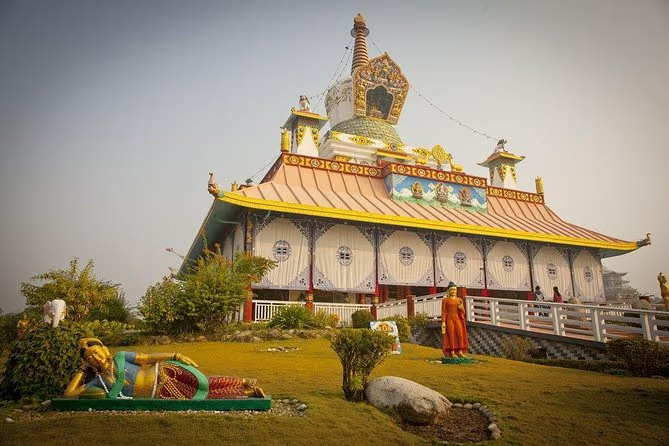
- •The Thai Monastery, Japanese Temple, and Bhutanese Monastery are all within a 15-20 minute walk from the Mahabodhi Temple.
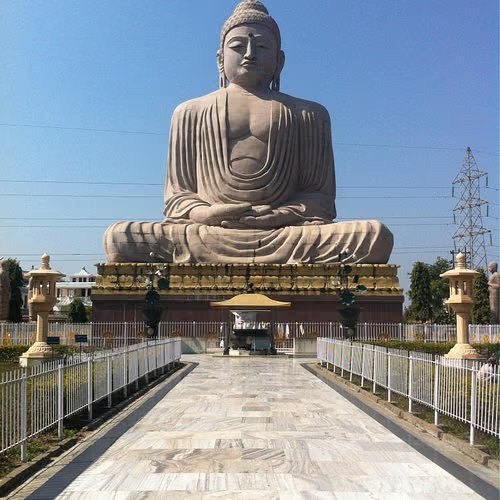
- •The Great Buddha Statue (80 feet tall) is about a 10-minute walk from the temple, located near the Thai Monastery.
- •The Muchalinda Lake (Lotus Pond) is within the temple complex itself, so no extra walking is needed.
Cycle Rickshaw
Cycle rickshaws are the most common local transport for short hops, such as from your guesthouse to the temple gate or to nearby monasteries. They are slow but eco-friendly and allow you to see the town at a leisurely pace.
Fares and Negotiation
Fares are not metered; always negotiate before boarding. For a single trip within the main town area, expect to pay around 20-50 Indian rupees (less than $1).
- •From the bus stand to the Mahabodhi Temple, a cycle rickshaw ride typically costs 30-50 rupees.
- •For a round trip to the Great Buddha Statue and back, agree on a price (often 50-100 rupees) and confirm if the driver will wait.
- •Carry small change; drivers may not have change for large notes.
Accessibility
Cycle rickshaws can navigate narrow lanes, but they are not suitable for long distances or if you have heavy luggage. They are best for solo travelers or pairs.
- •Rickshaws are widely available near the temple entrance, bus stand, and major intersections.
- •During peak pilgrimage seasons (winter months), rickshaws are plentiful but prices may be slightly higher.
- •For early morning visits to the temple (around sunrise), you may need to walk or arrange a rickshaw the night before.
Auto Rickshaw (Tuk-Tuk)
Auto rickshaws are faster and more comfortable than cycle rickshaws, ideal for covering slightly longer distances within Bodh Gaya or for trips to the nearby town of Gaya (about 12 km away). They are shared or private.
Local Trips
For trips within Bodh Gaya, auto rickshaws charge around 50-100 rupees. They are useful for reaching monasteries on the outskirts, such as the Vietnamese or Korean temples.
- •Shared autos (where you pay per seat) are cheaper but less frequent; private hires are more convenient.
- •Always agree on the fare before starting the journey, as meters are not used.
- •For a half-day tour of all major monasteries, negotiate a rate (around 300-500 rupees) with the driver to wait at each stop.
Gaya City and Railway Station
Auto rickshaws can take you to Gaya Junction (the nearest major railway station) or Gaya city for shopping. The ride takes about 30-40 minutes.
- •A private auto to Gaya Junction costs around 200-300 rupees; shared autos are cheaper (around 50-70 rupees per person).
- •For early morning trains, pre-book an auto the night before or use the hotel's transport service.
- •Auto rickshaws are not allowed to enter the Mahabodhi Temple complex; they drop you at the parking area near the entrance.
Taxi (Private Car)
Taxis are available for day trips to nearby Buddhist sites like Sarnath (though that is 250 km away, usually done by train) or for airport transfers. Within Bodh Gaya, taxis are less common but can be hired for convenience.
Airport and Railway Transfers
The nearest airport is Gaya International Airport (about 7 km from Bodh Gaya), with flights from Colombo, Bangkok, and some domestic cities. Taxis are the most reliable way to reach the airport.
- •A prepaid taxi from the airport to Bodh Gaya costs around 500-700 rupees; negotiate if not using prepaid.
- •From Gaya Junction railway station, a taxi to Bodh Gaya costs around 400-600 rupees.
- •For early morning flights, arrange a taxi the previous day through your hotel or a local travel desk.
Day Excursions
Taxis can be hired for full-day trips to Rajgir (about 60 km away) or Nalanda (about 90 km), which are part of the Buddhist Circuit. These trips require a full-day hire.
- •A full-day taxi to Rajgir and Nalanda typically costs 2,500-3,500 rupees, including waiting time and fuel.
- •For a trip to Sarnath (near Varanasi), it is more practical to take a train from Gaya to Varanasi, then a local taxi.
- •Always confirm the itinerary and total cost before hiring a taxi for long distances.
Practical Tips
- •Start your day early (around sunrise) to visit the Mahabodhi Temple when it is quieter and cooler; the temple opens at 5:00 AM.
- •Carry a pair of socks to wear inside the temple complex, as the ground can be hot and you must remove your shoes.
- •Beware of unofficial guides and touts near the temple entrance; hire only authorized guides from the information counter inside the complex.
- •Carry small denomination rupees for rickshaw fares and small purchases, as many vendors do not have change for larger notes.
- •The best time to visit is from October to March; avoid the monsoon (June-September) when streets may be muddy and transport disrupted.
Tour Packages for Bodh Gaya
Explore More of Bodh Gaya
Destination Hub
Bodh Gaya OverviewSpiritual & Temple Guides
Places to Explore
Discover attraction
Discover attraction
Discover attraction
Discover attraction
Discover attraction
Discover attraction
Discover attraction
Discover attraction
Discover attraction