
Temples in Bodh Gaya
Bodh Gaya, in Bihar, India, is the most sacred site in Buddhism, marking the exact location where Siddhartha Gautama attained enlightenment under the Bodhi Tree and became the Budd
Overview
Bodh Gaya, in Bihar, India, is the most sacred site in Buddhism, marking the exact location where Siddhartha Gautama attained enlightenment under the Bodhi Tree and became the Buddha—a significance comparable to Mecca for Muslims or Jerusalem for Christians and Jews. The Mahabodhi Temple Complex, a UNESCO World Heritage Site since 2002, enshrines the Vajrasana (Diamond Throne) placed by Emperor Ashoka in the 3rd century BCE and a descendant of the original Bodhi Tree, while the main temple's structure dates largely to the 5th–6th century CE Gupta period. Surrounding the complex are seven meditation spots from the Buddha's post-enlightenment weeks, and the town hosts an international array of monasteries and temples built by Buddhist communities from Thailand, Japan, Bhutan, Tibet, Myanmar, and Vietnam, including the 80-foot Great Buddha Statue consecrated by the Dalai Lama in 1989, making Bodh Gaya a living, global center of Buddhist pilgrimage and part of India's broader Buddhist Circuit.
Temples
Mahabodhi Temple
A typical visit takes 2–3 hours, though many pilgrims spend several hours or even days in meditation.The Mahabodhi Temple, a majestic brick structure rising 55 meters above the Bodhi Tree, stands as the ultimate pilgrimage destination for Buddhists worldwide. This UNESCO World Heritage Site, dating substantially to the 5th–6th century CE Gupta period, enshrines the very spot where Siddhartha Gautama achieved enlightenment under the Bodhi Tree circa 531 BCE. The temple complex, with its pyramidal spire and intricate carvings, is a masterpiece of Indian architecture. Pilgrims and visitors from around the globe come to meditate, offer prayers, and walk the sacred circumambulation path, absorbing the profound serenity that pervades this hallowed ground.
Great Buddha Statue
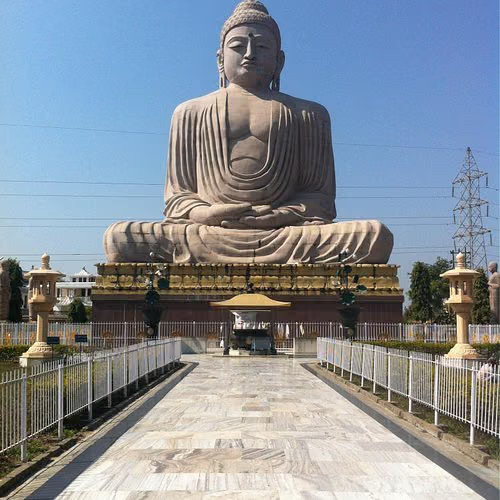
45 minutes to 1 hourRising 80 feet above the sacred grounds of Bodh Gaya, the Great Buddha Statue is a majestic sandstone and granite masterpiece consecrated by the 14th Dalai Lama in 1989. It depicts the Buddha seated in the earth-touching bhumisparsha mudra, the same posture he held under the Bodhi Tree when he attained enlightenment. The statue is surrounded by a tranquil garden dotted with ten smaller statues of his disciples, creating a contemplative atmosphere. As one of the tallest Buddha statues in India, it offers pilgrims and visitors a profound visual reminder of the Buddha's teachings and the historical significance of this holiest of Buddhist sites.
Thai Monastery
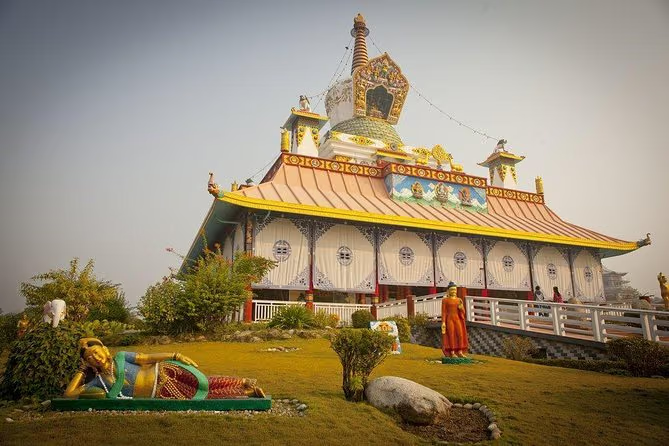
1 to 2 hoursThe Thai Monastery, also known as Wat Thai Buddhagaya, is a striking example of traditional Thai architecture nestled in the sacred landscape of Bodh Gaya. Commissioned by the Thai government, this monastery serves as a spiritual home for Thai monks and pilgrims, offering a tranquil space for meditation and prayer. Its golden, multi-tiered roof, ornate carvings, and vibrant murals depict the life of the Buddha and Thai artistic heritage. The monastery complex includes a main prayer hall, monks' quarters, and a beautifully landscaped garden with a large bronze Buddha statue. As one of the many international monasteries in Bodh Gaya, it underscores the global significance of this pilgrimage site, where the Buddha attained enlightenment. Visitors can observe monks chanting, participate in meditation sessions, and learn about Thai Buddhist traditions. The monastery stands as a testament to the enduring bond between Thailand and India, both historically and spiritually.
Japanese Temple (Nippon Myohoji)
1-2 hoursNippon Myohoji, also known as the Japanese Temple, stands as a graceful symbol of international Buddhist unity in Bodh Gaya. Built by Japanese Buddhist organizations, this temple features traditional Japanese architectural elements, including curved roofs, wooden pillars, and a tranquil garden. It is one of several national monasteries that ring the sacred site where Buddha attained enlightenment, each representing a different Buddhist tradition. Inside, visitors find a peaceful prayer hall with ornate decorations and a statue of Buddha, while the temple grounds offer a quiet space for meditation and reflection. The temple not only serves Japanese pilgrims but also welcomes all visitors to experience the harmony of Japanese Buddhist practice in the heart of India.
Bhutanese Monastery
1-2 hoursThe Bhutanese Monastery, also known as the Royal Bhutanese Monastery, stands as a beautiful testament to the deep Buddhist heritage shared between Bhutan and India. Built by the Royal Government of Bhutan, this monastery features distinctive Bhutanese architectural elements, including ornate wooden carvings, colorful frescoes, and a striking golden roof. Inside, visitors are treated to intricate wall paintings that narrate the life of the Buddha and depict various Buddhist iconographies, such as the Wheel of Life and protective deities. The monastery serves both as a place of worship for Bhutanese pilgrims and as a cultural landmark for international visitors, offering a peaceful atmosphere for meditation and reflection amidst the bustle of Bodh Gaya.
Tour Packages for Bodh Gaya
Explore More of Bodh Gaya
Destination Hub
Bodh Gaya OverviewSpiritual & Temple Guides
Places to Explore
Discover attraction
Discover attraction
Discover attraction
Discover attraction
Discover attraction
Discover attraction
Discover attraction
Discover attraction
Discover attraction