
Jammu and Kashmir
Paradise on Earth
Jammu and Kashmir is a union territory in northern India renowned for the Himalayan meadows of the Kashmir Valley, the houseboats and gardens of Srinagar, and the revered Vaishno Devi pilgrimage in Jammu.
About Jammu and Kashmir
Overview
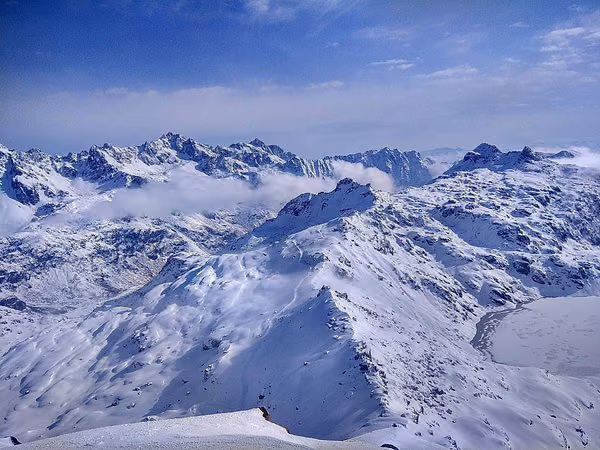
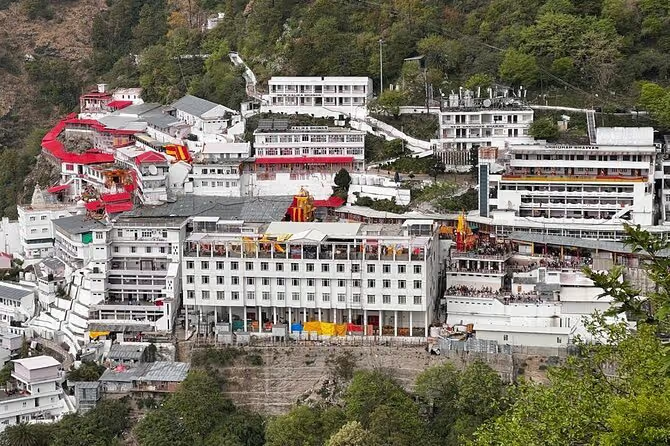
Jammu and Kashmir stretches across the western Himalayas, split between the Jammu region's hills and plains and the Kashmir Valley's lakes and alpine meadows. Srinagar, its summer capital, is famed for Dal Lake's houseboats and shikara rides alongside the Mughal-era gardens of Nishat and Shalimar Bagh. Hill stations like Gulmarg and Pahalgam draw visitors for skiing, trekking and gondola rides through pine forests, while Sonmarg serves as the gateway to high-altitude glacier treks. Jammu, the winter capital, is home to the Vaishno Devi shrine near Katra — one of India's most visited pilgrimage sites — along with the Bahu Fort and Raghunath Temple. Every year, thousands also undertake the demanding Amarnath Yatra to the ice lingam cave shrine high in the mountains. Known historically as 'Paradise on Earth,' the region's saffron fields, apple orchards, and handwoven Pashmina shawls and carpets round out a destination shaped equally by faith, craft and dramatic mountain scenery.
- Vaishno Devi cave shrine near Katra, one of India's most-visited pilgrimage sites
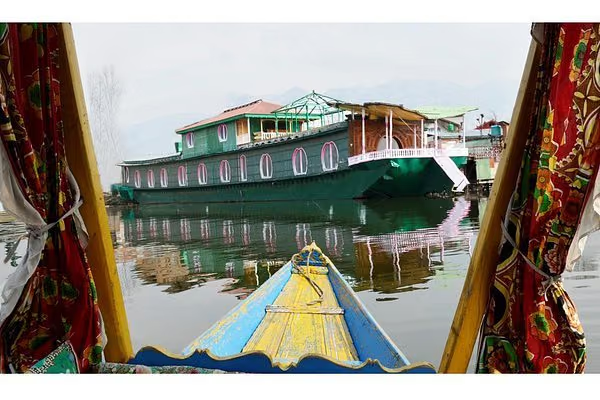
- Dal Lake houseboats and shikara rides in Srinagar
- Mughal Gardens — Nishat Bagh, Shalimar Bagh and Chashme Shahi
- Gulmarg's gondola (Gondola cable car) and ski slopes
- Pahalgam's Betaab and Aru valleys
- The high-altitude Amarnath cave shrine
Top Destinations in Jammu and Kashmir
View All DestinationsTour Packages for Jammu and Kashmir


Culture & Heritage
Jammu and Kashmir's culture blends Kashmiri, Dogri and Ladakhi traditions shaped by centuries of Mughal, Sikh and Dogra rule. Kashmiri handicrafts — Pashmina shawls, hand-knotted carpets and papier-mâché — remain a defining craft heritage, alongside a strong tradition of Sufi and devotional music.
- Pashmina Shawl & Carpet Weaving
- Wazwan Multi-Course Feast
- Sufi & Kashmiri Folk Music
- Mughal Garden Architecture
Famous Festivals
- Amarnath Yatra — July–AugustA demanding high-altitude pilgrimage to the Amarnath cave shrine, undertaken by lakhs of devotees each year over a short government-set window.
- Navratri at Vaishno Devi — March/April and September/OctoberThe shrine sees its heaviest pilgrim numbers during the biannual Navratri festival, with special decorations and extended darshan hours.
- Tulip Festival, Srinagar — March–AprilAsia's largest tulip garden, Indira Gandhi Memorial Tulip Garden, blooms with over a million tulips against a backdrop of the Zabarwan hills.
Food of Jammu and Kashmir
- Rogan JoshA signature Kashmiri lamb curry cooked in a deep-red, aromatic gravy of Kashmiri chillies and spices.
- WazwanA traditional multi-course Kashmiri feast of meat-based dishes served at weddings and special occasions.
- KahwaA fragrant green tea infused with saffron, cardamom and almonds, popular across the Kashmir Valley.
- Kashmiri PulaoA mildly sweet, fragrant rice dish studded with dry fruits and paneer, distinct from the region's meat-forward dishes.
Travel Information
How to Reach
- Srinagar Airport (SXR) serves the Kashmir Valley; Jammu Airport (IXJ) serves Jammu and the Vaishno Devi pilgrimage circuit.
- Jammu Tawi is the main railhead with direct trains from major Indian cities; the Kashmir Valley itself has a separate scenic rail line between Baramulla and Banihal.
- National highways connect Jammu to Srinagar via the Jawahar Tunnel/Banihal, and to Katra for the Vaishno Devi yatra.
Nearest Airports
- Srinagar Airport (SXR) — Srinagar
- Jammu Airport (IXJ) — Jammu
Travel Tips
- Register for the free Vaishno Devi Yatra Slip in advance (online or at Katra) — it's mandatory before starting the trek.
- Kashmir Valley roads (Gulmarg, Sonmarg) can close after heavy snowfall in winter — check conditions before travelling between towns.
- Carry warm layers even in summer for higher-altitude stops like Gulmarg's Gondola upper station and Sonmarg.
Frequently Asked Questions
For the Kashmir Valley (Srinagar, Gulmarg, Pahalgam, Sonmarg), April to October offers the most comfortable weather, with spring (April–May) bringing blooming gardens and autumn (September–October) bringing golden chinar leaves — both especially scenic. Winter (December–February) turns Gulmarg into a snow and skiing destination but makes many valley roads difficult. Jammu and the Vaishno Devi shrine can be visited year-round, though the Katra trek is most pleasant outside the peak summer heat (April–June) and the coldest winter weeks. The Amarnath Yatra runs only during a short window each July–August set by the shrine board.
A week is a good baseline for a first visit: two to three days in Srinagar for Dal Lake, the Mughal Gardens and a houseboat stay, two days in Gulmarg or Pahalgam for the mountains, and one to two days in Jammu for the Vaishno Devi yatra (including the trek to and from the shrine). Travellers focused purely on the Vaishno Devi pilgrimage can complete it in two days from Katra, while a fuller Kashmir circuit covering Sonmarg as well is best planned over ten days.
Jammu and Kashmir is best known as the Vaishno Devi pilgrimage destination in Jammu and, in the Kashmir Valley, for Srinagar's Dal Lake houseboats and Mughal-era gardens, the ski slopes and meadows of Gulmarg, and the valleys of Pahalgam. It's also the starting point for the high-altitude Amarnath Yatra. The region is famous for saffron cultivation in Pampore, apple orchards, and handcrafted Pashmina shawls and carpets.
Srinagar Airport (SXR) is the main gateway to the Kashmir Valley — Gulmarg, Pahalgam and Sonmarg are all a scenic drive away. For the Vaishno Devi pilgrimage and the Jammu region, Jammu Airport (IXJ) is closer, roughly 45–50 km from Katra, the base town for the shrine trek. Many multi-region itineraries fly into one city and out of the other rather than travelling overland between Jammu and Srinagar.
Yes, the Vaishno Devi yatra is one of India's most family- and group-friendly pilgrimages. The 12–13 km paved trek from Katra to the shrine can be done on foot, by pony, palanquin, or via the battery car and helicopter services for those seeking an easier route, making it accessible across age groups. Advance registration (a free Yatra Slip) is required and can be arranged as part of a planned group tour, and Katra has a wide range of hotels to suit different budgets before and after the trek.