
Nagercoil, Kanyakumari
Overview
- •Nagercoil, the headquarters of Kanyakumari district, is a town steeped in religious and historical significance.
- •Its name is derived from the Nagaraja Temple, a unique shrine dedicated to the serpent king.
- •The town serves as a gateway to the southernmost tip of India, offering visitors a mix of spiritual sites, colonial heritage, and natural beauty.
- •With its strategic location and cultural richness, Nagercoil is an essential stop for pilgrims and travelers exploring the deep south of Tamil Nadu.
Highlights
- Nagaraja Temple – an ancient shrine with intricate stone carvings and a sacred pond
- Proximity to Kanyakumari town – just about 20 km from the southern tip of India
- Scenic surroundings with the Western Ghats and lush paddy fields
- Local markets offering traditional handicrafts and fresh produce
- Colonial-era buildings reflecting the town's historical past under Travancore and British influence
Religious Significance
Nagercoil holds profound religious significance due to the Nagaraja Temple, which is believed to be one of the few temples dedicated to a snake deity in its original form. The temple is also associated with both Hindu and Jain traditions, making it a unique symbol of religious harmony. For pilgrims, visiting Nagercoil is often combined with a trip to Kanyakumari, as the latter is considered a sacred site for its confluence of seas and the meditation spot of Swami Vivekananda. The town's name itself is a testament to its spiritual importance, as 'Nagercoil' literally means 'temple of the serpent king'.
Facilities
Nagercoil offers a range of facilities for visitors, including budget and mid-range hotels, restaurants serving local and South Indian cuisine, and public transport options like buses and auto-rickshaws. The town has a railway station with connections to major cities, and the nearest airport is Trivandrum International Airport, about 70 kilometers away. Tourist information centers and ATMs are available, and the town is well-equipped with medical facilities. For pilgrims, the temple provides basic amenities like shoe storage and drinking water.
Festivals
- •The most important festival at the Nagaraja Temple is the annual 'Aippasi' festival, celebrated during October-November, which includes special abhishekams and processions.
- •The temple also observes 'Ayilya Pooja' on the day of the star Ayilyam, which is considered highly auspicious for serpent worship.
- •Additionally, the town celebrates major Tamil festivals like Pongal, Navaratri, and Maha Shivaratri with great enthusiasm.
- •The nearby Kanyakumari town hosts the famous 'Kodiyettu' festival at the Kumari Amman Temple, which attracts many devotees.
History
- •Nagercoil has a long history that predates the common era, with references in ancient Tamil literature.
- •It was part of the Kingdom of Travancore for centuries, which influenced its culture and architecture.
- •The Nagaraja Temple itself is believed to have been built around the 9th century AD, with later additions by various rulers.
- •The town was also a center for Jainism and Hinduism, and its name appears in historical records as a significant settlement.
- •After India's independence, Nagercoil became part of the newly formed Kanyakumari district in 1956, following the linguistic reorganization of states.
Architecture
- •The Nagaraja Temple showcases a mix of Dravidian and Kerala architectural styles, reflecting the region's cultural amalgamation.
- •The temple features a two-tiered sanctum, with the main idol of the serpent deity carved from a single stone.
- •Intricate wood carvings and mural paintings adorn the walls, typical of Kerala-influenced structures.
- •The temple complex also includes a large temple tank and several sub-shrines.
- •The town itself has colonial-era buildings, including churches and public offices, that display European architectural elements from the British and Portuguese periods.
Travel Tips
- Carry comfortable footwear as temple visits and market walks require walking.
- Dress modestly when visiting temples, covering shoulders and knees.
- Plan to stay in Nagercoil or nearby Kanyakumari to easily explore both areas.
- Try local South Indian cuisine, especially the traditional Tamil Nadu meals served on banana leaves.
Things to Do
Visit Nagaraja Temple
1-2 hoursExplore the main temple dedicated to the serpent deity, observe the unique architecture and participate in the daily rituals.
Day trip to Kanyakumari
Half dayTake a short drive to the southernmost point of India to witness the confluence of three oceans and the Vivekananda Rock Memorial.
Explore local markets
2-3 hoursWander through the bustling bazaars of Nagercoil to buy spices, textiles, and traditional Kerala-style handicrafts.
Nature walk in the Western Ghats foothills
3-4 hoursEnjoy a gentle trek or nature walk in the nearby hills, taking in the lush vegetation and panoramic views.
Frequently Asked Questions
The Nagaraja Temple is one of the few temples in India dedicated to a snake deity. It is believed to be an ancient site of worship and holds both Hindu and Jain significance, with a history that may date back over a thousand years.
Nagercoil is approximately 20 kilometers from Kanyakumari town, which is a short drive of about 30-45 minutes depending on traffic.
The best time to visit is from November to February when the weather is cooler and more pleasant for sightseeing. The summer months can be hot and humid.
The temple celebrates various Hindu festivals, with the most prominent being the annual festival in the Tamil month of Aippasi (October-November) when special rituals and processions are held.
Quick Information
Best Time
October to March
Timings
Nagaraja Temple is typically open from early morning to noon and from late afternoon to evening. Specific timings may vary by day; it is advisable to check locally.
Entry Fee
No entry fee for the temple, but donations are accepted. Some attractions in Kanyakumari may have separate fees.
Related Topics
Tour Packages for kanyakumari


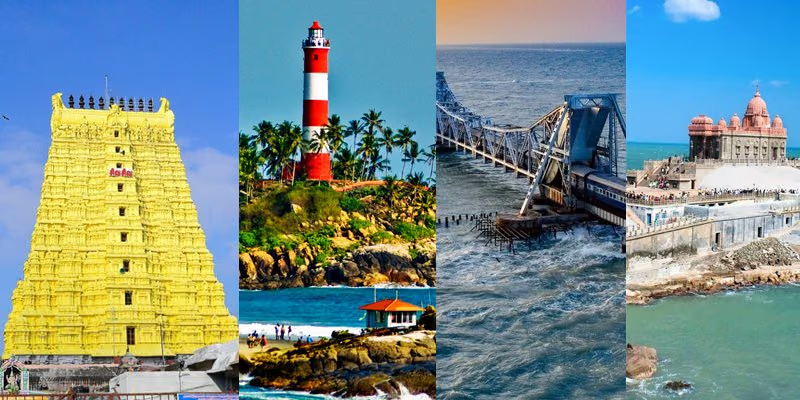


Explore More of Kanyakumari
Destination Hub
Kanyakumari OverviewSpiritual & Temple Guides
Places to Explore
Discover attraction
Discover attraction
Discover attraction
Discover attraction
Discover attraction
Discover attraction
Discover attraction
Discover attraction
Discover attraction
Discover attraction
Discover attraction
Discover attraction
Discover attraction
Discover attraction
Discover attraction
Discover attraction
Discover attraction
Discover attraction
Discover attraction
Discover attraction
Discover attraction
Discover attraction
Discover attraction