
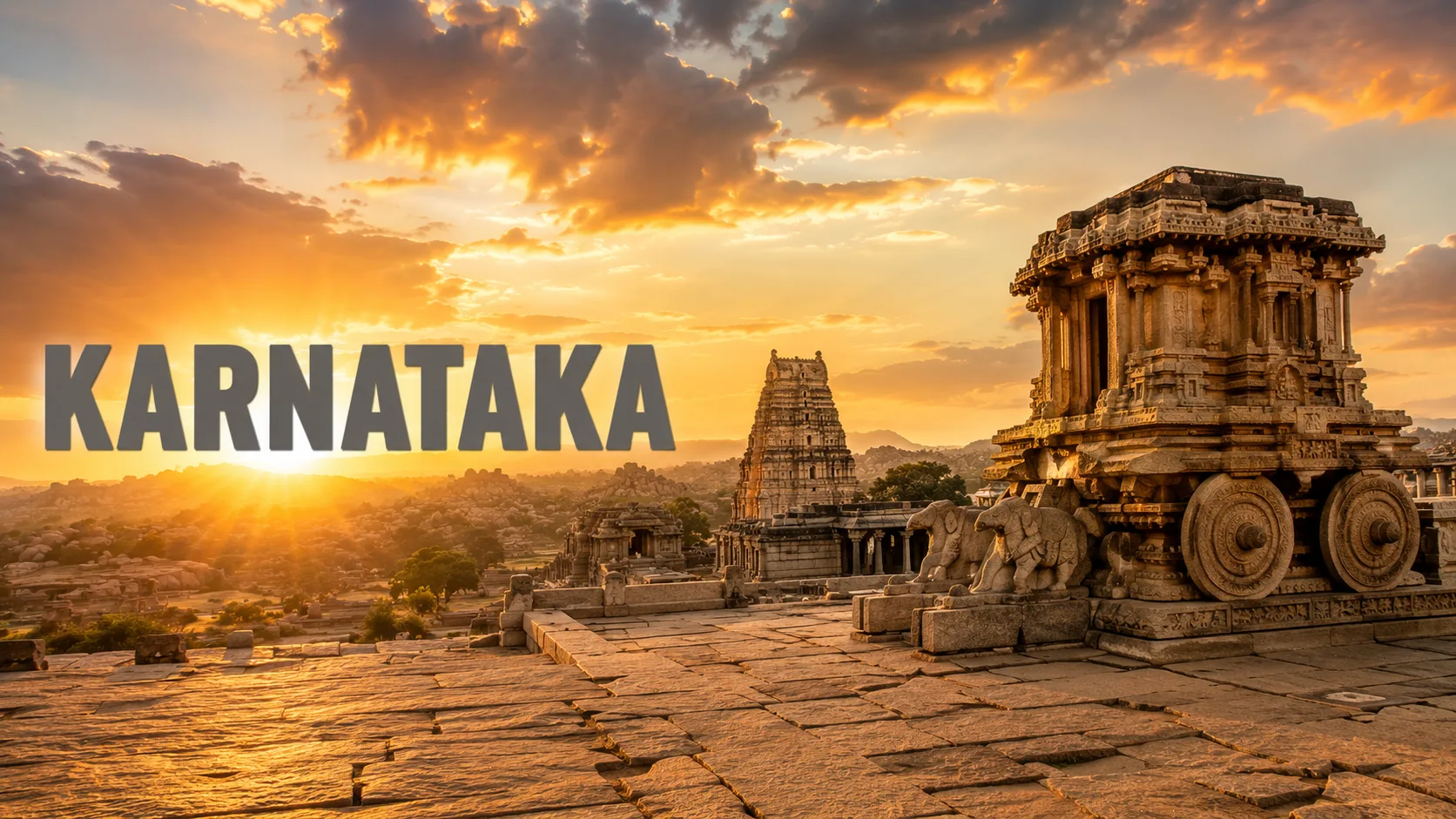
Karnataka
One State, Many Worlds
Karnataka, in southwestern India, spans the tech metropolis of Bengaluru, the ruined Vijayanagara capital of Hampi, misty coffee hills of Coorg, and a Western Ghats coastline.
About Karnataka
Overview
Karnataka is a large southwestern Indian state whose capital, Bengaluru, is renowned as the country's technology and startup hub. The state's history stretches from the rock-cut cave temples of Badami to the sprawling ruins of Hampi, capital of the once-mighty Vijayanagara Empire and now a UNESCO World Heritage Site. Karnataka is home to a substantial share of the Western Ghats, a UNESCO-listed biodiversity hotspot, harbouring wildlife reserves such as Bandipur and Nagarhole and hill regions like Coorg (Kodagu), famous for coffee plantations and misty landscapes. Along its Arabian Sea coastline, towns like Gokarna and Udupi draw both pilgrims and beach travellers, while Mysuru's opulent palace and Dussehra celebrations showcase the region's royal Wadiyar heritage. Karnataka's cuisine, temple architecture at Belur, Halebidu and Pattadakal, and classical Carnatic and Hindustani music traditions reflect its position at a cultural crossroads of South India.
- Group of Monuments at Hampi (UNESCO, 1986)
- Western Ghats — Bandipur & Nagarhole National Parks
- Coorg (Kodagu) coffee plantations and hill landscapes
- Mysuru Palace and its Dasara festival
Top Destinations in Karnataka
View All DestinationsTour Packages for Karnataka


Culture & Heritage
Karnataka's heritage spans Chalukya, Hoysala and Vijayanagara dynastic art — seen in the intricately carved temples of Belur, Halebidu and Pattadakal — through to the royal Wadiyar legacy of Mysuru. The state is also a major centre for both Carnatic and Hindustani classical music, and its Yakshagana theatre remains a vibrant coastal tradition.
- Hoysala & Vijayanagara Temple Architecture
- Mysuru Royal Wadiyar Heritage
- Yakshagana Theatre
- Carnatic & Hindustani Classical Music
Famous Festivals
- Mysuru Dasara — September / OctoberKarnataka's grandest festival, featuring a lavishly illuminated Mysuru Palace and a royal elephant procession.
- Karaga Festival — March / AprilAn ancient Bengaluru festival where a priest carries a flower pyramid through the old city streets overnight.
- Ugadi — March / AprilThe Kannada New Year, celebrated with special dishes balancing sweet and bitter flavours symbolising life's mix of experiences.
Food of Karnataka
- Bisi Bele BathA spiced rice, lentil and vegetable dish, a Karnataka comfort-food staple.
- Mysore Masala DosaA crisp fermented rice-and-lentil crepe spread with a signature red chutney, from Mysuru.
- Ragi MuddeSteamed finger-millet balls, a staple of the Old Mysore region typically eaten with sambar or curry.
- Filter CoffeeSouth Indian filter-brewed coffee, deeply embedded in Karnataka's everyday food culture.
Travel Information
How to Reach
- International airports at Bengaluru and Mangaluru connect Karnataka worldwide.
- Extensive rail network centred on Bengaluru, Mysuru, Hubballi and Mangaluru.
- Well-developed national highway network linking Bengaluru to Mysuru, Hampi, Coorg and the coast.
Nearest Airports
- Kempegowda International Airport (BLR) — Bengaluru
- Mangaluru International Airport (IXE) — Mangaluru
Travel Tips
- Visit Mysuru during Dasara (Sep/Oct) to see the illuminated palace and grand royal procession.
- Coorg and the Western Ghats get heavy monsoon rain (Jun–Sep); roads can be slippery, but the hills turn lush green.
- Hampi's ruins are best explored early morning or late afternoon to avoid the midday heat, especially March–May.
Frequently Asked Questions
October to February offers the most pleasant weather across most of the state, with comfortable daytime temperatures for exploring Hampi's ruins, Mysuru's palace grounds and Coorg's coffee estates. If Jog Falls or the Western Ghats waterfalls are a priority, aim for just after the monsoon, roughly September to November, when they run at maximum flow without the heaviest rains still falling. The southwest monsoon (June to September) brings very heavy rainfall to Coorg and the Western Ghats — turning the hills lush green but making roads slippery — while March to May gets hot and dry, especially around Hampi, where midday sightseeing should be avoided in favour of early morning or late afternoon.
A week lets you comfortably combine the state's three signature regions: two to three days at Hampi exploring the UNESCO-listed Vijayanagara ruins, two days around Mysuru for the palace and nearby Hoysala temples, and two to three days in Coorg's coffee-covered hills. Shorter four- to five-day trips work well if you focus on just one or two of these regions rather than all three, since Hampi sits several hours from Mysuru and Coorg. Travellers with extra time often add Bandipur or Nagarhole National Park for wildlife, or the coastal town of Gokarna for a beach-focused finish.
Karnataka is best known for the sprawling Vijayanagara Empire ruins at Hampi, a UNESCO World Heritage Site since 1986, and for Mysuru's opulent palace and lavish Dasara festival, a legacy of the region's royal Wadiyar dynasty. Coorg (Kodagu) is celebrated for its misty coffee plantations and hill landscapes, while a substantial share of the biodiverse Western Ghats — including Bandipur and Nagarhole National Parks — falls within the state. Karnataka is equally known as the base of Bengaluru, India's technology and startup hub, and for a laid-back Arabian Sea coastline around Gokarna that draws both pilgrims and beach travellers.
Kempegowda International Airport in Bengaluru (BLR) is Karnataka's main gateway, with extensive domestic and international connections and the best road links to Mysuru and Coorg. Hubballi airport is the more convenient option for reaching Hampi directly, cutting a long drive from Bengaluru, while Mangaluru International Airport (IXE) serves the coastal region including Gokarna and Udupi well. For Coorg specifically, many travellers fly into Mangaluru or Bengaluru and continue by road, as Coorg itself has no commercial airport.
Mysuru and Coorg are comfortable and well set up for groups, with paved palace grounds, accessible viewpoints over coffee estates, and a good range of hotels catering to organised tours. Hampi is more demanding: its ruins are spread across a rocky, boulder-strewn landscape with uneven paths and significant walking between monument clusters, so it suits travellers who are reasonably mobile, and early morning or late afternoon visits help avoid the heat. For less mobile groups, focusing on Mysuru and Coorg while treating Hampi as an optional add-on, with a vehicle to shuttle between the closer sites, is generally the more comfortable approach.