
West Bengal ·
Kolkata
Kolkata, formerly and still fondly called Calcutta, is the largest city in eastern India and the capital of the state of West Bengal. Once the capital of the British Raj till 1911, Kolkata is said to have been built on three villages along the Hooghly River, a distributary of the mighty Ganges.
Kolkata at a Glance
Why Kolkata?
The highlights, landmarks and experiences that make this destination worth visiting.
- Asutosh Museum of Indian Art
- Tiriti Bazaar
- Fatima Church
- Wellesley Gol Talab
- St. James' Church
- Osmond Memorial Church
Kolkata at a Glance
Essential travel information to understand Kolkata before planning your visit.
Can be combined with
Explore Kolkata
Places to Visit
- Asutosh Museum of Indian Art: Asutosh Museum of Indian Art is an art museum located in the main campus of University of Calcutta on College Street, Kolkata (previously Calcutta), India, on the first and second floors of the Centenary Building.
- Tiriti Bazaar: Tiriti Bazaar, also known as Chinatown, & also spelled as Tiretta Bazaar is a neighborhood near Lalbazar in Central Kolkata. It is usually called Old China Market.
- Fatima Church: Fatima Church is a Catholic religious building located on CIT Road, Kolkata, India. Looked after by the Redemptorist fathers since 1966 the Fatima church serves the Catholic community living in and around CIT Road, Entally, Park Circus and nearby surrounding areas.
- Wellesley Gol Talab: Wellesley Gol Talab, (also known as Gol Talab), is a park located in Taltala neighbourhood in Central Kolkata, in the Indian state of West Bengal.
- St. James' Church: St. James' Church in Entally, Kolkata (Calcutta), India, is one of Kolkata's most elegant churches. Built in 1862, the twin spires of the St. James' Church dominates Kolkata's skyline.
- Osmond Memorial Church: Osmond Memorial Church, previously known as Wesleyan Methodist Church, is a historic church located at 56, S. Banerjee Road, Taltala, Kolkata, West Bengal, India.
Sightseeing Places
- Asutosh Museum of Indian Art: Asutosh Museum of Indian Art is an art museum located in the main campus of University of Calcutta on College Street, Kolkata (previously Calcutta), India, on the first and second floors of the Centenary Building.
- Tiriti Bazaar: Tiriti Bazaar, also known as Chinatown, & also spelled as Tiretta Bazaar is a neighborhood near Lalbazar in Central Kolkata. It is usually called Old China Market.
- Fatima Church: Fatima Church is a Catholic religious building located on CIT Road, Kolkata, India. Looked after by the Redemptorist fathers since 1966 the Fatima church serves the Catholic community living in and around CIT Road, Entally, Park Circus and nearby surrounding areas.
- Wellesley Gol Talab: Wellesley Gol Talab, (also known as Gol Talab), is a park located in Taltala neighbourhood in Central Kolkata, in the Indian state of West Bengal.
- St. James' Church: St. James' Church in Entally, Kolkata (Calcutta), India, is one of Kolkata's most elegant churches. Built in 1862, the twin spires of the St. James' Church dominates Kolkata's skyline.
- Osmond Memorial Church: Osmond Memorial Church, previously known as Wesleyan Methodist Church, is a historic church located at 56, S. Banerjee Road, Taltala, Kolkata, West Bengal, India.
Places That Define Kolkata
Explore the most iconic landmarks and sacred sites.
Asutosh Museum of Indian Art
Asutosh Museum of Indian Art is an art museum located in the main campus of University of Calcutta on College Street, Kolkata (previously Calcutta), India, on the first and second floors of the Centenary Building.
Tiriti Bazaar
Tiriti Bazaar, also known as Chinatown, & also spelled as Tiretta Bazaar is a neighborhood near Lalbazar in Central Kolkata. It is usually called Old China Market.
Fatima Church
Fatima Church is a Catholic religious building located on CIT Road, Kolkata, India. Looked after by the Redemptorist fathers since 1966 the Fatima church serves the Catholic community living in and around CIT Road, Entally, Park Circus and nearby surrounding areas.
Wellesley Gol Talab
Wellesley Gol Talab, (also known as Gol Talab), is a park located in Taltala neighbourhood in Central Kolkata, in the Indian state of West Bengal.
St. James' Church
St. James' Church in Entally, Kolkata (Calcutta), India, is one of Kolkata's most elegant churches. Built in 1862, the twin spires of the St. James' Church dominates Kolkata's skyline.
Osmond Memorial Church
Osmond Memorial Church, previously known as Wesleyan Methodist Church, is a historic church located at 56, S. Banerjee Road, Taltala, Kolkata, West Bengal, India.
Explore Destination on Map
Discover all sub-destinations, routes and detailed navigation information on an interactive map.
Explore Kolkata on Map
Open the destination map to discover attractions and routes.
Plan Your Trip
Plan Your Way
- When to Visit: Climate-based guidance for choosing your dates.
- Getting Around: How to reach and move around.
- Budget & Practical Tips: Costs and safety notes from local guidebook sources.
All Itineraries
- 1 Day in Kolkata: 1 days with detailed day plans
- 2 Days in Kolkata: 2 days with detailed day plans
How to Reach
- By Air: The nearest airport is Netaji Subhash Chandra Bose International Airport (CCU), about 12 km from Kolkata.
- By Train: The nearest railway station is Kankurgachhi Road railway station, about 2 km from central Kolkata.
- By Road: Kolkata is well served by buses from destinations both inside and outside India. There are buses from Bangladesh, North-Eastern India, Bihar, Jharkhand, Odisha, Sikkim and Bhutan.
Best Time to Visit
- Summer: Summer in Kolkata (Apr, May, Jun) averages 26–34°C with about 176 mm of rain per month.
- Monsoon: Monsoon in Kolkata (Jul, Aug, Sep) averages 26–32°C with about 416 mm of rain per month.
- Post-monsoon: Post-monsoon in Kolkata (Oct, Nov) averages 23–31°C with about 69 mm of rain per month.
- Winter: Winter in Kolkata (Dec, Jan, Feb) averages 16–27°C with about 4 mm of rain per month.
Weather
- Summer: Average highs of 34°C and lows of 26°C.
- Monsoon: Average highs of 32°C and lows of 26°C.
- Post-monsoon: Average highs of 31°C and lows of 23°C.
- Winter: Average highs of 27°C and lows of 16°C.
Travel Tips
- Staying safe: Kolkata is one of the safest metropolitan areas in India, and the people are friendly and helpful, unlike in most of India's other large cities. Violent crime in Kolkata is more or less like any other large Indian city.
- Getting around: Kolkata has an extensive public transport network, from the modern rapid transit system to the century-old heritage tram system.
- Climate: Kolkata has three main seasons: summer, monsoon, and winter. Summer, from March–May, is hot and humid with temperatures touching 38-42°C.
- Heat: Daytime highs reach about 35°C in April; carry water and plan outdoor sightseeing for the morning.
- Rain: The wettest months are March, April, May, June, July, August, September and October; check road and site conditions before travelling.
Local Transport
- By taxi or cab: Taxis and cabs are a popular mode of transport in Kolkata. Both are easily available, relatively cheap, and will use their meters, at least in theory.
- By metro: The oldest rail rapid transit system in India, the Kolkata Metro is the fastest, cleanest, most reliable, least crowded (though still rather crowded) and most efficient of all the transportation Kolkata has to offer. As of 2025, five lines are operational and more are under construction.
- By tram: Kolkata has the only tram service in all of India and the oldest surviving electric tram network in Asia. Though decommissioned in some parts of the city, electric trams are still one of the means of travelling between a few places within the city.
- By train: Most daily commuters to Kolkata rely upon the electrified suburban rail network of the Eastern Railway (ER), commonly referred to as "local trains". The network is extensive and includes the Kolkata Circular Rail or chakra rail.
- By bus: The city has an extensive bus network (possibly the most exhaustive in the whole of India) and this is the cheapest, though not always the most comfortable means of transport. The routes are written all over the colourful buses in Bengali and also in English.
- By rickshaw: There are four types of rickshaws in Kolkata: human-pulled rickshaws, cycle rickshaws, auto-rickshaws and electric rickshaws. Rickshaws pulled by men are a common sight in Kolkata and they are mainly found in some old localities of Kolkata.
Suggested Itinerary
Choose the perfect duration for your Kolkata trip.
Spiritual & Religious
History
- Summary: Kolkata, formerly and still fondly called Calcutta, is the largest city in eastern India and the capital of the state of West Bengal.
- Overview: Kolkata, formerly and still fondly called Calcutta, is the largest city in eastern India and the capital of the state of West Bengal. Once the capital of the British Raj till 1911, Kolkata is said to have been built on three villages along the Hooghly River, a distributary of the mighty Ganges. The city has seen tremendous growth during and after the partition of India in 1947.
- Ancient History: The discovery and archaeological study of Chandraketugarh, 35 km (22 mi) north of Kolkata, provide evidence that the region in which the city stands has been inhabited for over two millennia. Kolkata or Kalikata in its earliest mentions, is described to be a village surrounded with jungle on the bank of river Ganga as a renowned port, commercial hub and a Hindu pilgrimage site for Kalighat Temple. The same source says another 177,000 resided in the suburbs and neighbouring villages, making the entire population of greater Calcutta 406,700.
Architecture Guide
- Summary: Kolkata, formerly and still fondly called Calcutta, is the largest city in eastern India and the capital of the state of West Bengal.
- Overview: Kolkata, formerly and still fondly called Calcutta, is the largest city in eastern India and the capital of the state of West Bengal. Once the capital of the British Raj till 1911, Kolkata is said to have been built on three villages along the Hooghly River, a distributary of the mighty Ganges. The city has seen tremendous growth during and after the partition of India in 1947.
- Architectural Style: Kolkata is known for its literary, artistic and revolutionary heritage; as the former capital of India, it was the birthplace of modern Indian literary and artistic thought. Kolkata has been called the "City of Furious, Creative Energy" as well as the "cultural [or literary] capital of India". The presence of paras, which are neighbourhoods that possess a strong sense of community, is characteristic of the city.
Planning Guide
- Overview: Kolkata, formerly and still fondly called Calcutta, is the largest city in eastern India and the capital of the state of West Bengal. Once the capital of the British Raj till 1911, Kolkata is said to have been built on three villages along the Hooghly River, a distributary of the mighty Ganges. The city has seen tremendous growth during and after the partition of India in 1947.
- Accommodation: Kolkata has long had a concentration of budget backpacker hotels in the Sudder Street area and many of these are colonial era gems, albeit decaying ones. Sudder Street is centrally located and is well connected by public transport.
- Best Way To Explore: Kolkata has an extensive public transport network, from the modern rapid transit system to the century-old heritage tram system.
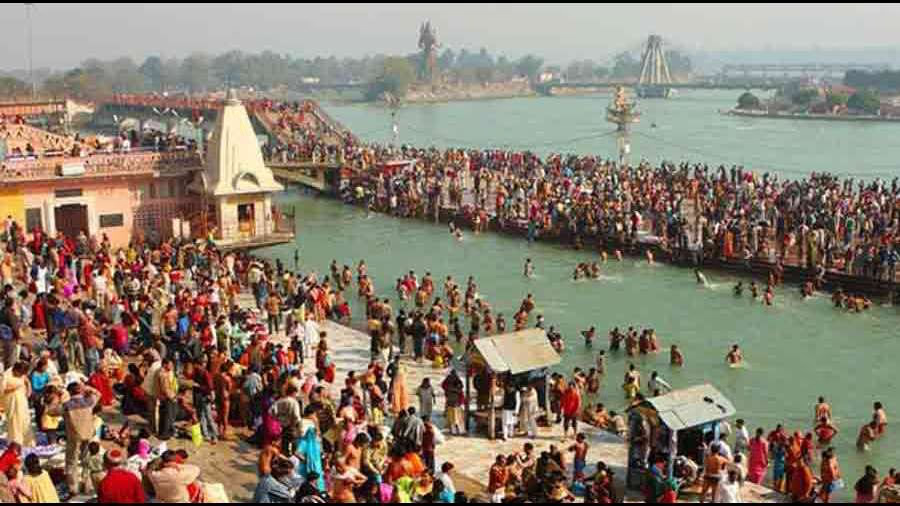
The Sacred Heart of Kolkata
A timeless journey of faith and devotion.
Significance
According to the 2011 census, 76.51% of the population is Hindu, 20.60% Muslim, 0.88% Christian, 0.47% Jain, 0.31% Sikh and 0.11% Buddhist. 1.12% did not state a religion in the census.
Spiritual Significance
According to the 2011 census, 76.51% of the population is Hindu, 20.60% Muslim, 0.88% Christian, 0.47% Jain, 0.31% Sikh and 0.11% Buddhist. 1.12% did not state a religion in the census.
Pilgrimage Traditions
Kolkata is known for its literary, artistic and revolutionary heritage; as the former capital of India, it was the birthplace of modern Indian literary and artistic thought. Kolkata has been called the "City of Furious, Creative Energy" as well as the "cultural [or literary] capital of India".
Sacred Heritage
The discovery and archaeological study of Chandraketugarh, 35 km (22 mi) north of Kolkata, provide evidence that the region in which the city stands has been inhabited for over two millennia.
Frequently Asked Questions
Kolkata is most comfortable in January, February, November and December, when average daytime highs stay at or below 32°C and rainfall is low. The hottest month is April (average high 35°C) and the wettest months are March, April, May, June, July, August, September and October.
The nearest airport is Netaji Subhash Chandra Bose International Airport (CCU), about 12 km away. The nearest railway station is Kankurgachhi Road railway station, about 2 km away. See the How to Reach page for road, rail and air details.
Main attractions include Asutosh Museum of Indian Art, Tiriti Bazaar, Fatima Church, Wellesley Gol Talab, St. James' Church and Osmond Memorial Church.
A stay of 1 day covers the main sights. Ready-made 1-day and 2-day itineraries are linked on this page.
Average highs range from 26°C to 35°C over the year, with about 2053 mm of rain in total.

Your Kolkata Journey Starts Here
Explore top attractions, local culture, and the experiences that make this destination worth visiting.