
Himachal Pradesh ·
Manali
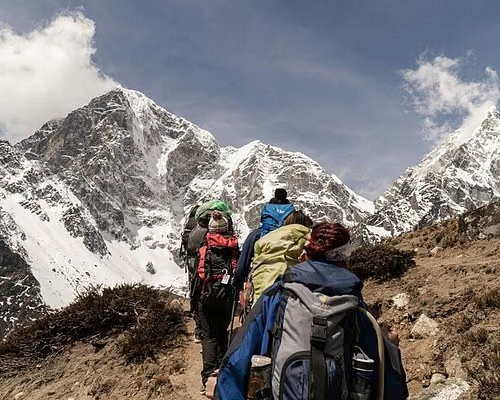
Manali is a city of about 11,000 people (2023) in Central Himachal Pradesh. A staging point for a number of treks (Beas Kund, Chandrakhani Pass) and sports such as white-water rafting, Manali is also on the road to Ladakh via the valley of Lahaul and Spiti and Rohtang Pass, which is the main attraction near Manali.
Manali at a Glance
Why Manali?
The highlights, landmarks and experiences that make this destination worth visiting.
- Solang Valley
- Hidimba Devi Temple
- Manali Sanctuary
- Bhrigu Lake
- Hidimba Temple
- Rohtang Pass
Manali at a Glance
Essential travel information to understand Manali before planning your visit.
Can be combined with
Explore Manali
Places to Visit
- Solang Valley: Solang Valley derives its name from a combination of the words Solang (Nearby village) and Nallah (water stream).
- Hidimba Devi Temple: Hidimba Devi Temple, locally known as Dhungari Temple, also known variously as the Hadimba Temple, is a Hindu Temple, located in Manāli, a hill station in the State of Himāchal Pradesh in north India.
- Manali Sanctuary: The Manali Wildlife Sanctuary is a wildlife sanctuary in Himachal Pradesh in northern India. The sanctuary starts about 2 km from Manali.
- Bhrigu Lake: Bhrigu Lake or Brighu Lake is a lake located at an elevation of around 4,300 metres (14,100 ft) in Kullu district, Himachal Pradesh, India. It is located to the east of Rohtang Pass and is around 6 kilometres (3.7 mi) from Gulaba village.
- Hidimba Temple: It is an ancient cave temple dedicated to Hidimbi Devi, who was a character in the Indian epic, Mahābhārata. The temple is surrounded by a cedar forest at the foot of the Himālayas.
- Rohtang Pass: At an altitude of 3979 m (13,050 ft) above sea level, this is another adventure tourist site where it can be cold even on a summer day.
Things to Do
- Rohtang Pass: At an altitude of 3979 m (13,050 ft) above sea level, this is another adventure tourist site where it can be cold even on a summer day.
- Beas Kund: An igloo-shaped temple, on top has a spring which is the origin of River Beas.
- Fun park: Fun park is worth a visit while in Manali.
- Hidimba Temple: It is an ancient cave temple dedicated to Hidimbi Devi, who was a character in the Indian epic, Mahābhārata. The temple is surrounded by a cedar forest at the foot of the Himālayas.
- Maa Sharvari Temple: This temple is represented as Kuldevi of the kings of Kullu in early times and is worshipped as a manifestation of Durga, and image of the goddess is also enshrined here.
- Monasteries: Manali is known for its shiny gompas or Buddhist monasteries. These are maintained by donations from the local community and by the sale of hand-woven carpets in the temple workshops.
Sightseeing Places
- Solang Valley: Solang Valley derives its name from a combination of the words Solang (Nearby village) and Nallah (water stream).
- Hidimba Devi Temple: Hidimba Devi Temple, locally known as Dhungari Temple, also known variously as the Hadimba Temple, is a Hindu Temple, located in Manāli, a hill station in the State of Himāchal Pradesh in north India.
- Manali Sanctuary: The Manali Wildlife Sanctuary is a wildlife sanctuary in Himachal Pradesh in northern India. The sanctuary starts about 2 km from Manali.
- Bhrigu Lake: Bhrigu Lake or Brighu Lake is a lake located at an elevation of around 4,300 metres (14,100 ft) in Kullu district, Himachal Pradesh, India. It is located to the east of Rohtang Pass and is around 6 kilometres (3.7 mi) from Gulaba village.
- Hidimba Temple: It is an ancient cave temple dedicated to Hidimbi Devi, who was a character in the Indian epic, Mahābhārata. The temple is surrounded by a cedar forest at the foot of the Himālayas.
- Rohtang Pass: At an altitude of 3979 m (13,050 ft) above sea level, this is another adventure tourist site where it can be cold even on a summer day.
Temples
- Hidimba Devi Temple: Hidimba Devi Temple, locally known as Dhungari Temple, also known variously as the Hadimba Temple, is a Hindu Temple, located in Manāli, a hill station in the State of Himāchal Pradesh in north India.
- Hidimba Temple: It is an ancient cave temple dedicated to Hidimbi Devi, who was a character in the Indian epic, Mahābhārata. The temple is surrounded by a cedar forest at the foot of the Himālayas.
- Vashist Hot Water Springs and Temple: Around 3 km from Manali, across the Beas river is Vashist, a small village with natural sulphur springs. Modern bathhouses, with Turkish-style showers, have the hot water piped into them for the convenience of the visitors who come here to benefit from the medicinal properties.
Places That Define Manali
Explore the most iconic landmarks and sacred sites.
Solang Valley
Solang Valley derives its name from a combination of the words Solang (Nearby village) and Nallah (water stream).
Hidimba Devi Temple
Hidimba Devi Temple, locally known as Dhungari Temple, also known variously as the Hadimba Temple, is a Hindu Temple, located in Manāli, a hill station in the State of Himāchal Pradesh in north India.
Manali Sanctuary
The Manali Wildlife Sanctuary is a wildlife sanctuary in Himachal Pradesh in northern India. The sanctuary starts about 2 km from Manali.
Bhrigu Lake
Bhrigu Lake or Brighu Lake is a lake located at an elevation of around 4,300 metres (14,100 ft) in Kullu district, Himachal Pradesh, India. It is located to the east of Rohtang Pass and is around 6 kilometres (3.7 mi) from Gulaba village.
Hidimba Temple
It is an ancient cave temple dedicated to Hidimbi Devi, who was a character in the Indian epic, Mahābhārata. The temple is surrounded by a cedar forest at the foot of the Himālayas.
Rohtang Pass
At an altitude of 3979 m (13,050 ft) above sea level, this is another adventure tourist site where it can be cold even on a summer day.
Naggar
The Castle, Roerich House and Art gallery are places to see. Moonlight dinner on the balcony of Hotel Castle restaurant is worth experiencing, with the lovely sight of twinkling lights below in the Beas valley.
Beas Kund
An igloo-shaped temple, on top has a spring which is the origin of River Beas.
Old Manali
3 km northwest of Manali is Old Manali, famous for its orchards and old guesthouses. There is ruined fort here by the name of Manaligarh.
Vashist Hot Water Springs and Temple
Around 3 km from Manali, across the Beas river is Vashist, a small village with natural sulphur springs. Modern bathhouses, with Turkish-style showers, have the hot water piped into them for the convenience of the visitors who come here to benefit from the medicinal properties.
Jana Falls
15 km from Naggar and 35 km from Manali, at Zana Village, beautiful Water Fall is worth visiting. The valley provides amazing views.
Rahala waterfalls
About 16 km from Manali at the start of the climb to the Rohtang Pass, are the beautiful Rahalla Falls at an altitude of 2,501 m.
Explore Destination on Map
Discover all sub-destinations, routes and detailed navigation information on an interactive map.
Explore Manali on Map
Open the destination map to discover attractions and routes.
Plan Your Trip
Plan Your Way
- When to Visit: Climate-based guidance for choosing your dates.
- Getting Around: How to reach and move around.
- Budget & Practical Tips: Costs and safety notes from local guidebook sources.
All Itineraries
- 1 Day in Manali: 1 days with detailed day plans
- 2 Days in Manali: 2 days with detailed day plans
How to Reach
- By Air: The nearest airport is Kullu Manali Airport (KUU), about 41 km from Manali.
- By Train: The nearest Broad Gauge Rail Head is Chandigarh (310 km).
- By Road: Manali is about from Delhi and there are buses connecting the town with Delhi, Shimla, Dharamsala and Leh.
Best Time to Visit
- Summer: Summer in Manali (Apr, May, Jun) averages 7–20°C with about 189 mm of rain per month.
- Monsoon: Monsoon in Manali (Jul, Aug, Sep) averages 15–24°C with about 163 mm of rain per month.
- Post-monsoon: Post-monsoon in Manali (Oct, Nov) averages 1–17°C with about 147 mm of rain per month.
- Winter: Winter in Manali (Dec, Jan, Feb) averages -3–12°C with about 215 mm of rain per month.
Weather
- Summer: Average highs of 20°C and lows of 7°C.
- Monsoon: Average highs of 24°C and lows of 15°C.
- Post-monsoon: Average highs of 17°C and lows of 1°C.
- Winter: Average highs of 12°C and lows of -3°C.
Travel Tips
- Staying safe: Manali is a safe city but during seasonal time a surge of visitors keep visiting this beautiful place and some transients exploit this opportunity for their own benefits. Best be exercise caution if in a crowd.
- Getting around: There are various ways of getting around in Manali, if you are not already travelling with your own vehicle. Most tourists hire a taxi (various kinds available), which takes you around to all the sightseeing spots in and around Manali (Rohtang, Manikaran, etc.)
- Climate: The climate in Manali is predominantly cold during winters, and moderately cool during summers. The temperatures range from 4 °C (39 °F) to 26 °C (68 °F) over the year.
- Heat: Daytime highs reach about 24°C in July; carry water and plan outdoor sightseeing for the morning.
- Rain: The wettest months are January, February, March, April, May, June, July, August, September and October; check road and site conditions before travelling.
Suggested Itinerary
Choose the perfect duration for your Manali trip.
Spiritual & Religious
Planning Guide
- Overview: Manali is a city of about 11,000 people (2023) in Central Himachal Pradesh. A staging point for a number of treks (Beas Kund, Chandrakhani Pass) and sports such as white-water rafting, Manali is also on the road to Ladakh via the valley of Lahaul and Spiti and Rohtang Pass, which is the main attraction near Manali. Check live status of Rohtang Pass and Atal Tunnel on manali.today.
- Accommodation: As of May 2023 it is still definitely possible to get a comfortable room with a great mountain view for around ₹800. Bargaining is a must if you're a foreigner and coming without an online booking, to avoid pushing the prices further up. Listed options include Apple View Guest House, Drifters' Inn & Cafe and Flamingo Resort.
- Best Way To Explore: There are various ways of getting around in Manali, if you are not already travelling with your own vehicle. Most tourists hire a taxi (various kinds available), which takes you around to all the sightseeing spots in and around Manali (Rohtang, Manikaran, etc.)
The Sacred Heart of Manali
A timeless journey of faith and devotion.
Significance
Manali, at the northern end of the Kullu Valley in Himachal Pradesh, is a hill station at a height of 2,050 m (6,398 ft) in the Himalayas, on the Beas River (Vyaas in Hindi) and near its source. It is a popular tourist spot for Indians in summer and a magical, snow-covered place in winter.
Natural Significance
Manali, at the northern end of the Kullu Valley in Himachal Pradesh, is a hill station at a height of 2,050 m (6,398 ft) in the Himalayas, on the Beas River (Vyaas in Hindi) and near its source. It is a popular tourist spot for Indians in summer and a magical, snow-covered place in winter.
Frequently Asked Questions
Manali is most comfortable in November and December, when average daytime highs stay at or below 32°C and rainfall is low. The hottest month is July (average high 24°C) and the wettest months are January, February, March, April, May, June, July, August, September and October.
The nearest airport is Kullu Manali Airport (KUU), about 41 km away. See the How to Reach page for road, rail and air details.
Main attractions include Solang Valley, Hidimba Devi Temple, Manali Sanctuary, Bhrigu Lake, Hidimba Temple and Rohtang Pass.
A stay of 2 days covers the main sights. Ready-made 1-day and 2-day itineraries are linked on this page.
Average highs range from 10°C to 24°C over the year, with about 2333 mm of rain in total.
Tour Packages for Manali




Your Manali Journey Starts Here
Explore top attractions, local culture, and the experiences that make this destination worth visiting.