
Tamil Nadu · Ramanathapuram
Rameshwaram
Char Dham Pilgrimage Island of Tamil Nadu
At the very tip of the Indian peninsula, where the sapphire waters of the Bay of Bengal and the Indian Ocean converge, lies Rameshwaram—a sacred island town that feels suspended between myth and reality. It is a place where the air is thick with the scent of salt and incense, and where every stone whispers the epic saga of the Ramayana.
Best Time
October to March
Ideal Duration
1 Day
Destination Type
Pilgrimage Town / Coastal Island Town
Region
South India
Location
Ramanathapuram, Tamil Nadu
Languages
Tamil · English
Why Rameshwaram?
A sacred island where pilgrimage, mythology, architecture and coastal landscapes meet.
- 01Seek Blessings at a Jyotirlinga
- 02Walk the 1,000-Pillar Corridor
- 03Bathe in the 22 Theerthams
- 04Witness the Ghost Town of Dhanushkodi
- 05Drive Across the Pamban Bridge
- 06Connect with the Ramayana
- 07Enjoy Serene Beaches
Rameshwaram in Frames
Explore Rameshwaram
Places to Visit
- ✓Ramanathaswamy Temple: A revered Hindu pilgrimage site dedicated to Lord Shiva, famous for its long, ornate corridors and 22 sacred wells (theerthams) where devotees bathe. It is one of the twelve Jyotirlingas in India.
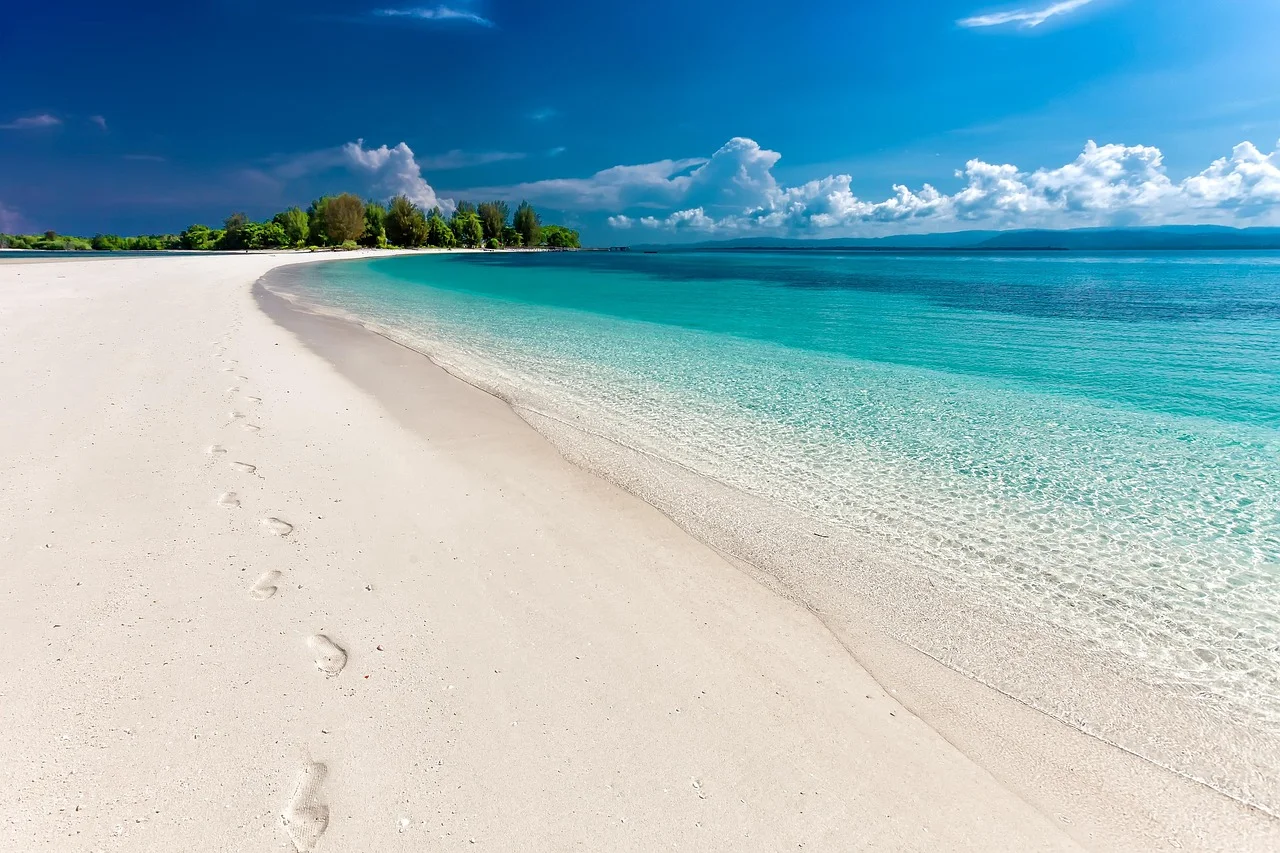
- ✓Dhanushkodi Beach and Ghost Town: A hauntingly beautiful, abandoned town at the southeastern tip of Rameswaram, destroyed by the 1964 cyclone. It offers pristine, unspoiled beaches and views of the confluence of the Bay of Bengal and Indian Ocean.
- ✓Agni Theertham: The sacred sea shore directly east of the Ramanathaswamy Temple, where pilgrims take a holy dip in the Bay of Bengal before entering the temple. It is considered the first of the 22 theerthams.
- ✓Kothandaramaswamy Temple: A small, serene temple situated on the seashore near Dhanushkodi, dedicated to Lord Rama. It is believed to be the spot where Vibhishana surrendered to Rama, and it survived the 1964 cyclone.
- ✓Ariyaman Beach: A calm, shallow beach located about 10 km from Rameswaram town, known for its gentle waves and safe swimming conditions. It is a popular spot for families and seniors, with shaded groves and clean sands.
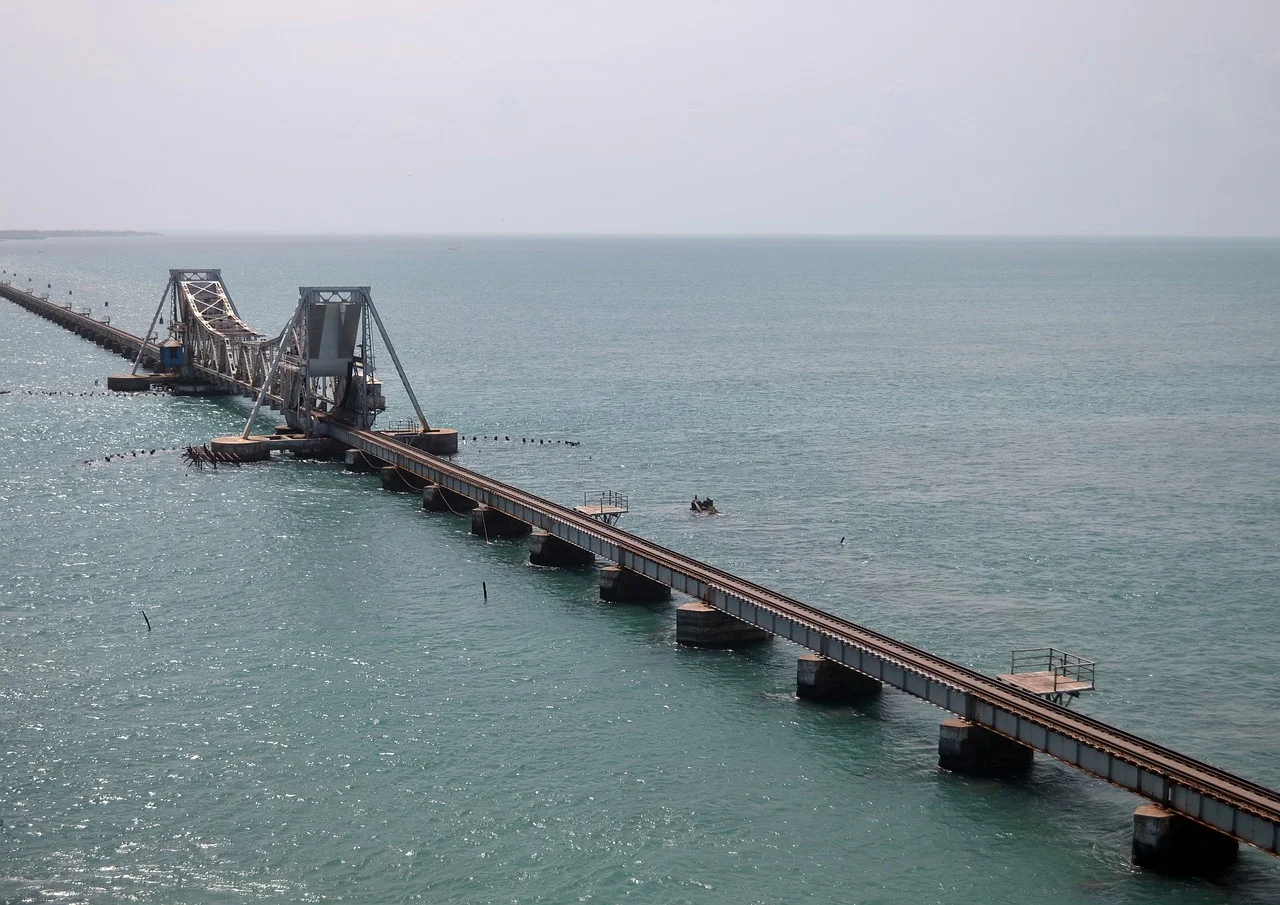
- ✓Pamban Bridge: A historic cantilever railway bridge connecting Rameswaram Island to mainland Tamil Nadu, spanning the Palk Strait. It is India’s first sea bridge and offers stunning views of the ocean and passing trains.
Things to Do
- ✓Darshan at Ramanathaswamy Temple and the 22 Theerthams: Take a peaceful morning darshan of the main Shiva lingam, then walk the inner corridor’s 1,212 carved pillars. After the main worship, bathe or sprinkle water from the 22 sacred wells (theerthams) inside the temple complex, a ritual believed to wash away sins.
- ✓Dhanushkodi Beach and Ghost Town Ruins: Take a shared jeep or private taxi along the 18 km road to the southern tip of India, where the 1964 cyclone destroyed the old town. See the skeletal remains of the railway station, church, and post office, and walk on the pristine, windswept beach where the Bay of Bengal meets the Indian Ocean.
- ✓Pamban Bridge Viewpoint and Train Watching: Stand on the shore near the old Pamban Bridge (a cantilever bridge that opens for ships) and watch trains cross the sea. You can also walk onto the newer road bridge’s pedestrian path for a closer view of the fishing boats and the Palk Strait.
- ✓Sea World Aquarium and Marine Museum: Visit this small but interesting aquarium run by the Tamil Nadu fisheries department, displaying local fish, corals, and a preserved whale skeleton. It’s a quick, educational stop to understand the marine life of the Gulf of Mannar, and a good break from temple crowds.
- ✓Agni Teertham Beach and Sunset Puja: Walk to the calm, shallow Agni Teertham beach, directly east of the temple’s main gopuram. In the evening, join the local priests performing the aarti (fire ritual) on the shore, a serene and spiritual experience with the Bay of Bengal ahead.
- ✓Gandamadana Parvatham Hilltop: Climb the small hill (about 100 steps) to a temple platform that marks the spot where Lord Rama’s footprint is said to be impressed. From the top, you get a sweeping 360-degree view of Rameswaram town, the temple gopurams, and the sea on both sides.
Sightseeing Places
- ✓Ramanathaswamy Temple: A revered Hindu pilgrimage site dedicated to Lord Shiva, famous for its long, ornate corridors and 22 sacred wells (theerthams) where devotees bathe. It is one of the twelve Jyotirlingas in India.
- ✓Dhanushkodi Beach and Ghost Town: A hauntingly beautiful, abandoned town at the southeastern tip of Rameswaram, destroyed by the 1964 cyclone. It offers pristine, unspoiled beaches and views of the confluence of the Bay of Bengal and Indian Ocean.
- ✓Agni Theertham: The sacred sea shore directly east of the Ramanathaswamy Temple, where pilgrims take a holy dip in the Bay of Bengal before entering the temple. It is considered the first of the 22 theerthams.
- ✓Kothandaramaswamy Temple: A small, serene temple situated on the seashore near Dhanushkodi, dedicated to Lord Rama. It is believed to be the spot where Vibhishana surrendered to Rama, and it survived the 1964 cyclone.
- ✓Ariyaman Beach: A calm, shallow beach located about 10 km from Rameswaram town, known for its gentle waves and safe swimming conditions. It is a popular spot for families and seniors, with shaded groves and clean sands.
- ✓Pamban Bridge: A historic cantilever railway bridge connecting Rameswaram Island to mainland Tamil Nadu, spanning the Palk Strait. It is India’s first sea bridge and offers stunning views of the ocean and passing trains.
Temples
- ✓Ramanathaswamy Temple: A revered Hindu pilgrimage site dedicated to Lord Shiva, famous for its long, ornate corridors and 22 sacred wells (theerthams) where devotees bathe. It is one of the twelve Jyotirlingas in India.
- ✓Kothandaramaswamy Temple: A small, serene temple situated on the seashore near Dhanushkodi, dedicated to Lord Rama. It is believed to be the spot where Vibhishana surrendered to Rama, and it survived the 1964 cyclone.
An Island of Faith & Sea
Rameshwaram is one of the holiest places in India, revered as one of the twelve Jyotirlingas and one of the four sacred Char Dham pilgrimage sites. The Ramanathaswamy Temple is the spiritual heart of the town, where Lord Rama is believed to have worshipped Lord Shiva to atone for the sin of killing Ravana. A pilgrimage here is believed to grant liberation (moksha) and absolve devotees of their sins.
Rameshwaram is deeply connected to the Ramayana. It is believed that Lord Rama, along with his wife Sita and brother Lakshmana, built a bridge (Rama Setu) from here to Lanka to rescue Sita. After the war, Rama wanted to atone for the sin of killing Ravana, a Brahmin. He installed a Shiva Lingam here and worshipped it, which is now the Ramanathaswamy Temple. The town is named after Rama, and the temple's corridors are adorned with murals depicting scenes from the Ramayana.
Pamban Island
Connected by the iconic Pamban Bridge
Gulf of Mannar
Rich marine biodiversity & coral reefs
Palk Strait
Narrow sea channel between India & Sri Lanka
~40 km
From Mannar Island (Sri Lanka)
Places That Define Rameshwaram
Explore the most iconic landmarks and sacred sites.
Explore Destination on Map
Explore Rameshwaram on Map
Discover all sub-destinations, routes, and detailed navigation information on an interactive map
Plan Your Trip
Plan Your Way
- ✓Build a custom itinerary around whether you are a devout pilgrim seeking temple rituals or a traveler exploring beaches and heritage sites, factoring in weather, transportation, and Ramanathaswamy Temple darshan timings so every day of the trip is planned around what matters most to you.
- ✓Map an efficient travel route covering the temple complex, Agni Theertham, Dhanushkodi, Pamban Bridge, Ariyaman Beach, and the Abdul Kalam Memorial, sequencing stops so you avoid backtracking across the island and make the most of jeep and auto availability.
- ✓Organize a day-wise schedule that balances early-morning temple rituals with sightseeing later in the day, since the temple closes between 1 PM and 3 PM and Dhanushkodi jeeps run only from 6 AM to 5 PM, making sequencing essential to a smooth trip.
- ✓Plan your budget across accommodation ranging from ₹100-500 dharamshalas to ₹5,000-10,000+ luxury resorts, local transport such as ₹100-150 shared jeeps to Dhanushkodi, and food, so a typical 2-day trip can be costed out in advance.
- ✓Decide how many days to allocate: a rushed 1-day visit covers the temple and 22 theerthams, while the popular 2-day trip adds Dhanushkodi, the Abdul Kalam Memorial, and Pamban Bridge, and a 3-day trip allows time for Gandhamadhana Parvatham and Ariyaman Beach as well.
- ✓Sequence your route to minimize travel time by clustering the temple, Agni Theertham, and local markets on one day and the Dhanushkodi jeep excursion with the Pamban Bridge crossing on another, so sightseeing time isn't wasted on repeat journeys.
All Itineraries
- ✓2 Days in Rameswaram - 2 days with detailed day plans
- ✓3 Days in Rameswaram - 3 days with detailed day plans
- ✓4 Days in Rameswaram - 4 days with detailed day plans
- ✓5 Days in Rameswaram - 5 days with detailed day plans
How to Reach
- ✓By Train: Rameswaram Railway Station (RMM) is the terminus for direct trains from Chennai Egmore (Sethu Express, 12-14 hours), Madurai (3-4 hours), Trichy (5-6 hours), and weekly services from Bangalore and Coimbatore, with the journey crossing the scenic Pamban Bridge, so book via IRCTC well in advance during peak season.
- ✓By Road: Rameshwaram is well connected via NH49, with TNSTC buses running from Madurai every 15 minutes (4 hours, ₹250-350), and overnight services from Chennai (12-14 hours) and Bangalore (14-16 hours), with the road journey culminating in a crossing of the iconic Pamban Bridge from mainland Tamil Nadu.
- ✓By Air: Madurai International Airport (IXM) is the nearest airport, approximately 170 km away via NH-87, with daily flights from Chennai, Bangalore, Mumbai, and Delhi; from there, a prepaid taxi (₹3,500-4,500) or state bus covers the remaining 4-5 hours to Rameshwaram.
- ✓From Chennai: Direct trains like the Sethu Express are available, with the journey taking about 10-14 hours; alternatively, overnight private and TNSTC buses run the 570 km route, or you can fly to Madurai and continue by road.
- ✓From Madurai: The most convenient gateway city at 170 km away, reachable in about 3-4 hours by taxi, bus (every 15 minutes), or frequent train services, making it the recommended base for combining a Madurai temple visit with your Rameshwaram trip.
- ✓From Bangalore: Approximately 500-680 km away, accessible via multiple routes through Madurai or Trichy, with weekly direct trains (14-16 hours), daily overnight luxury buses, or a flight to Madurai followed by a 3-4 hour road transfer.
Best Time to Visit
- ✓October to March: The best overall season, with temperatures between 22-30°C, low humidity, and clear skies that make temple visits, the 22 theerthams ritual, and outdoor sightseeing comfortable, though this peak window also brings larger crowds and higher accommodation prices.
- ✓January: One of the highest-rated months, with cool and dry conditions around 22-28°C, calm seas ideal for beach activities, and peak-season crowds, so it's best to visit the Ramanathaswamy Temple early morning to avoid long darshan queues.
- ✓February: Dry and comfortable with temperatures of 23-30°C and minimal rainfall, making it ideal for outdoor exploration of Dhanushkodi and Pamban Bridge; Maha Shivaratri sometimes falls in this month and can draw very large crowds.
- ✓December: Pleasant, dry, and cool at 22-29°C with a festive atmosphere around Karthigai Deepam, though it is peak season, so accommodation should be booked well in advance and light woolens carried for cooler evenings.
- ✓March: A transition month with temperatures rising to 25-32°C and humidity increasing, still offering a good balance of pleasant weather and tapering crowds, though afternoons can turn hot, so plan temple visits for the morning.
- ✓Avoid April-June: Peak summer brings scorching heat up to 35-38°C with high humidity, making outdoor sightseeing difficult; if you must travel then, schedule activities for early morning (5-8 AM) or evening and stay hydrated throughout the day.
Travel Tips
- ✓Dress with Respect: As it is a highly revered pilgrimage site, dress modestly when visiting the temple. Men typically wear dhotis or trousers, and women are advised to wear sarees or salwar kameez, covering their shoulders and legs.
- ✓Plan Your Dhanushkodi Trip: The final stretch of road to Dhanushkodi is through sand and shallow water and is only accessible by local jeeps. Arrange a shared or private jeep from the town, and start early in the morning to avoid the harsh midday sun and crowds.
- ✓Check the Temple Timings: The Ramanathaswamy Temple has specific opening hours for different poojas (rituals). The temple opens very early (around 5 AM) for the Spadigam (crystal lingam) pooja, which is a spectacular sight not to be missed. Plan your visit accordingly.
- ✓Best Time to Visit: The ideal time to visit is between October and April, when the weather is pleasant and cool. Avoid the summer months (April-June) when temperatures can be scorching, and be mindful of the monsoon season (October-December) which can bring heavy rains.
Local Transport
- ✓Auto Rickshaws: The most convenient way to cover short distances within town, with fares unmetered and negotiable — expect ₹20-30 from the temple to Agni Theertham, and around ₹300-500 for a 2-3 hour local sightseeing tour; ask your hotel to arrange a reliable driver.
- ✓Taxi Services: Available for private hire and full-day sightseeing at ₹2,000-3,000 for 8-10 hours including driver and fuel, with air-conditioned options and outstation trips to Madurai (₹3,000-4,000) or Trichy (₹4,000-5,000), best suited for families and elderly travelers.
- ✓Jeeps for Dhanushkodi: Special 4x4 jeeps are required for the final 8 km stretch, which passes through sand and shallow water impassable by regular cars, departing from a designated stand near the Rameshwaram bus stand between 6 AM and 5 PM.
- ✓Shared Jeeps: The most cost-effective option for the Dhanushkodi trip at ₹100-150 per person, though you may wait 30-60 minutes for the 6-8 seat jeep to fill up; private jeeps cost ₹1,500-2,000 for a round trip with flexible stops for photography.
- ✓Bicycle and Scooter Rentals: An eco-friendly and flexible way to explore the town, with bicycles from ₹50-100 per day and scooters ₹300-400 per day, requiring a valid driving license and ID; helmets are mandatory and provided, ideal for reaching Ariyaman Beach (8 km away).
- ✓Walking: Most attractions in Rameshwaram town are comfortably walkable, with the temple to Agni Theertham just 500 meters and most hotels within 1 km of the temple, making early morning beach walks and market strolls a pleasant, low-cost way to get around.
Suggested Itinerary
Choose the perfect duration for your Rameshwaram pilgrimage.
1 Day
Quick pilgrimage visit
2 Days
Essential pilgrimage experience
3 Days
Complete spiritual journey
4 Days
In-depth exploration
5 Days
Extended pilgrimage tour
Madurai Trip
3-day from Madurai
Dhanushkodi
3-day trip to Dhanushkodi
Spiritual & Religious
Jyotirlinga
- ✓Rameshwaram is the southernmost of the twelve Jyotirlingas of India — alongside Somnath, Mahakaleshwar, Kedarnath, Vishwanath, and others — considered the most sacred abodes where Lord Shiva is worshipped as a column of divine light (Jyoti).
- ✓The Ramanathaswamy Temple houses the revered Jyotirlinga, worshipped here as "Ramanathaswamy" or Lord of Rama, making it uniquely tied to both Shaivism and Vaishnavism among the twelve Jyotirlinga shrines.
- ✓According to legend, after defeating Ravana, Rama sent Hanuman to fetch a lingam from Kailash, but when Hanuman was delayed, Sita fashioned a lingam from sand which Rama worshipped; both the sand lingam and the one Hanuman later brought are enshrined in the sanctum today.
- ✓Devotees believe a pilgrimage here, especially when combined with the Kashi Yatra, absolves sins and grants liberation (moksha), with the temple regarded as having the power to cleanse impurities through darshan and ritual bathing.
- ✓The temple's third corridor, built over centuries by the Pandya, Jaffna, and Vijayanagara rulers, stretches roughly 1,200 metres and is lined with over 1,200 intricately carved granite pillars, widely regarded as the longest temple corridor in the world.
- ✓The 22 sacred theerthams (wells) inside the temple complex, each linked to a different legend or deity, are bathed in sequence by pilgrims who believe every well washes away a distinct category of sin before darshan.
Char Dham
- ✓One of the four sacred Char Dham pilgrimage sites established by Adi Shankaracharya, alongside Badrinath in the north, Dwarka in the west, and Puri in the east, together marking the four cardinal points of the Indian subcontinent.
- ✓As the southernmost Char Dham, Rameshwaram is traditionally the culmination point of the pilgrimage circuit, which scripture prescribes as a clockwise journey from Badrinath through Dwarka and Puri before ending here.
- ✓Completing all four Char Dhams is believed to wash away sins and lead to moksha (liberation from the cycle of birth and death); a full circuit typically takes 15-20 days including 3-4 days allocated for Rameshwaram alone.
- ✓Rameshwaram's place in the circuit is tied directly to the Ramayana — after his victory over Ravana in Lanka, Rama came here to atone, linking the site permanently to the epic's theme of the triumph of good over evil.
- ✓The pilgrimage is regarded as the ultimate spiritual journey every devout Hindu should undertake at least once in their lifetime, symbolizing the soul's inner progression toward the divine across the four directions of the land.
- ✓Each Char Dham honors a different form of the divine: Badrinath, Dwarka, and Puri are dedicated to Vishnu as Badrinarayan, Dwarkadhish, and Jagannath respectively, while Rameshwaram alone is dedicated to Lord Shiva as Ramanathaswamy.
Pilgrimage
- ✓Perform the theertham snanam by bathing or sprinkling water from the 22 sacred wells inside the temple complex, traditionally taken in numerical order starting near the eastern tower, a ritual that typically takes 1-2 hours and is best done on an empty stomach in the morning.
- ✓Each of the 22 theerthams represents a different holy river or legend and is believed to wash away a specific type of sin, symbolically purifying the pilgrim's senses, mind, and intellect; a temple guide can be hired for around ₹100-500 to assist with the sequence.
- ✓Take a holy dip at Agni Theertham, the sea-facing bathing ghat right in front of the temple, before entering for darshan — it is considered the first and most essential theertham, believed to be as meritorious as bathing in the Ganges.
- ✓Participate in the evening Sayarakshai aarti around 6-7 PM and the Ardhajamam ceremony around 8:30 PM at the temple's main sanctum, when the lingam is adorned in special attire and offered fire worship for a deeply soulful close to the day.
- ✓Perform or witness the abhishekam (ritual bathing) of the Shiva Lingam, offered with milk, honey, curd, sandalwood paste, and rose water during the morning Kalasanthi puja, with a paid Rudrabhishekam option available for around ₹200 per person.
- ✓Walk barefoot through the temple's long corridors in pradakshina (circumambulation) as a mark of devotion, taking in the 1,200-plus carved pillars along the way — comfortable, easy-to-remove footwear is recommended since shoes aren't allowed inside.
Religious Significance
- ✓Rameshwaram is deeply woven into the Ramayana, revered as the place where Lord Rama, Sita, and Lakshmana paused on their return from Lanka, making it one of the most sacred tirthas (pilgrimage sites) associated with the epic anywhere in India.
- ✓According to tradition, Lord Rama built a bridge, Ram Setu, from the vicinity of Rameshwaram across the sea to Lanka to rescue Sita from Ravana, with the legendary crossing said to have begun near present-day Dhanushkodi.
- ✓After defeating Ravana, Rama worshipped Lord Shiva here to atone for the sin of Brahmahatya, since Ravana, despite being a demon king, was born a Brahmin, and this act of penance is what established the Ramanathaswamy Temple.
- ✓The town's very name, "Rameshwaram," translates to "Lord of Rama," commemorating the moment Rama installed and worshipped the Shiva lingam here, a story that uniquely binds Vaishnavism and Shaivism at a single sacred site.
- ✓The temple's famous corridors and pillars, built over centuries by the Chola, Pandya, and Sethupathi dynasties, are carved with sculptures of deities and scenes drawn from the Ramayana, turning a walk through them into a visual retelling of the epic.
- ✓The legendary Ram Setu, also known as Adam's Bridge, is visible as a chain of limestone shoals stretching roughly 40 km toward Sri Lanka's Mannar Island, and pilgrims often offer prayers here believing it to be the remains of Rama's bridge.
Temple Guide
- ✓The Ramanathaswamy Temple's third corridor, the Chitirai Mandapam, stretches roughly 197 metres by 133 metres and is widely regarded as the longest temple corridor in the world, spanning a temple complex that covers about 15 acres in total.
- ✓The corridor is lined with 1,212 intricately carved granite pillars depicting various deities and mythological scenes, elevated on a raised platform that creates a majestic walkway built up over centuries by the Pandya, Jaffna, and Vijayanagara rulers.
- ✓Temple timings run 5 AM to 1 PM and 3 PM to 9 PM, structured around a sequence of daily poojas including Kalasanthi at 6 AM, Uchikala at 10:30 AM, Sayaraksha at 6 PM, and Ardhajamam at 8:30 PM, with darshan of the main lingam taking 30-45 minutes during peak hours.
- ✓Special darshan tickets, priced around ₹50-100 and purchasable at the temple office or the HR&CE website, allow entry through a separate queue that cuts waiting time down to just 10-15 minutes during busy periods.
- ✓The 22 holy theerthams inside the temple, each linked to a distinct legend such as Santhana Theertham (blessed with children) or Kubera Theertham (prosperity), are bathed in sequentially by pilgrims, a ritual that typically takes 1-2 hours to complete.
- ✓Dress code requires modest, traditional attire: men in dhoti or trousers with an upper cloth, women in sarees or salwar kameez covering shoulders and legs; western wear like shorts and sleeveless tops is not permitted, and footwear must be removed before entry.
Festivals
- ✓Ram Navami, celebrated in March-April, honors the birth of Lord Rama with special pujas and abhishekams for the idols of Rama, Sita, Lakshmana, and Hanuman, a Ramayana recitation, and a procession of Rama and Sita on a decorated palanquin around the temple.
- ✓Annual temple festivals such as Karthigai Deepam feature the temple illuminated with thousands of oil lamps, a huge brass lamp lit atop the 50-foot Kodi Maram flagstaff, elaborate decorations, cultural music, and religious discourses drawing large evening crowds.
- ✓Maha Shivaratri, the most significant festival at the temple, is observed with a night-long vigil, fasting, and special abhishekams using milk, honey, ghee, and curd on the Shiva Lingam, drawing crowds exceeding 100,000 with darshan waits of up to 6-8 hours.
- ✓The temple follows a rich festival calendar rooted in the Tamil almanac, including Thai Amavasai and Aadi Amavasai for ancestor worship, Navaratri's nine nights of goddess worship, and Pongal celebrations, each with its own rituals and crowd patterns.
- ✓The annual Brahmotsavam, typically held in February-March, is a 10-day festival that begins with flag-hoisting (Dwajarohanam) and culminates in the grand Temple Car Festival, where thousands of devotees pull the deities through the streets on a massive decorated wooden chariot.
- ✓Devotees from across India converge during major festivals like Maha Shivaratri and Thai Amavasai, when the temple deploys extra staff and volunteers, sets up special queue complexes, and distributes free prasadam, creating a vibrant, densely packed spiritual atmosphere.
Learn More
History
- ✓Rameshwaram's ancient history is rooted in the Ramayana, mentioned in various Puranas and epics, and the site has drawn pilgrims since ancient times, with the temple later expanded significantly by the Chola dynasty between the 9th and 13th centuries.
- ✓According to the Ramayana, Lord Rama, Sita, and Lakshmana built a bridge (Rama Setu) from Dhanushkodi to Lanka to rescue Sita from Ravana, and after the war Rama worshipped Lord Shiva here to atone for the sin of killing a Brahmin, since Ravana was born one.
- ✓The Ramanathaswamy Temple's grand corridors and gopurams were substantially built up by the Sethupathi kings of Ramnad during the 17th and 18th centuries, whose additions transformed it into the vast structure seen today, with its longest corridor exceeding 1,200 feet.
- ✓Rameswaram, sitting on Pamban Island about 40 km from Sri Lanka's Mannar Island across the Gulf of Mannar, has been administered by a municipal body since 1994, covers 53 km², and recorded a population of 44,856 in the 2011 Census.
- ✓The devastating cyclone of December 22, 1964, with winds exceeding 200 km/h, destroyed the once-prosperous railway town of Dhanushkodi and killed an estimated 1,800 people, leaving it abandoned as a haunting ghost town that tourists visit today.
- ✓Rameshwaram is the birthplace of Dr. A.P.J. Abdul Kalam, India's 11th President and celebrated aerospace scientist, and a memorial dedicated to him now stands in the town, drawing visitors alongside the temple and Dhanushkodi ruins.
Distance from Major Cities
- ✓Chennai: Approximately 570 km away, roughly 10 hours by road, with excellent connectivity via train (including the popular Sethu Express) and overnight buses, making it a common weekend-trip origin from the metro city.
- ✓Madurai: Just 170 km away and roughly 3 hours by road, Madurai is the nearest major city and the most convenient gateway, with its airport, frequent trains, and buses every 15 minutes making it the recommended base for onward travel.
- ✓Trichy: Approximately 230 km away, about 5 hours by road, Trichy is a historic city with good rail and road connectivity, serving as another useful transport hub for travelers coming from central Tamil Nadu.
- ✓Coimbatore: About 320 km away, a 6-7 hour road journey, this major industrial city offers multiple transportation options including trains routed via Madurai for pilgrims from western Tamil Nadu.
- ✓Kanyakumari: Around 300 km away, roughly 6 hours by road, forming a popular southern-tip circuit that many travelers combine with Rameshwaram to cover both sacred and scenic ends of the Indian peninsula.
- ✓Bangalore: About 580 km away, taking 10-12 hours by road, with the IT hub connected via overnight trains and buses, or by flying into Madurai first and continuing the final stretch by taxi.
Weather
- ✓Rameshwaram has a tropical maritime climate moderated by its location in the Gulf of Mannar, with average temperatures staying in the 25-30°C range year-round and rarely dropping below 23°C or exceeding 35°C even in peak summer.
- ✓The heaviest rainfall arrives during the northeast monsoon between October and December, with November alone averaging around 615 mm of rain and high humidity, making it the wettest and roughest-seas month of the year.
- ✓July is the driest month, with essentially no recorded rainfall, though the southwest monsoon still brings strong winds of 30-35 km/h that keep the sea rough and less suited to beach swimming despite the clear skies.
- ✓Being surrounded by the sea on Pamban Island, humidity stays high year-round at roughly 70-85%, and even the pleasant winter months feel noticeably muggy compared to inland Tamil Nadu destinations.
- ✓The northeast monsoon can disrupt travel plans significantly between October and December, sometimes flooding roads and making the Dhanushkodi jeep route impassable, so it's wise to check forecasts before finalizing outdoor plans in this window.
- ✓The best weather conditions fall between January and March, when the sea is calm, humidity dips slightly, temperatures hover around 22-32°C, and skies stay clear — ideal for temple visits, beach activities, and photography alike.
Weather by Month
- ✓January: Temperature 25°C - 26°C, Rainfall 52mm
- ✓February: Temperature 25°C - 27°C, Rainfall 29mm
- ✓March: Temperature 27°C - 29°C, Rainfall 22mm
- ✓April: Temperature 29°C - 30°C, Rainfall 29mm
- ✓May: Temperature 29°C - 30°C, Rainfall 98mm
- ✓June: Temperature 28°C - 30°C, Rainfall 7mm
The Sacred Heart of Rameshwaram
A timeless journey of faith and devotion.
Rameshwaram Temple
Jyotirlinga and spiritual heart of the island.
22 Sacred Theerthams
Holy wells believed to cleanse the soul.
Jyotirlinga Significance
The Ramanathaswamy Temple is one of the twelve Jyotirlingas, which are considered the most sacred abodes of Lord Shiva. According to legend, Lord Rama installed the lingam here to worship Shiva, making it a unique Jyotirlinga with a direct link to Lord Rama. Devotees believe that a pilgrimage to this Jyotirlinga absolves them of sins and grants liberation.
Char Dham Circuit
Rameshwaram is one of the four sacred Char Dham pilgrimage sites, alongside Badrinath, Dwarka, and Puri. It is believed that a visit to these four sites ensures salvation (moksha). Rameshwaram is the southernmost Char Dham, and it is often the culmination of the pilgrimage, as it is associated with the Ramayana and the victory of good over evil.
Ramayana Connection
Rameshwaram is deeply connected to the Ramayana. It is believed that Lord Rama, along with his wife Sita and brother Lakshmana, built a bridge (Rama Setu) from here to Lanka to rescue Sita. After the war, Rama wanted to atone for the sin of killing Ravana, a Brahmin. He installed a Shiva Lingam here and worshipped it, which is now the Ramanathaswamy Temple. The town is named after Rama, and the temple's corridors are adorned with murals depicting scenes from the Ramayana.
Pilgrimage Traditions
The tradition of installing two lingams - one by Rama and one by Sita
Weather Overview
Best Overall Period: October - March
Route Explorer
Frequently Asked Questions
Yes, men are expected to remove their shirts and wear a dhoti or lungi (available for rent near the temple), while women should wear traditional, modest attire like sarees or salwar kameez. Footwear must be removed before entering, and you can leave shoes at the paid cloakroom.
Yes, but the temple has many steps and long corridors, so it is advisable to hire a wheelchair or a local helper (available at the temple entrance) for a small fee. Most roads and hotels are flat and walkable, but Dhanushkodi requires a jeep ride, which can be bumpy—so consult your doctor if you have back or heart issues.
A 2-day stay is ideal for a relaxed visit. On day one, explore the Ramanathaswamy Temple, Agnitheertham beach, and the 22 holy wells; on day two, take a short drive to Dhanushkodi (the abandoned town) and the floating stone bridge at Ram Setu viewpoint.
The best time is between October and March, when the weather is pleasant with temperatures ranging from 20°C to 30°C. Avoid April to June, as it is extremely hot and humid, making long temple queues and walking tours tiring for senior travellers.
Rameswaram is famous for its pure vegetarian Tamil meals, especially the traditional banana-leaf thali served at local eateries near the temple. Also try the fresh seafood at small restaurants near the beach, but stick to well-cooked dishes and filtered water to avoid stomach upsets. Many hotels offer simple, home-style South Indian breakfasts like idli and dosa.
Explore More of Rameshwaram
Spiritual & Temple Guides
Places to Explore
Your Rameshwaram Journey Starts Here
Explore sacred temples, island landscapes, Dhanushkodi and the stories that define this extraordinary destination.