
Pilgrimage
Vaishno Devi
Nestled in the Trikuta Hills of Jammu and Kashmir, the Vaishno Devi cave shrine is one of India's most revered Shakti temples, drawing millions of pilgrims each year. The journey begins in Katra and unfolds along a 12-13 km paved trek through scenic hills, culminating in the sacred cave where the goddess manifests as three natural rock formations. It is a pilgrimage of faith, endurance, and devotion, offering a deeply spiritual experience amidst the Himalayan foothills.
The Story of Vaishno Devi
Vaishno Devi holds a unique place in Hindu spirituality as a Shakti Peetha, where the goddess is worshipped not as an idol but as three natural pindies representing the divine energies of creation, preservation, and destruction. The Trikuta Hills themselves are sacred, with the name 'Trikuta' meaning 'three peaks' or 'three summits', symbolizing the three forms of the goddess. Legend tells of the goddess meditating in the cave at Ardhkuwari for nine months before moving to the main cave, and of her creating the Banganga stream by shooting an arrow into the earth to quench her thirst. The nearby Bhairavnath Temple, located about 2.5 km beyond the main shrine, is integral to the pilgrimage; tradition holds that the yatra is incomplete without paying homage there, commemorating the goddess's victory over the demon Bhairavnath, who pursued her and was slain, later seeking forgiveness and becoming her guardian.
bestTime
bestTime
Ideal Duration
idealDuration
Nearest Airport
Jammu Airport (~48 km from Katra)
Nearest Railway Station
Shri Mata Vaishno Devi Katra Railway Station (Katra town itself)
Traveler Suitability
The 12-13km trek from Katra gains steady altitude on a well-paved path with rest points; pony, palki, e-rickshaw (partway) and helicopter options make it accessible to most fitness levels, though it remains a genuine trek.
Open year-round; base town Katra has a subtropical climate, while the shrine (1,584m) is noticeably cooler, especially at night and in winter (Dec-Feb).
Why Visit
Spiritual Significance
Experience the divine presence of the goddess in her three forms at the sacred cave shrine.
Scenic Trek
Enjoy a well-paved trek through the picturesque Trikuta Hills, with stunning views and fresh mountain air.
Cultural Immersion
Witness the vibrant tradition of langars and the collective devotion of thousands of pilgrims.
Legendary Sites
Visit Ardhkuwari, Banganga, and Bhairavnath Temple, each with its own mythological story.
Accessibility
Open year-round, with multiple options for transportation, including ponies, palkis, battery vehicles, and helicopter service.
Well-Supported Journey
The trek is equipped with rest shelters, medical facilities, and food stalls, making it suitable for all ages.
Weather & Best Time to Visit
Overview
Vaishno Devi, also known as Mata Rani, is a manifestation of the Divine Mother Shakti, enshrined in a natural cave at an altitude of 1,584 meters (5,200 feet) in the Trikuta Hills. The shrine, managed by the Shri Mata Vaishno Devi Shrine Board, is accessible via a well-paved 12-13 km trek from the base town of Katra, with options for ponies, palkis, battery-operated vehicles to Ardhkuwari, and helicopter service to Sanjichhat. The cave houses three natural rock formations (pindies) worshipped as the goddess in her forms of Maha Kali, Maha Lakshmi, and Maha Saraswati. Unlike many Himalayan shrines, Vaishno Devi remains open throughout the year, welcoming nearly 8-9 million pilgrims annually, making it one of the most visited pilgrimage sites in the world.
Highlights
- The main cave shrine with three sacred pindies
- The 12-13 km paved trek from Katra through scenic hills
- Ardhkuwari cave, where the goddess meditated for nine months
- Bhairavnath Temple, essential for completing the yatra
- Banganga stream, created by the goddess's arrow
- Charan Paduka, marking the goddess's footprints
Places That Define Vaishno Devi
Discover the iconic attractions that make this destination unforgettable
Vaishno Devi Bhawan (Main Shrine)
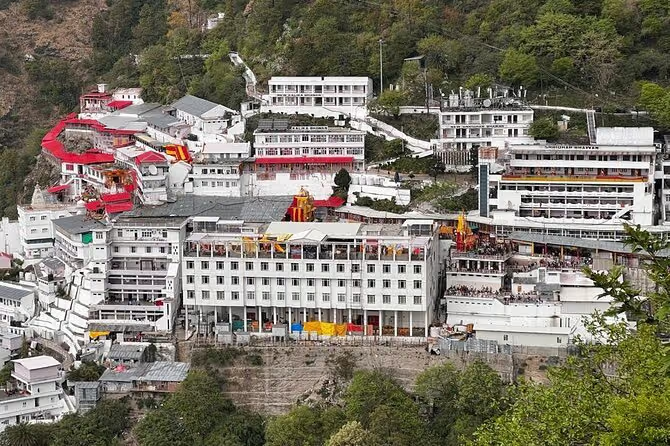
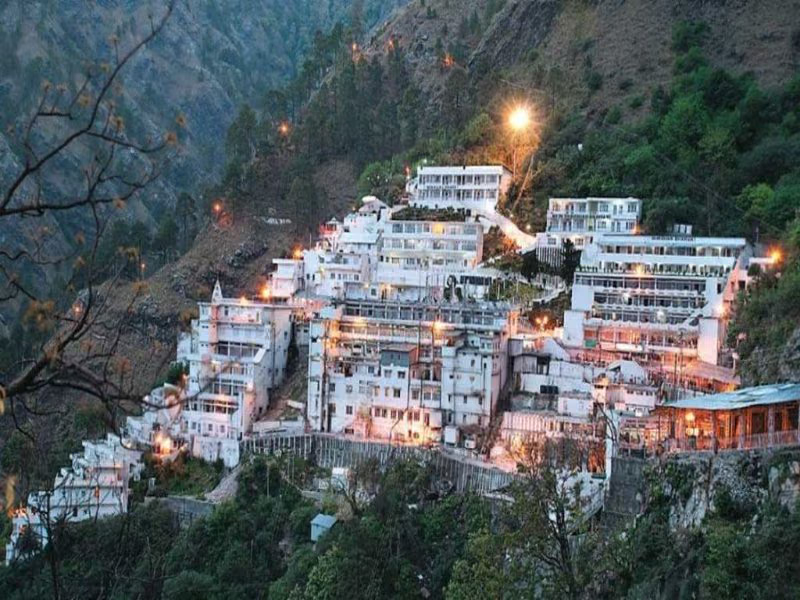
The main cave shrine at about 1,584m in the Trikuta Hills, housing three natural rock formations (pindies) representing Maha Kali, Maha Lakshmi, and Maha Saraswati. Pilgrims trek approximately 12-13km from Katra to seek darshan of the goddess, with the cave open throughout the year.
Ardhkuwari Cave
A smaller cave shrine about halfway along the trek (around 6km from Katra), where legend says the goddess meditated for nine months. Devotees traditionally pause here for prayers before continuing to the main Bhawan.
Bhairavnath Temple
Situated about 2.5km beyond the main shrine, this temple is dedicated to Bhairavnath, whose pursuit of the goddess is central to the pilgrimage legend. The yatra is considered incomplete without visiting this temple, reached by a further short trek or pony ride.
Banganga
Near the start of the trek from Katra, this sacred stream is believed to have been created when the goddess shot an arrow into a rock to quench her thirst. Pilgrims often bathe or sprinkle the water on themselves before beginning the climb.
Charan Paduka
A spot on the trekking route where footprints of the goddess are said to be imprinted in stone, left as she looked back at Bhairavnath during her flight. It is one of the earliest significant landmarks after starting the yatra from Katra.
Katra Town
The base town for the Vaishno Devi pilgrimage, located in Reasi district about 48km from Jammu. It offers accommodation, restaurants, and the starting point of the 12-13km paved trek, with a railway station connecting to major Indian cities.
Religious & Cultural Overview
Significance
Vaishno Devi is a major Shakti Peetha, where the goddess is worshipped in her form as the Divine Mother, representing cosmic energy and protection.
Shakti Peetha Significance
The shrine is considered one of the 108 Shakti Peethas, where parts of Sati's body are believed to have fallen; here, the goddess is present in her full form.
Trikuta Hills Significance
The Trikuta Hills, meaning 'three peaks', symbolize the three forms of the goddess—Maha Kali, Maha Lakshmi, and Maha Saraswati—and are considered sacred in Hindu mythology.
Legend Of Bhairavnath
According to legend, the demon Bhairavnath pursued the goddess, who took refuge in the cave. After a fierce battle, the goddess killed him, but he repented, and she granted him a boon that his temple would be visited after her darshan, making the pilgrimage incomplete without visiting Bhairavnath.
Practices
- •Taking a holy dip in the Banganga stream before beginning the trek
- •Pausing at Ardhkuwari to offer prayers and seek blessings
- •Performing darshan of the three pindies in the main cave
- •Visiting the Bhairavnath Temple after the main darshan
- •Offering prasad and participating in aarti ceremonies
Traditions
- •Pilgrims often walk barefoot from Katra as a mark of devotion
- •The yatra is considered incomplete without visiting Bhairavnath
- •Many devotees carry a 'gulla' (a cloth bundle) with offerings
- •Chanting 'Jai Mata Di' is a common expression of reverence
- •The shrine board organizes free langars (community meals) for all pilgrims
Important Temples
Getting There
Things To Do
Trek to the Main Shrine
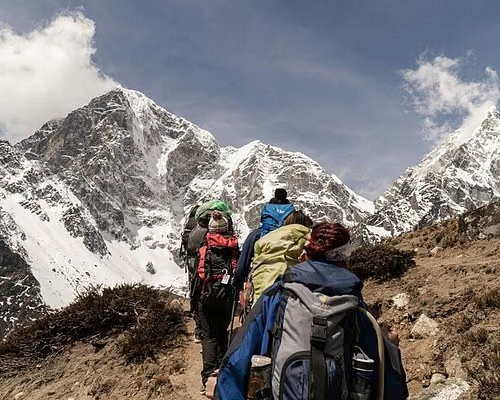
Embark on the 12-13 km paved trek from Katra to the cave shrine, passing through scenic hills and resting points. The journey takes about 6-8 hours, offering a blend of physical challenge and spiritual fulfillment.
6-8 hours
Visit Ardhkuwari Cave
Located about 6 km from Katra, this cave is where the goddess meditated for nine months. Pilgrims traditionally pause here to offer prayers and take a break before continuing to the main shrine.
1-2 hours
Pay Homage at Bhairavnath Temple
After darshan at the main shrine, trek or ride a pony about 2.5 km to the Bhairavnath Temple. This visit is considered essential to complete the yatra, as per legend.
2-3 hours
Take a Dip in Banganga
At the start of the trek, visit the Banganga stream, believed to have been created by the goddess's arrow. A holy dip here is considered purifying and auspicious.
30 minutes
Explore Charan Paduka
Near the beginning of the route, Charan Paduka marks the footprints of the goddess. It is a small shrine where pilgrims offer prayers and seek blessings.
30 minutes
Helicopter Ride to Sanjichhat
For those with limited time or physical constraints, take a helicopter from Katra to Sanjichhat, which reduces the trek to about 2.5 km. This offers a bird's-eye view of the hills and a quicker route to the shrine.
1-2 hours
Top Attractions
Vaishno Devi Bhawan (Main Shrine)
The main cave shrine at about 1,584m in the Trikuta Hills, housing three natural rock formations (pindies) representing Maha Kali, Maha Lakshmi, and Maha Saraswati. Pilgrims trek approximately 12-13km from Katra to seek darshan of the goddess, with the cave open throughout the year.
Ardhkuwari Cave
A smaller cave shrine about halfway along the trek (around 6km from Katra), where legend says the goddess meditated for nine months. Devotees traditionally pause here for prayers before continuing to the main Bhawan.
Bhairavnath Temple
Situated about 2.5km beyond the main shrine, this temple is dedicated to Bhairavnath, whose pursuit of the goddess is central to the pilgrimage legend. The yatra is considered incomplete without visiting this temple, reached by a further short trek or pony ride.
Banganga
Near the start of the trek from Katra, this sacred stream is believed to have been created when the goddess shot an arrow into a rock to quench her thirst. Pilgrims often bathe or sprinkle the water on themselves before beginning the climb.
Charan Paduka
A spot on the trekking route where footprints of the goddess are said to be imprinted in stone, left as she looked back at Bhairavnath during her flight. It is one of the earliest significant landmarks after starting the yatra from Katra.
Katra Town
The base town for the Vaishno Devi pilgrimage, located in Reasi district about 48km from Jammu. It offers accommodation, restaurants, and the starting point of the 12-13km paved trek, with a railway station connecting to major Indian cities.
Trikuta Hills
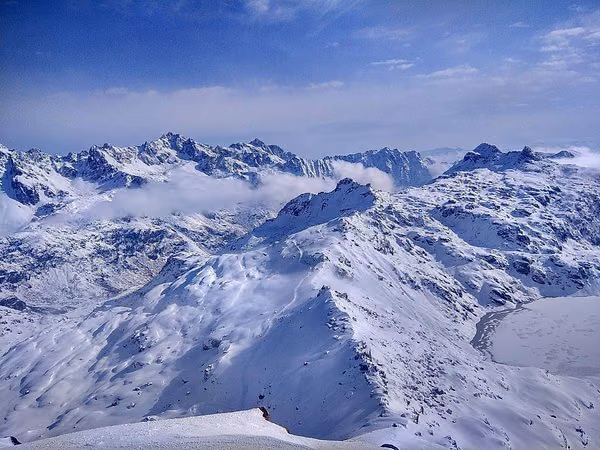
The mountain range in which the Vaishno Devi shrine is nestled, with three peaks symbolizing the three goddess forms. The hills are considered sacred and offer scenic views along the well-maintained pilgrimage path.
Himkoti
A scenic viewpoint and rest area along the trek, roughly midway between Ardhkuwari and the Bhawan, offering panoramic views of the surrounding hills. It is a popular spot for pilgrims to pause and refresh before continuing the climb.
Sanjichhat
The helipad and drop-off point for pilgrims opting for the helicopter service from Katra, located about 9-10km from the Bhawan. From Sanjichhat, pilgrims walk the remaining distance or take a pony/palki to the main shrine.
Travel Tips
Register in advance
All pilgrims must register before starting the yatra. You can register online via the Shri Mata Vaishno Devi Shrine Board website or at the Yatra Registration Counter in Katra.
Start early
Begin the trek early in the morning to avoid crowds and heat. The route is well-lit, but starting early gives you ample time to reach the shrine and complete the Bhairavnath visit.
Use the helicopter for time savings
If you have limited time, consider taking the helicopter from Katra to Sanjichhat. This reduces the trek to about 2.5 km, making the darshan more accessible.
Pack light but essential
Carry only essentials like a water bottle, light snacks, and a small first-aid kit. Heavy luggage can be deposited at cloakrooms in Katra and at various points along the trek.
Respect local customs
Maintain decorum at the shrine, follow the queue for darshan, and avoid littering. The shrine board has strict rules to ensure the sanctity of the pilgrimage.
Frequently Asked Questions
The best time to visit is from March to June and September to December, when the weather is pleasant. The shrine is open year-round, but avoid the monsoon season (July-August) due to heavy rains and landslides.
The trek from Katra to the cave shrine is approximately 12-13 km, taking about 6-8 hours on foot. You can also use ponies, palkis, battery-operated vehicles to Ardhkuwari, or a helicopter to Sanjichhat to reduce the walking distance.
Yes, the trek is well-paved and supported with rest shelters and medical facilities. Ponies, palkis, and battery-operated vehicles are available, and the helicopter service to Sanjichhat makes the journey accessible for those with mobility issues.
Carry comfortable walking shoes, warm clothing (especially in winter), a water bottle, and some snacks. Avoid carrying heavy luggage; there are cloakrooms at Katra and along the route. Also, carry a valid ID for registration.
There are no strict dress codes, but modest clothing is recommended. Non-vegetarian food, alcohol, and tobacco are prohibited on the trek. Langars provide free vegetarian meals throughout the route.
Plan Your Own Trip
Tell us what you're looking for and how many days you have — we'll instantly put together a personalised itinerary for Vaishno Devi.
Tour Packages for Vaishno Devi
Planning a trip to Vaishno Devi?
Talk to our travel experts for a customised group tour package.