
Sikkim ·
Yuksom
Yuksom is a small village in Sikkim it serves as the starting point of the Dzongri - Goechala Trek. The 8 - 9 day trek is the most popular in Sikkim and leads to the base of the third highest mountain in the world, Kangchenjunga.
Yuksom at a Glance
Why Yuksom?
The highlights, landmarks and experiences that make this destination worth visiting.
- Khecheopalri Lake
- Throne of Norbugang
- Kathok Pokhri
- Shrine of Yangthang Rinpoche
- Kartok Monastery
- Yuksom Temple
Yuksom at a Glance
Essential travel information to understand Yuksom before planning your visit.
Can be combined with
Explore Yuksom
Places to Visit
- Khecheopalri Lake: Khecheopalri Lake, originally known as Kha-Chot-Palri (meaning the heaven of Padmasambhava), is a lake located near Khecheopalri village, 147 kilometres (91 mi) west of Gangtok in the West Sikkim district of the Northeastern Indian state of Sikkim.
- Throne of Norbugang: Yuksom literally means the meeting place of three learned men. Lama Lutsum Chembo meet Sempa Chembo and Rinzing Chembo in Yuksom in 1641.
- Kathok Pokhri: Kathok Pokhri is a small lake, or rather a pond, connected to the historical coronation of Sikkim. Legend says that after coronation the new king was blessed by the three lamas with the water of the Kathok Pokhri.
- Shrine of Yangthang Rinpoche: Yangthang Rinpoche is said to be the incarnation of Lama Lutsum Chembo. The shrine is topped with a giant statue of Yangthang Rinpoche.
- Kartok Monastery: This beautiful monastery gets its name from the nearby holy lake. This small monastery is newly constructed and has no connection with the historic coronation.
- Yuksom Temple: A small temple on the side of the road housing several giant prayer wheels.
Things to Do
- Dubdi and Hongri monasteries: (4 hours one way), the views are superb, the trail passes through a small waterfall and a small village upm in the hills called Chung. Truly a rewarding experience.
- Dzongri Trek: Dzongri Trek is worth a visit while in Yuksom.
- Dzongri and Goecha La Trek: Dzongri and Goecha La Trek is worth a visit while in Yuksom.
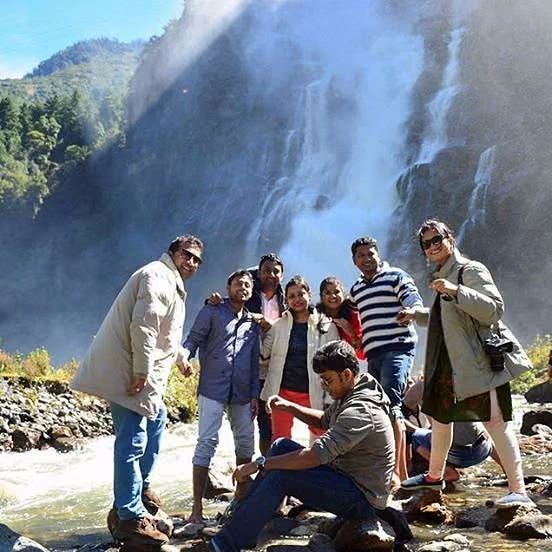
- Kanchandzongha National Park: It will take you 2 hours to trek into the wildlife sanctuary and go to a particular waterfall on the way to Dzongri. You can also bathe here but will need to be careful.
- Kanchenjunga Goecha La Trek: Kanchenjunga Goecha La Trek is worth a visit while in Yuksom.
- Khecheopalri Lake: The lake is revered by Buddhists and Hindus. The word "Khecheopalri" is derived from "Khcheo" meaning 'flying yoginis/angels' and "Palri" meaning 'Palace'.
Sightseeing Places
- Khecheopalri Lake: Khecheopalri Lake, originally known as Kha-Chot-Palri (meaning the heaven of Padmasambhava), is a lake located near Khecheopalri village, 147 kilometres (91 mi) west of Gangtok in the West Sikkim district of the Northeastern Indian state of Sikkim.
- Throne of Norbugang: Yuksom literally means the meeting place of three learned men. Lama Lutsum Chembo meet Sempa Chembo and Rinzing Chembo in Yuksom in 1641.
- Kathok Pokhri: Kathok Pokhri is a small lake, or rather a pond, connected to the historical coronation of Sikkim. Legend says that after coronation the new king was blessed by the three lamas with the water of the Kathok Pokhri.
- Shrine of Yangthang Rinpoche: Yangthang Rinpoche is said to be the incarnation of Lama Lutsum Chembo. The shrine is topped with a giant statue of Yangthang Rinpoche.
- Kartok Monastery: This beautiful monastery gets its name from the nearby holy lake. This small monastery is newly constructed and has no connection with the historic coronation.
- Yuksom Temple: A small temple on the side of the road housing several giant prayer wheels.
Temples
- Yuksom Temple: A small temple on the side of the road housing several giant prayer wheels.
Places That Define Yuksom
Explore the most iconic landmarks and sacred sites.
Khecheopalri Lake
Khecheopalri Lake, originally known as Kha-Chot-Palri (meaning the heaven of Padmasambhava), is a lake located near Khecheopalri village, 147 kilometres (91 mi) west of Gangtok in the West Sikkim district of the Northeastern Indian state of Sikkim.
Throne of Norbugang
Yuksom literally means the meeting place of three learned men. Lama Lutsum Chembo meet Sempa Chembo and Rinzing Chembo in Yuksom in 1641.
Kathok Pokhri
Kathok Pokhri is a small lake, or rather a pond, connected to the historical coronation of Sikkim. Legend says that after coronation the new king was blessed by the three lamas with the water of the Kathok Pokhri.
Shrine of Yangthang Rinpoche
Yangthang Rinpoche is said to be the incarnation of Lama Lutsum Chembo. The shrine is topped with a giant statue of Yangthang Rinpoche.
Kartok Monastery
This beautiful monastery gets its name from the nearby holy lake. This small monastery is newly constructed and has no connection with the historic coronation.
Yuksom Temple
A small temple on the side of the road housing several giant prayer wheels.
Explore Destination on Map
Discover all sub-destinations, routes and detailed navigation information on an interactive map.
Explore Yuksom on Map
Open the destination map to discover attractions and routes.
Plan Your Trip
Plan Your Way
- When to Visit: Climate-based guidance for choosing your dates.
- Getting Around: How to reach and move around.
- Budget & Practical Tips: Costs and safety notes from local guidebook sources.
All Itineraries
- 1 Day in Yuksom: 1 days with detailed day plans
- 2 Days in Yuksom: 2 days with detailed day plans
How to Reach
- By Air: The nearest airport is Bagdogra Airport (IXB), about 78 km from Yuksom.
- By Train: The nearest railway station is Rangpo railway station, about 38 km from central Yuksom.
Best Time to Visit
- Summer: Summer in Yuksom (Apr, May, Jun) averages 13–21°C with about 341 mm of rain per month.
- Monsoon: Monsoon in Yuksom (Jul, Aug, Sep) averages 17–24°C with about 316 mm of rain per month.
- Post-monsoon: Post-monsoon in Yuksom (Oct, Nov) averages 9–19°C with about 132 mm of rain per month.
- Winter: Winter in Yuksom (Dec, Jan, Feb) averages 4–15°C with about 55 mm of rain per month.
Weather
- Summer: Average highs of 21°C and lows of 13°C.
- Monsoon: Average highs of 24°C and lows of 17°C.
- Post-monsoon: Average highs of 19°C and lows of 9°C.
- Winter: Average highs of 15°C and lows of 4°C.
Suggested Itinerary
Choose the perfect duration for your Yuksom trip.
Spiritual & Religious
History
- Summary: Yuksom is a small village in Sikkim it serves as the starting point of the Dzongri - Goechala Trek. The 8 - 9 day trek is the most popular in Sikkim and leads to the base of the third highest mountain in the world, Kangchenjunga.
- Overview: Yuksom is a small village in Sikkim it serves as the starting point of the Dzongri - Goechala Trek. The 8 - 9 day trek is the most popular in Sikkim and leads to the base of the third highest mountain in the world, Kangchenjunga. It is said that it was the first capital of Sikkim.
- Ancient History: Sikkim was introduced to Buddhism from Tibet as early as the 9th century. In Tibet, the struggle for power between the "Yellow hats" and the "Red hats" led the latter to migrate to Sikkim and convert the local Lepchas to Buddhism. In the 13th century, relations between Sikkim and Tibet were strengthened by a "Brotherhood treaty" signed between the Lepcha chief Thekong Thek and the Tibetan prince Khe-Bhumsa at Kavi, in north Sikkim.
Festivals
- Overview: Yuksom is a small village in Sikkim it serves as the starting point of the Dzongri - Goechala Trek. The 8 - 9 day trek is the most popular in Sikkim and leads to the base of the third highest mountain in the world, Kangchenjunga. It is said that it was the first capital of Sikkim.
- Best Festival Time: The most comfortable months are January, February, November and December.
Planning Guide
- Overview: Yuksom is a small village in Sikkim it serves as the starting point of the Dzongri - Goechala Trek. The 8 - 9 day trek is the most popular in Sikkim and leads to the base of the third highest mountain in the world, Kangchenjunga. It is said that it was the first capital of Sikkim.
- Accommodation: A very beautiful government guest house with two dormitories. total # of beds 6. ₹50 each in 2007. Three private hostels are also present. Listed options include Demazong Hotel, Dragon Hotel and Hotel Tashi Gang.
- Best Way To Explore: It is a very small village so getting around is on foot. Yuksom is the base camp for many treks in Sikkim.
The Sacred Heart of Yuksom
A timeless journey of faith and devotion.
Significance
Sikkim was introduced to Buddhism from Tibet as early as the 9th century. In Tibet, the struggle for power between the "Yellow hats" and the "Red hats" led the latter to migrate to Sikkim and convert the local Lepchas to Buddhism.
Spiritual Significance
Sikkim was introduced to Buddhism from Tibet as early as the 9th century. In Tibet, the struggle for power between the "Yellow hats" and the "Red hats" led the latter to migrate to Sikkim and convert the local Lepchas to Buddhism.
Pilgrimage Traditions
Yuksom means “meeting place of the three learned monks”. According to the legend, three monks from Tibet selected Phuntsog Namgyal as the first King of Sikkim and gave him the title Chogyal, meaning “religious King” or “the king who rules with righteousness”.
Frequently Asked Questions
Yuksom is most comfortable in January, February, November and December, when average daytime highs stay at or below 32°C and rainfall is low. The hottest month is July (average high 24°C) and the wettest months are March, April, May, June, July, August, September and October.
The nearest airport is Bagdogra Airport (IXB), about 78 km away. The nearest railway station is Rangpo railway station, about 38 km away. See the How to Reach page for road, rail and air details.
Main attractions include Khecheopalri Lake, Throne of Norbugang, Kathok Pokhri, Shrine of Yangthang Rinpoche, Kartok Monastery and Yuksom Temple.
A stay of 1 day covers the main sights. Ready-made 1-day and 2-day itineraries are linked on this page.
Average highs range from 14°C to 24°C over the year, with about 2711 mm of rain in total.
Tour Packages for Yuksom



Your Yuksom Journey Starts Here
Explore top attractions, local culture, and the experiences that make this destination worth visiting.