
Chardham Yatra Tour Package from Agra – 9 Days Pilgrimage
- Places Covered: Chardham Yatra
- Tour Type: Private Tour
- Transport: Private Cab
- Customization: Available
Agra to Chardham Tour Package Itinerary
Day 1: Arrival in Dehradun/Haridwar – Drive to Barkot
The journey begins with an arrival from the originating city to Dehradun or Haridwar, utilizing air, train, or bus services. Upon arrival, a vehicle facilitates the transfer to Barkot, a picturesque town situated at an elevation of 1,220 meters. Barkot serves as a crucial stopover on the Chardham route, offering stunning views of the Bandarpunch peak and the Yamuna River. The evening is dedicated to relaxation in Barkot.
Day 2: Yamunotri Darshan – Return to Barkot
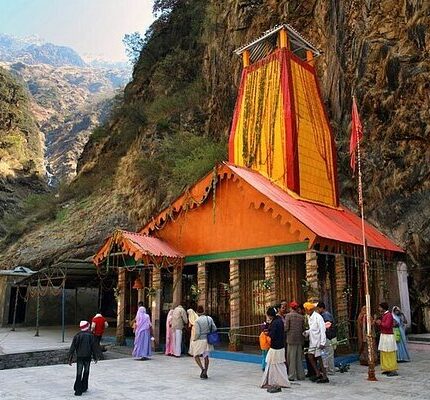
This day features an early morning drive to Janki Chatti, the starting point for the trek to Yamunotri. Pilgrims undertake a 6 km trek or utilize ponies/palki services to reach the sacred Yamunotri Temple. A revered Hindu shrine dedicated to the goddess Yamuna, located at an altitude of 3,293 metres in the Garhwal Himalayas. The temple is part of the Chardham pilgrimage and is known for its thermal springs, where pilgrims prepare rice and potatoes by dipping them in the hot water. The pristine surroundings and the sanctity of the Yamuna River make it a deeply spiritual destination. Yamunotri Temple on Wikipedia After darshan and performing rituals, the return trek to Janki Chatti and drive back to Barkot for the night stay.
Barkot and Uttarkashi Sightseeing Itinerary
Day 3: Barkot to Gangotri – Drive to Uttarkashi
Following breakfast, the journey proceeds from Barkot towards Gangotri. Upon arrival, the opportunity for darshan at the Gangotri Temple. Situated at an elevation of 3,100 metres amidst the majestic Garhwal Himalayas, Gangotri is the origin of the sacred River Ganga (Ganges). The temple, dedicated to Goddess Ganga, holds immense religious significance as one of the four Chardham sites. Pilgrims visit to offer prayers and take a holy dip in the icy waters, believing it cleanses sins. The scenic beauty of the surrounding peaks and the roaring Bhagirathi River add to its spiritual aura. Gangotri Temple on Wikipedia After the spiritual experience, the drive continues to Uttarkashi for an overnight stay. Uttarkashi is a town known for its spiritual significance and natural beauty, situated on the banks of the Bhagirathi River.
Day 4: Uttarkashi to Phata
After a morning meal in Uttarkashi, the journey continues towards Phata. Phata is a strategically important location, often serving as a base for pilgrims heading to Kedarnath, particularly those opting for helicopter services. The drive offers scenic views of the Garhwal Himalayas. An overnight stay is arranged in Phata, allowing for preparation for the Kedarnath pilgrimage.
Phata, Kedarnath, and Badrinath Sightseeing Itinerary
Day 5: Phata to Kedarnath
From Phata, pilgrims proceed to Kedarnath. This leg of the journey can be undertaken via helicopter, pony, or trekking, depending on individual preference and booking. The destination for the day is a camp stay in Kedarnath, offering a unique experience amidst the high-altitude environment. The Kedarnath Temple is an ancient and highly revered Shiva temple nestled at an altitude of 3,583 metres near the Mandakini River. It is one of the twelve Jyotirlingas of Lord Shiva and a significant part of the Chardham circuit. Surrounded by snow-capped peaks, its stone architecture stands as a testament to centuries of devotion and resilience against natural elements, attracting thousands of devotees annually despite its challenging terrain. Kedarnath Temple on Wikipedia The evening is spent in contemplation and rest near the sacred shrine.
Day 6: Kedarnath to Phata
After morning darshan and prayer at Kedarnath Temple, pilgrims return from Kedarnath to Phata. The descent allows for reflections on the spiritual journey. An overnight stay is arranged in Phata, providing comfort after the high-altitude experience.
Day 7: Phata to Badrinath – Visit Mana Village
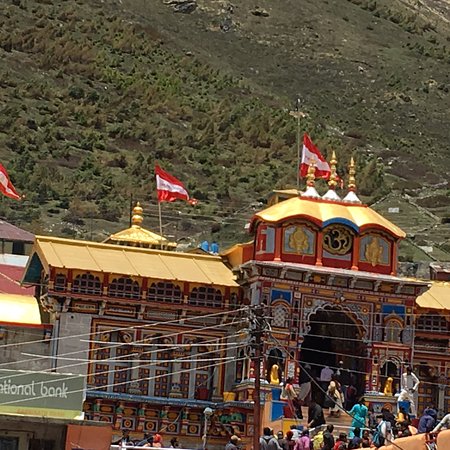
The day begins with a drive from Phata to Badrinath. Upon arrival in Badrinath, pilgrims visit Mana Village. Situated just 3 km from Badrinath, Mana is known as the “last Indian village” before the Indo-Tibetan border. This quaint village is rich in mythological connections, believed to be where Ved Vyasa dictated the Mahabharata. Visitors explore ancient caves, waterfalls, and vibrant local culture, making it a unique stop for its scenic beauty and historical significance. Mana Village on TripAdvisor Following the visit, an overnight stay is planned in Badrinath. The Badrinath Temple is dedicated to Lord Vishnu, and is located at an elevation of 3,133 metres on the banks of the Alaknanda River, against the backdrop of the Nilkantha peak. It is one of the most important pilgrimage sites in India, revered as one of the four Chardham and one of the 108 Divya Desams. The temple’s vibrant architecture and the serene setting make it a powerful spiritual magnet. Badrinath Temple on Wikipedia
Pipalkoti and Rishikesh Sightseeing Itinerary
Day 8: Badrinath Sightseeing – Evening to Pipalkoti
Morning is dedicated to exploring Badrinath, including darshan at the temple and visiting other significant spots. In the evening, the drive proceeds to Pipalkoti for an overnight stay. Pipalkoti is a small, scenic town located on the National Highway 7, offering pleasant views and comfortable accommodation options, making it an ideal stopover.
Day 9: Drive to Rishikesh – Drop in Haridwar
On the final day, the journey from Pipalkoti to Rishikesh commences. Along the route, stops are made at significant confluences such as Nand Prayag, Karna Prayag, Rudra Prayag, and Devprayag. This sacred town is known for being the confluence of two holy rivers, the Alaknanda and Bhagirathi, which thereafter merge to form the mighty Ganga River. It is a highly revered spot for Hindus, where pilgrims take a holy dip at the sangam. The dramatic meeting of the distinct green and muddy waters, set against the backdrop of verdant hills, creates a visually stunning and spiritually profound experience. The evening includes a visit to Rishikesh. Located in the foothills of the Himalayas along the Ganga River, Rishikesh is renowned as the “Yoga Capital of the World.” It serves as a spiritual hub, attracting pilgrims and adventure seekers alike. The city is famous for its ashrams, yoga centers, ancient temples, and iconic bridges like Laxman Jhula and Ram Jhula, offering breathtaking views and a tranquil atmosphere for introspection and spiritual growth. Rishikesh on Wikipedia The tour concludes with a drop-off in Haridwar by 8 PM.
3 Star Hotels in Chardham, Barkot, Uttarkashi, Phata, Badrinath, Pipalkoti, Rishikesh
Accommodation throughout the Chardham Yatra is provided in well-regarded 3-star hotels in locations such as Barkot, Uttarkashi, Phata, Badrinath, and Pipalkoti, ensuring comfort and essential amenities for pilgrims. In high-altitude or remote areas like Kedarnath, basic camp stays or guesthouses are arranged, maintaining standards suitable for the challenging terrain. The selection prioritizes cleanliness, service quality, and convenient access to key pilgrimage sites, offering a restful retreat after each day’s spiritual exploration. Travelers can expect hospitable environments conducive to a peaceful pilgrimage.
Chardham Yatra Package Price from Agra
| Group Size (Adults) | Per Person Price (INR) |
|---|---|
| 2 | Rs. 33120 |
| 3 | Rs. 25920 |
| 4-7 | Rs. 20777 |
| 8-10 | Rs. 20160 |
| 11-12 | Rs. 18720 |
*Prices are indicative and subject to change based on travel dates, specific hotel availability, and final group size. Prices for 4-7, 8-10, and 11-12 adults reflect the lowest per-person cost within that range.
Inclusions in Chardham Yatra Tour Package from Agra
Breakfast, all sightseeing as per itinerary, AC vehicle Dzire or Innova or Tempo Traveller as per group size, driver allowance, parking, tolls, and stay in 3star AC hotels.
Exclusions in Chardham Yatra Package from Agra
Anything not mentioned in inclusions, entry tickets, boating, guide services, personal expenses, camera fees, or meals other than breakfast.
Child Policy for Chardham Yatra Trip from Agra
Child up to 6 years Free
Child 6 to 8 years Half charge
Child above 8 years Full charge
Payment Policy for Chardham Yatra Package Booking
20 percent advance at time of booking
20 percent after getting hotel booking voucher
60 percent during tour in parts
For tours between 15 Dec to 2 Jan, 50 percent advance payment required.
Cancellation Policy for Chardham Yatra Tour
Minimum Rs. 3000 cancellation charge per person
10 percent or Rs. 3000 per person whichever is higher
25 percent cancellation between 46 to 30 days before departure
50 percent cancellation between 30 to 15 days before departure
75 percent cancellation between 15 to 5 days before departure
100 percent cancellation within 5 days of departure or noshow
Cancellation charges are calculated as percentage of total tour cost.
Frequently Asked Questions – Chardham Yatra Travel Guide
- What is the best time to undertake the Chardham Yatra?
The best time to visit Chardham is from April to June and again from September to November. During these months, the weather is pleasant, and the roads are generally clear. - What is included in the Chardham Yatra tour package from Agra?
The package typically includes accommodation in 3-star hotels, daily breakfast, transportation via an AC vehicle as per group size, driver allowance, parking, and tolls. - Are helicopter services available for Kedarnath?
Yes, helicopter services to Kedarnath are available from Phata, Guptkashi, or Sersi. These are an optional service and generally not included in the standard package price. - What kind of accommodation is provided?
Accommodation is provided in 3-star AC hotels wherever available. In high-altitude areas like Kedarnath, simple camp stays or basic guesthouses are common due to limited infrastructure. - Is a medical check-up advisable before the Chardham Yatra?
Yes, it is highly recommended to undergo a thorough medical check-up before embarking on the Yatra, especially for individuals with pre-existing health conditions, given the high altitudes and challenging terrain. - What should be packed for the Chardham Yatra?
Essential items include warm clothing, rain gear, comfortable trekking shoes, personal medication, a first-aid kit, a torch, power bank, and basic toiletries. - Is it safe for senior citizens to undertake the Chardham Yatra?
Many senior citizens successfully complete the Yatra. However, it is important to consult a doctor, maintain a slow pace, and utilize available facilities like palanquins or ponies for challenging stretches. - What are the key attractions in Mana Village?
Mana Village features Vyas Gufa, Ganesh Gufa, Bhim Pul, and the origin of the Saraswati River, all steeped in mythological significance. - Are ATMs available along the Chardham route?
ATMs are available in major towns like Barkot, Uttarkashi, and Badrinath, but their availability can be inconsistent, especially in remote areas. Carrying sufficient cash is advisable. - What is the typical meal plan included?
The package usually includes daily breakfast. Other meals (lunch and dinner) are typically excluded, providing flexibility for personal preferences. - How is the weather during the Yatra season?
Weather can be unpredictable. Mornings and evenings are generally cold, while daytime temperatures can be mild. Rain is common, especially during the monsoon fringes. - Is there mobile network connectivity throughout the route?
Mobile network connectivity can be intermittent and unreliable in remote sections of the Chardham route. BSNL and Jio generally offer better coverage in these areas.
Important Travel Information for Chardham Yatra Package
- Altitude Sickness: The Chardham Yatra involves traveling to high altitudes. Acclimatization is crucial; ascend gradually, stay hydrated, and report any symptoms like headache or nausea immediately.
- Permits and Registration: Pilgrims are often required to register for the Chardham Yatra. It is essential to carry valid ID proof and ensure all necessary permits are obtained.
- Weather Conditions: Mountain weather is highly unpredictable. Always carry layers of warm clothing, waterproof jackets, and sturdy shoes. Check forecasts before each day’s travel.
- Medical Facilities: Basic medical aid posts are available at major stops, but advanced medical facilities are limited. Carry personal medications and consult a doctor before the trip.
- Road Conditions: Roads to Chardham can be challenging, with narrow stretches and occasional landslides, especially during the monsoon. Travel is generally slower than on plains.
- Food and Water: Stick to freshly cooked food. Drink bottled water or use water purifiers. Avoid street food that looks unhygienic.
- Ecosystem Sensitivity: The Himalayas are a fragile ecosystem. Dispose of waste responsibly, avoid littering, and respect local customs and environment.
- Connectivity: Mobile network coverage is sparse in many areas. Inform family members about potential communication gaps.
- Cash Availability: ATMs are scarce in remote locations. It is advisable to carry enough cash for personal expenses, offerings, and emergencies.
- Pilgrim Etiquette: Dress modestly, especially when visiting temples. Maintain silence and reverence inside sacred premises.
- Photography: While photography is generally allowed, check for restrictions inside temple sanctums. Respect privacy of locals.
- Emergency Contacts: Keep a list of emergency contacts, including local police, medical services, and tour operator information, readily accessible.
Trypdeals tour packages you might be interested in
Visit our main website for more incredible travel deals: Trypdeals Home
Explore our wide range of tour packages across various destinations: All Tours by Trypdeals
Discover the most sought-after travel destinations with Trypdeals: Top Travel Destinations
Yamunotri Dham: The Source of Purity
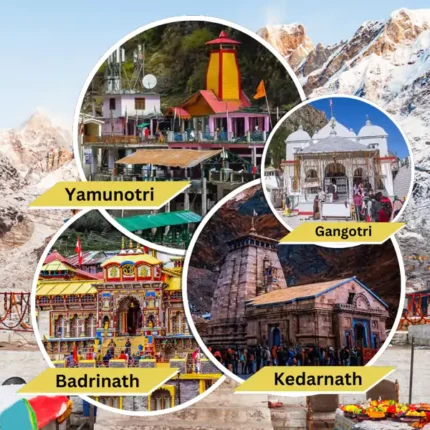
The Chardham Yatra tour package from Agra commences with a spiritual journey to Yamunotri, the sacred source of the Yamuna River. This revered site, nestled in the Garhwal Himalayas, draws devotees seeking blessings from Goddess Yamuna. The trek to the temple offers breathtaking views of cascading waterfalls and lush valleys, culminating in the serene ambiance of the shrine. Pilgrims immerse themselves in the thermal springs, a unique experience believed to cleanse the soul. The raw natural beauty combined with profound spiritual significance makes Yamunotri an unforgettable start to the pilgrimage.
Gangotri Dham: The Abode of Ganga
Continuing the Chardham Yatra, the journey proceeds to Gangotri, the mythological origin of the holy River Ganga. This majestic temple town, surrounded by towering peaks and glaciers, embodies serenity and divine power. The ancient Gangotri Temple, dedicated to Goddess Ganga, is a focal point for pilgrims who perform rituals and take holy dips in the Bhagirathi River. The pristine environment, the roar of the river, and the spiritual vibrations create an immersive experience for every visitor. Gangotri represents a profound connection to India’s spiritual heartland.
Kedarnath Dham: The Seat of Lord Shiva
The pilgrimage then leads to the awe-inspiring Kedarnath Dham, one of the twelve Jyotirlingas of Lord Shiva. Located amidst the dramatic peaks of the Garhwal Himalayas, the Kedarnath Temple stands as a symbol of unwavering faith and architectural marvel. The arduous yet rewarding journey to this high-altitude shrine offers panoramic vistas and a deep sense of accomplishment. Devotees brave the challenging terrain to seek the blessings of Lord Shiva, experiencing an intense spiritual connection in the tranquil, yet powerful, surroundings.
Badrinath Dham: The Divine Abode of Vishnu
Badrinath, the final and most prominent of the Chardham sites, is a revered abode of Lord Vishnu. Situated on the banks of the Alaknanda River with the Neelkanth Peak as its backdrop, the vibrant Badrinath Temple attracts devotees from across the globe. The sacred Tapt Kund (hot springs) and the proximity to Mana Village, believed to be the last village before the Indo-Tibetan border, add to its allure. Badrinath offers a blend of spiritual solace, mythological richness, and breathtaking natural beauty, marking a fitting culmination to the Chardham pilgrimage.
Rishikesh: The Yoga Capital and Gateway to Spirituality
The concluding phase of the Chardham Yatra includes a visit to Rishikesh, nestled in the foothills of the Himalayas. Known globally as the “Yoga Capital of the World,” Rishikesh exudes a vibrant spiritual energy. The city offers a serene environment for meditation, yoga, and self-reflection along the sacred Ganges. Iconic landmarks like Laxman Jhula and Ram Jhula provide picturesque views and access to ancient ashrams and temples. Rishikesh serves as a perfect spiritual retreat, allowing pilgrims to absorb the tranquility and spiritual essence before their departure.
There are no reviews yet.