
Book Nagaland Hornbill Festival Tour 2026 10 Days with hotels, cab, meals and sightseeing Get 24×7 support and instant WhatsApp assistance Lowest price guaranteed
Overview:
The Nagaland Hornbill Festival Tour 2026 is a premier 10-day cultural expedition into the heart of the “Land of Festivals.” Starting from Guwahati or Dimapur, this journey takes you to the vibrant Kisama Heritage Village to witness the legendary Hornbill Festival. Beyond the festivities, the tour explores the eco-rich Khonoma Green Village, the historical World War II sites in Kohima, and the mystical Ao Naga heartlands of Mokokchung. Perfectly suited for families, culture enthusiasts, and photography friends, this package offers deep immersion into tribal traditions while utilizing the best available Hotels Budget Category for a comfortable yet authentic Naga experience.
Day 1: Arrival in Guwahati and Transfer to Kohima
Pickup: Guwahati Airport / Drop: Kohima Hotel / Stay: Kohima
Kohima City Drive offers a scenic introduction to the high-altitude capital of Nagaland as you ascend from the plains of Assam. The road winds through lush tea gardens and dense subtropical forests, revealing traditional Naga settlements perched on steep ridges. It is an ideal time to observe the changing landscape and the unique architectural style of the mountain dwellings.
Day 2: Opening Ceremony of Hornbill Festival 2026
Pickup: Kohima Hotel / Drop: Kohima Hotel / Stay: Kohima
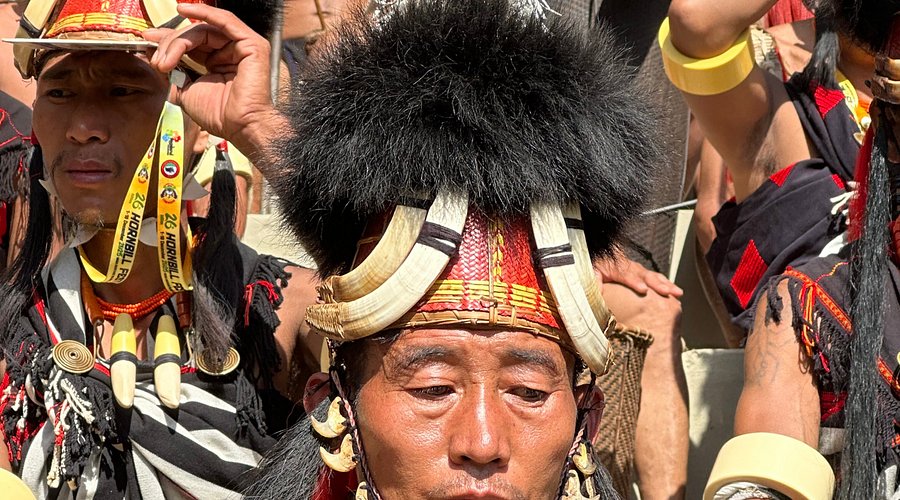
Kisama Heritage Village serves as the permanent venue for the Hornbill Festival, featuring traditional “Morungs” or communal huts representing each of the 17 Naga tribes. During the opening ceremony, the arena erupts with warrior dances, rhythmic drum beats, and vibrant folk songs performed in ancestral costumes. Visitors can explore the intricate wood carvings and tribal symbols that adorn each hut, providing a living museum experience.
Day 3: Cultural Immersion at Hornbill Festival
Pickup: Kohima Hotel / Drop: Kohima Hotel / Stay: Kohima
Hornbill Festival Ground becomes a bustling hub of indigenous sports, including bamboo pole climbing and traditional Naga wrestling matches. This day is dedicated to tasting local delicacies like smoked pork with bamboo shoots and the famous “Zutho” rice beer at tribal stalls. The evening atmosphere shifts to the Hornbill International Rock Festival, where modern music blends with the ancient soul of the hills.
Day 4: Kohima Local Sightseeing and History
Pickup: Kohima Hotel / Drop: Kohima Hotel / Stay: Kohima
Kohima War Cemetery is a poignant memorial built on the site of the Battle of Kohima, where Allied forces halted the Japanese advance during WWII. The beautifully manicured terraces contain the graves of 1,420 Commonwealth soldiers, with the famous epitaph “When You Go Home, Tell Them Of Us And Say, For Your Tomorrow, We Gave Our Today.” It is a site of deep historical significance that offers a peaceful space for reflection amidst the city’s hills.
Day 5: Asia’s First Green Village Exploration
Pickup: Kohima Hotel / Drop: Kohima Hotel / Stay: Kohima
Khonoma Green Village is a 700-year-old settlement of the Angami tribe, globally recognized for its community-led conservation and sustainable farming. A walk through its stone-paved alleys reveals ancient forts, traditional granaries, and the unique Alder-based cultivation system that has preserved the land for generations. The village’s history of resisting British colonial rule is still whispered by its elders and seen in the sturdy “Kharus” or ceremonial gates.
Day 6: Nature Trek and Botanical Beauty
Pickup: Kohima Hotel / Drop: Kohima Hotel / Stay: Kohima
Dzukou Valley Viewpoint provides a glimpse into a mesmerizing landscape of rolling green hills and crystal-clear streams often referred to as the “Valley of Flowers of the East.” Accessible via a moderate trek, the valley is known for its unique flora, including the rare Dzukou Lily and thick bamboo brush. It offers a serene escape from the festival crowds, showcasing the raw, untouched natural beauty of the Nagaland-Manipur border.
Day 7: Journey to the Heart of the Ao Tribe
Pickup: Kohima Hotel / Drop: Mokokchung Hotel / Stay: Mokokchung
Mokokchung Town is the cultural headquarters of the Ao Naga tribe and one of the most picturesque districts in the state. Perched atop several hills, the town serves as a base to explore the oldest and most traditional villages in the region. The journey from Kohima to Mokokchung is a cultural transition, passing through Rengma and Sema tribal territories.
Day 8: Ancient Villages and Living Traditions
Pickup: Mokokchung Hotel / Drop: Mokokchung Hotel / Stay: Mokokchung
Ungma Village is the largest and oldest Ao Naga village, believed to be the ancestral birthplace of the entire tribe according to local folklore. Visitors can walk to the historic log drum, a massive hollowed-out tree trunk used to signal warnings or celebrations to the entire community. The village church and traditional houses provide a deep look into how the Ao people have balanced modern faith with ancient tribal identity.
Mopungchuket Village is often cited as the best-kept village in Nagaland, famous for its romantic folk legends and beautifully maintained parks. The village features the “Süngpur” tower and a local museum that houses ancient war gear, jewelry, and daily artifacts used by the ancestors. It is a center for Ao art and culture, where every corner tells a story of love, bravery, and community spirit.
Day 9: Return to the Plains via Jorhat
Pickup: Mokokchung Hotel / Drop: Jorhat Hotel / Stay: Jorhat
Jorhat Tea Estates mark your return to the lush plains of Assam, where the world-famous Assam tea is cultivated in sprawling green gardens. You can visit a colonial-era tea bungalow or walk through the estates to see workers plucking the “two leaves and a bud” during the harvest season. It offers a relaxing atmosphere to unwind after the rugged mountain travel of Nagaland.
Day 10: Final Departure from Guwahati
Pickup: Jorhat Hotel / Drop: Guwahati Airport / Stay: End of Tour
Kamakhya Temple is one of the oldest and most revered Shakti Peethas in India, located on the Nilachal Hill in Guwahati. This temple complex is a masterpiece of medieval architecture and a major pilgrimage site for tantric worshipers from across the world. A visit here on the final day completes your spiritual and cultural journey through the Northeast before your flight.
Learn about the Hornbill Festival history on Wikipedia.
Read reviews of the Kohima War Cemetery on Tripadvisor.
Explore the official guide to Khonoma Green Village on the Nagaland Tourism website.
See traveler tips for Mokokchung sightseeing on Tripadvisor.
2 Adults: Rs. 40800 per person
3 Adults: Rs. 31200 per person
4–7 Adults: Rs. 21600 per person
8–10 Adults: Rs. 24000 per person
11–12 Adults: Rs. 21600 per person
For long weekend, holidays and festivals, extra charges applicable.
Breakfast, all sightseeing as per itinerary, AC vehicle Dzire or Innova or Tempo Traveller as per group size, driver allowance, parking, tolls, and stay in 3star AC hotels.
Anything not mentioned in inclusions, entry tickets, boating, guide services, personal expenses, camera fees, or meals other than breakfast.
Child up to 6 years Free
Child 6 to 8 years Half charge
Child above 8 years Full charge
20 percent advance at time of booking
20 percent after getting hotel booking voucher
60 percent during tour in parts
For tours between 15 Dec to 2 Jan, 50 percent advance payment required.
Minimum Rs. 3000 cancellation charge per person
10 percent or Rs. 3000 per person whichever is higher
25 percent cancellation between 45 to 30 days before departure
50 percent cancellation between 30 to 15 days before departure
75 percent cancellation between 15 to 5 days before departure
100 percent cancellation within 5 days of departure or noshow
Cancellation charges are calculated as percentage of total tour cost.
Best time to visit Nagaland
The absolute best time is the first ten days of December to attend the Hornbill Festival, though October to May offers great weather for trekking.
Weather conditions
Nagaland has a pleasant climate; however, December is quite chilly in Kohima (5°C to 20°C), requiring heavy woolens and jackets.
Safety for solo travelers
Nagaland is safe for solo travelers, especially during festival season when security is high and locals are exceptionally welcoming to guests.
Family and couple suitability
This package is perfect for families and couples, offering a mix of educational cultural visits and scenic romantic viewpoints like Dzukou.
Famous temples, beaches, or attractions
Key attractions include the Kisama Heritage Village, Kohima War Cemetery, and the ancient villages of Khonoma and Ungma.
Adventure and water activities
Trekking to Dzukou Valley or Japfu Peak are the top adventure activities, alongside exploring the rugged terrain of the Naga heartlands.
Local cuisine and food options
Naga cuisine is famous for smoked meats, bamboo shoots, and fiery chilies; Hotels Budget Category also provide standard Indian and Continental options.
Ideal trip duration
A 10-day duration is ideal as it allows you to cover the festival highlights plus the remote cultural districts of Mokokchung.
Nearest airports and railheads
Dimapur (DMU) has the nearest airport and railway station, though Guwahati (GAU) offers better connectivity for many travelers.
Tips for first-time travelers
Obtain your Inner Line Permit (ILP) in advance, carry enough cash as ATMs are sparse in villages, and always respect tribal customs.
Check Nagaland Tourism’s official page for festival schedules.
Visit Tripadvisor’s Nagaland guide for latest traveler reviews and photos.
These resources provide essential travel updates and peer-reviewed tips for navigating the mountainous terrain of the Northeast.
Weather and temperature for summer, winter, and monsoon: Summer 20-30°C, Winter 4-20°C, Monsoon (Heavy rains) 18-24°C
What to wear: Heavy woolens, thermals, and comfortable walking shoes are mandatory for the December festival
Travel safety and local culture: Respect tribal hierarchy and always ask for permission before entering a village Morung
Dos and Don’ts: Do try local crafts; Don’t photograph locals without permission or enter sacred areas alone
Mobile connectivity and ATMs: Connectivity is good in Kohima/Dimapur; carry cash for remote villages like Khonoma
Basic local etiquette and language tips: “Kuknalim” is a common greeting meaning victory to the people; English is widely spoken
Refer to the Government of Nagaland portal for official administrative news.
Consult the Ministry of Home Affairs for Inner Line Permit (ILP) regulations.
These official links are vital for understanding the legal requirements and administrative landscape of traveling in Nagaland.
Explore our range of spiritual tours at Trypdeals Official Website
Browse all our current travel offerings at Trypdeals Tours
Check out the most popular routes at Top Travel Destinations by Trypdeals
Kohima is the mountainous capital of Nagaland and the soul of its modern history. Known for the decisive Battle of Kohima during WWII, the city is a blend of bustling urban life and deep-rooted tribal tradition. It sits at an altitude of 1,444 meters, offering panoramic views of the surrounding hills. During December, it transforms into a global tourist destination as the gateway to the Hornbill Festival. Staying in Hotels Budget Category here allows travelers to enjoy the city’s vibrant night carnival and local markets while being close to the primary festival grounds in Kisama.
Khonoma is a historic village belonging to the Angami tribe, famed for being Asia’s first “Green Village.” It represents a successful model of community-based conservation where hunting and logging are strictly prohibited. The village is strategically built on a hill with thick stone walls that once protected it from British invaders. Today, it is a peaceful retreat where visitors can learn about the bravery of Naga warriors and the sustainable agricultural practices that keep the hills lush and fertile. It is a must-visit for eco-tourists and those seeking a slower, more authentic pace of life.
Mokokchung is the heartland of the Ao Naga tribe and is considered the most progressive and culturally sound district in Nagaland. The district is dotted with historic villages like Ungma and Mopungchuket, which preserve the ancient oral traditions and folklore of the Ao people. The town itself is beautifully developed, sitting atop several hills with clear views of the distant plains. It serves as a vital link for travelers heading deeper into the Naga heartlands. Its hospitality and rich cultural heritage make it an essential stop for a comprehensive 10-day Nagaland exploration.
The Hornbill Festival, held annually from December 1st to 10th, is the “Festival of Festivals” in India. Named after the revered bird in Naga folklore, it unites all 17 tribes of Nagaland to display their music, dance, food, and crafts. It is a massive cultural extravaganza that attracts thousands of international and domestic tourists to the Kisama Heritage Village. The festival is not just a performance but a celebration of the identity and survival of tribal traditions in a modern world. It is the highlight of any Nagaland tour, offering a sensory explosion of colors, sounds, and flavors.