
Uttar Pradesh ·
Agra
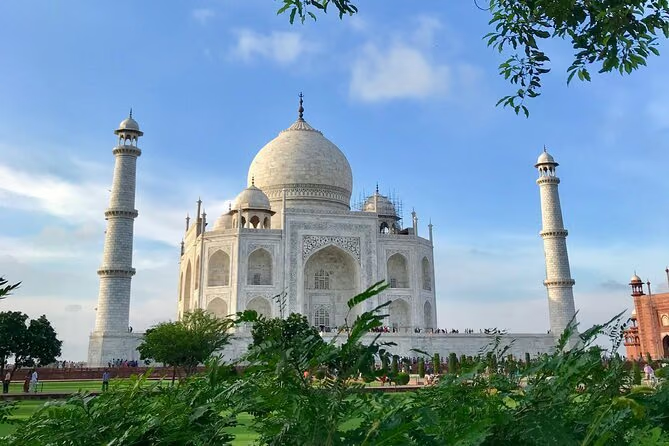
Home to the Taj Mahal, one of the world’s most iconic monuments, and a former Mughal capital rich in forts and tombs. Agra served as the capital of the Mughal Empire under Akbar, Jahangir and Shah Jahan, and its skyline is defined by the white-marble Taj Mahal, built by Shah Jahan as a mausoleum for his wife Mumtaz Mahal. Beyond the Taj, the city holds the red-sandstone Agra Fort, a UNESCO World Heritage Site that was the primary Mughal residence, and lies a short drive from the abandoned Mughal city of Fatehpur Sikri, making it one of India’s most visited heritage circuits.
Agra at a Glance
Why Agra?
The highlights, landmarks and experiences that make this destination worth visiting.
- Wildlife SOS
- Taj Mahal
- Mariam’s Tomb
- Itmad-ud-Daulah
- Fatehpur Sikri
- Sikandra
Agra at a Glance
Essential travel information to understand Agra before planning your visit.
Can be combined with
Explore Agra
Places to Visit
- Wildlife SOS: A rescue and rehabilitation centre for elephants freed from abuse and captivity, open to visitors for guided, ethical interactions.
- Taj Mahal: An ivory-white marble mausoleum built by Emperor Shah Jahan in memory of his wife Mumtaz Mahal, and one of the New Seven Wonders of the World.
- Mariam’s Tomb: The tomb of Mariam-uz-Zamani, a Rajput wife of Akbar and mother of Emperor Jahangir.
- Itmad-ud-Daulah: An intricately inlaid marble tomb often called the ‘Baby Taj’, built for a Mughal noble and considered a design precursor to the Taj Mahal.
- Fatehpur Sikri: A perfectly preserved Mughal city built by Emperor Akbar in the late 16th century, abandoned soon after due to water shortages.
- Sikandra: The northwestern suburb of Agra best known as the site of Akbar’s Tomb and its surrounding Mughal garden complex.
Sightseeing Places
- Wildlife SOS: A rescue and rehabilitation centre for elephants freed from abuse and captivity, open to visitors for guided, ethical interactions.
- Taj Mahal: An ivory-white marble mausoleum built by Emperor Shah Jahan in memory of his wife Mumtaz Mahal, and one of the New Seven Wonders of the World.
- Mariam’s Tomb: The tomb of Mariam-uz-Zamani, a Rajput wife of Akbar and mother of Emperor Jahangir.
- Itmad-ud-Daulah: An intricately inlaid marble tomb often called the ‘Baby Taj’, built for a Mughal noble and considered a design precursor to the Taj Mahal.
- Fatehpur Sikri: A perfectly preserved Mughal city built by Emperor Akbar in the late 16th century, abandoned soon after due to water shortages.
- Sikandra: The northwestern suburb of Agra best known as the site of Akbar’s Tomb and its surrounding Mughal garden complex.
Places That Define Agra
Explore the most iconic landmarks and sacred sites.
Wildlife SOS
A rescue and rehabilitation centre for elephants freed from abuse and captivity, open to visitors for guided, ethical interactions.
Taj Mahal
An ivory-white marble mausoleum built by Emperor Shah Jahan in memory of his wife Mumtaz Mahal, and one of the New Seven Wonders of the World.
Mariam’s Tomb
The tomb of Mariam-uz-Zamani, a Rajput wife of Akbar and mother of Emperor Jahangir.
Itmad-ud-Daulah
An intricately inlaid marble tomb often called the ‘Baby Taj’, built for a Mughal noble and considered a design precursor to the Taj Mahal.
Fatehpur Sikri
A perfectly preserved Mughal city built by Emperor Akbar in the late 16th century, abandoned soon after due to water shortages.
Sikandra
The northwestern suburb of Agra best known as the site of Akbar’s Tomb and its surrounding Mughal garden complex.
Agra Fort
A massive red-sandstone fort on the banks of the Yamuna that served as the main residence of the Mughal emperors until 1638.
Jama Masjid
One of India’s largest mosques, built by Shah Jahan and dedicated to his daughter Jahanara Begum.
Mehtab Bagh
A Mughal charbagh-style garden directly across the Yamuna from the Taj Mahal, laid out to be viewed in its reflection.
Akbar’s Tomb
The mausoleum of Mughal emperor Akbar, begun in his lifetime and completed by his son Jahangir.
Chini Ka Rauza
A lesser-visited Mughal tomb clad in glazed ceramic tiles, unusual among Agra’s mostly marble and sandstone monuments.
Taj Museum
A small museum within the Taj Mahal complex housing Mughal-era manuscripts, coins, weapons and original architectural drawings.
Explore Destination on Map
Discover all sub-destinations, routes and detailed navigation information on an interactive map.
Explore Agra on Map
Open the destination map to discover attractions and routes.
Plan Your Trip
Plan Your Way
- When to Visit: Climate-based guidance for choosing your dates.
- Getting Around: How to reach and move around.
- Budget & Practical Tips: Costs and safety notes from local guidebook sources.
All Itineraries
- 1 Day in Agra: 1 days with detailed day plans
- 2 Days in Agra: 2 days with detailed day plans
How to Reach
- By Air: The nearest airport is Agra Airport / Agra Air Force Station (AGR), about 5 km from Agra.
- By Train: The nearest railway station is Idgah railway station, about 1 km from central Agra.
- By Road: There are several buses to Agra originating from Jaipur, Delhi, Ajmer, Lucknow etc. The highways between Delhi and Agra have tolls, so most buses do not take it. Rather, they take the local roads, which makes the trip significantly longer than the express trains (4-5 hr).
Best Time to Visit
- Summer: Summer in Agra (Apr, May, Jun) averages 26–38°C with about 20 mm of rain per month.
- Monsoon: Monsoon in Agra (Jul, Aug, Sep) averages 27–33°C with about 184 mm of rain per month.
- Post-monsoon: Post-monsoon in Agra (Oct, Nov) averages 17–28°C with about 36 mm of rain per month.
- Winter: Winter in Agra (Dec, Jan, Feb) averages 10–22°C with about 15 mm of rain per month.
Weather
- Summer: Average highs of 38°C and lows of 26°C.
- Monsoon: Average highs of 33°C and lows of 27°C.
- Post-monsoon: Average highs of 28°C and lows of 17°C.
- Winter: Average highs of 22°C and lows of 10°C.
Travel Tips
- Staying safe: Don't leave cash or any valuables in the hotel room. Cross check all hotel, restaurant and lounge bills for errors.
- Getting around: Metro, electric buses, tongas (horse-drawn carriages) and e-rickshaws are readily available and the best way to get to the Taj Mahal. Camels are also available.
- Climate: The climate is similar to, but not identical, to the one of Delhi. Similar to Delhi, Agra is also notorious for their thick winter fog, which reduces visibility to almost zero.
- Heat: Daytime highs reach about 39°C in May; carry water and plan outdoor sightseeing for the morning.
- Rain: The wettest months are July, August and September; check road and site conditions before travelling.
Local Transport
- By metro: Tickets are ₹30 and trains run from 6AM to 10PM.
- By rickshaw: Auto-rickshaws and cycle rickshaws are available everywhere. Remember to agree on fares clearly in advance.
- By bus: The Uttar Pradesh State Road Transport Corporation (UPSRTC) operates some non-air-conditioned and air-conditioned buses, but they run only on specific routes.
- On foot: The best way to experience the city is to take a walk on the Mall Road (Sadar). The street is full of handicraft and leather goods shops.
Suggested Itinerary
Choose the perfect duration for your Agra trip.
Spiritual & Religious
History
- Summary: Agra, a city around 200 km from Delhi, is home to two s: the Taj Mahal and the Agra Fort.
- Overview: Agra, a city around 200 km from Delhi, is home to two s: the Taj Mahal and the Agra Fort. There are also many other buildings and tombs from Agra's days of glory as the capital of the Mughal Empire, as well as the abandoned city of Fatehpur Sikri outside town, itself a World Heritage Site. Besides these three World Heritage Sites, the city has little else to recommend it.
- Ancient History: The recorded history of Agra begins around the 11th century, and over the next 500 years, the city changed hands between various kings, both Hindu and Muslim.
Planning Guide
- Overview: Agra, a city around 200 km from Delhi, is home to two s: the Taj Mahal and the Agra Fort. There are also many other buildings and tombs from Agra's days of glory as the capital of the Mughal Empire, as well as the abandoned city of Fatehpur Sikri outside town, itself a World Heritage Site. Besides these three World Heritage Sites, the city has little else to recommend it.
- Accommodation: Thanks to heavy competition, Agra's five-star hotels are good value compared to most other cities in India.
- Best Way To Explore: Metro, electric buses, tongas (horse-drawn carriages) and e-rickshaws are readily available and the best way to get to the Taj Mahal. Camels are also available.
The Sacred Heart of Agra
A timeless journey of faith and devotion.
Significance
Agra, a city around 200 km from Delhi, is home to two s: the Taj Mahal and the Agra Fort. There are also many other buildings and tombs from Agra's days of glory as the capital of the Mughal Empire, as well as the abandoned city of Fatehpur Sikri outside town, itself a World Heritage Site.
Frequently Asked Questions
Agra is most comfortable in January, February, October, November and December, when average daytime highs stay at or below 32°C and rainfall is low. The hottest month is May (average high 39°C) and the wettest months are July, August and September.
The nearest airport is Agra Airport / Agra Air Force Station (AGR), about 5 km away. The nearest railway station is Idgah railway station, about 1 km away. See the How to Reach page for road, rail and air details.
Main attractions include Wildlife SOS, Taj Mahal, Mariam’s Tomb, Itmad-ud-Daulah, Fatehpur Sikri and Sikandra.
A stay of 2 days covers the main sights. Ready-made 1-day and 2-day itineraries are linked on this page.
Average highs range from 19°C to 39°C over the year, with about 742 mm of rain in total.
Taxi to Agra
Outstation cabs with fares for every vehicle — sedan, SUV and Tempo Traveller.
Tour Packages for Agra




EXPLORE AGRA
Plan My Trip: Agra
Tell us your trip and we'll call you back with a complete plan: cab, hotel and sightseeing.
Your Agra Journey Starts Here
Explore top attractions, local culture, and the experiences that make this destination worth visiting.