
Temples in Ayodhya
Ayodhya, a city on the banks of the Saryu river, is revered as the birthplace of Lord Rama and is one of Hinduism's seven sacred cities (Sapta Puri). The city's spiritual heart is
Overview
Ayodhya, a city on the banks of the Saryu river, is revered as the birthplace of Lord Rama and is one of Hinduism's seven sacred cities (Sapta Puri). The city's spiritual heart is the newly consecrated Shri Ram Janmabhoomi Temple (Ram Mandir), inaugurated in January 2024 after a historic Supreme Court verdict, while pilgrims traditionally first visit the hilltop Hanuman Garhi before proceeding to the temple. Beyond these, Ayodhya is dotted with sacred sites like Kanak Bhawan, Ram Ki Paidi ghats (famed for its Guinness World Record Deepotsav), Nageshwarnath Temple, Guptar Ghat, and Dashrath Mahal, all set against a backdrop of recent modern infrastructure including a new airport and railway station.
Temples
Nageshwarnath Temple
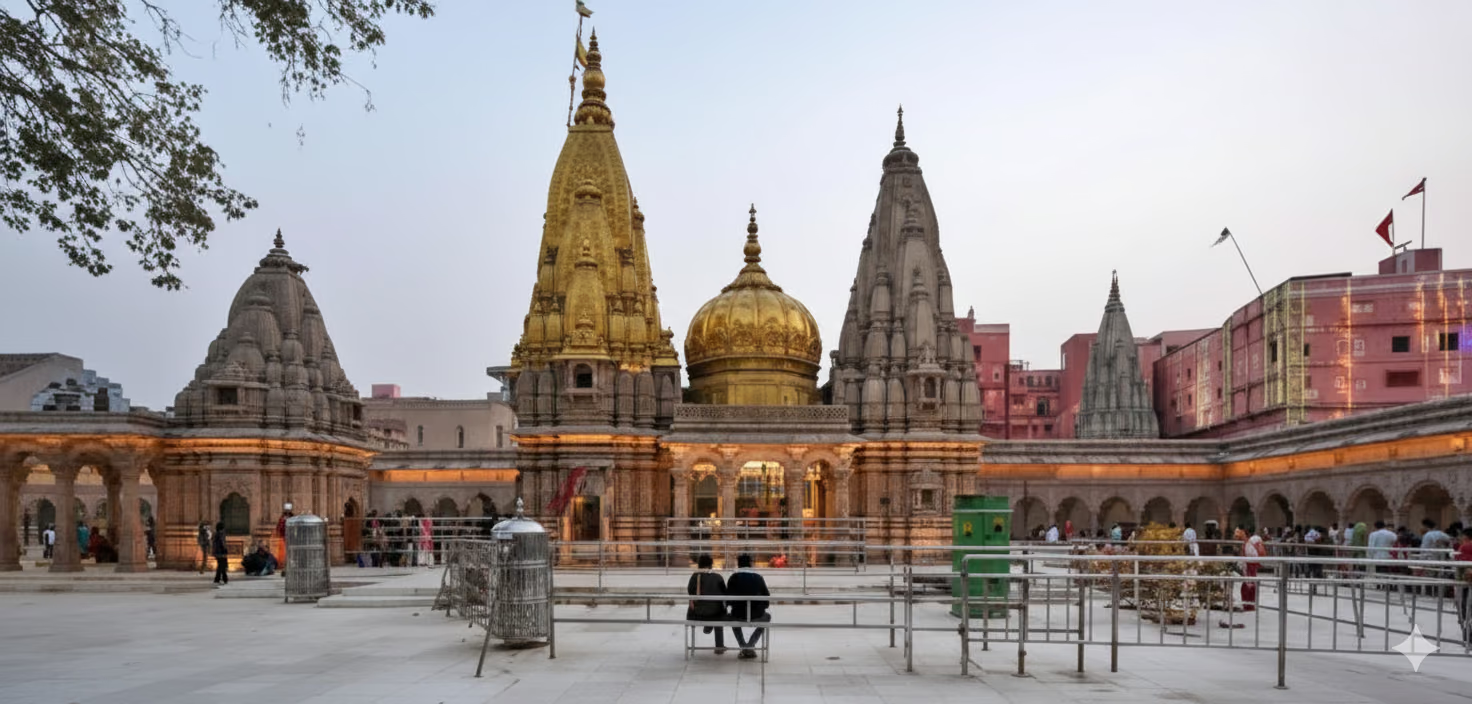
According to legend, Kush lost a snake-charm bracelet in the Saryu and this temple was built for the naga princess who returned it in exchange for a shrine to Shiva; it remains one of the focal points of Ayodhya’s Maha Shivratri festivities. Nageshwarnath Temple sits at an elevation of 112 m and is typically explored in about 30-60 minutes. The most favourable months to visit are February, November, December, and January, when conditions are best suited for sightseeing. Nearby points of interest include Temple Bazaar and Prasada Hall, Main Nageshwarnath Temple Shrine, and Kush’s Statue and Legendary Plaque. Other notable highlights include shivratri night aarti with oil lamps, kush’s legendary idol of Lord Shiva, and ancient tank for ritual holy dips. It falls within Faizabad district and Uttar Pradesh, India.
Ram Mandir
Built at the site traditionally identified as Ram Janmabhoomi, the birthplace of Lord Ram, this temple is one of the most significant pilgrimage sites in contemporary Hinduism, drawing pilgrims from across India and abroad. Ram Mandir is typically explored in about half day. The best time to visit is October to March. Nearby points of interest include Garbhagriha and Ram Janmabhoomi Complex. Other notable highlights include significant Pilgrimage destination in Ayodhya, rich historical and cultural heritage, and important spiritual or architectural significance. It falls within Ayodhya, Ayodhya district, and Uttar Pradesh.
Shri Ram Janmabhoomi Temple
Consecrated in January 2024 after decades of legal and religious dispute, the temple stands at the site long venerated as Rama’s birthplace and has quickly become one of India’s most visited pilgrimage sites, with its Nagara-style architecture and sweeping riverside plaza drawing millions of pilgrims annually. Shri Ram Janmabhoomi Temple sits at an elevation of 110 m and is typically explored in about 1-2 hours. The most favourable months to visit are February, November, December, and January, when conditions are best suited for sightseeing. Nearby points of interest include Ramkund, Hanuman Garhi, and Ram Darbar. Other notable highlights include view the 161-foot idol of Ram Lalla, walk the 50-foot-wide sanctum with gold-plated doors, and see the 392 carved pillars and 44 doors. It falls within Ayodhya, Faizabad district, and Uttar Pradesh.
Tour Packages for Ayodhya




Explore More of Ayodhya
Destination Hub
Ayodhya OverviewSpiritual & Temple Guides
Places to Explore
Discover attraction
Discover attraction
Discover attraction
Discover attraction
Discover attraction
Discover attraction
Discover attraction
Discover attraction
Discover attraction
Discover attraction
Discover attraction
Discover attraction
Discover attraction
Discover attraction
Discover attraction