
Hanuman Garhi
Overview
- •Perched atop a hill in the heart of Ayodhya, Hanuman Garhi is a majestic temple dedicated to Lord Hanuman, offering panoramic views of the sacred city.
- •This revered shrine, one of Ayodhya's most important, draws countless devotees who climb its 76 steps to seek the blessings of the monkey god before visiting the nearby Ram Janmabhoomi.
- •With its imposing presence and vibrant spiritual energy, Hanuman Garhi stands as a testament to unwavering devotion and the enduring legacy of the Ramayana.
Highlights
- 76-step climb flanked by whitewashed arches
- Panoramic view of Ayodhya’s ghats and Saryu River
- Four-faced Hanuman idol in the central sanctum
- Evening aarti with conch shells and temple bells
- Legendary spot where Hanuman guarded Ram’s city
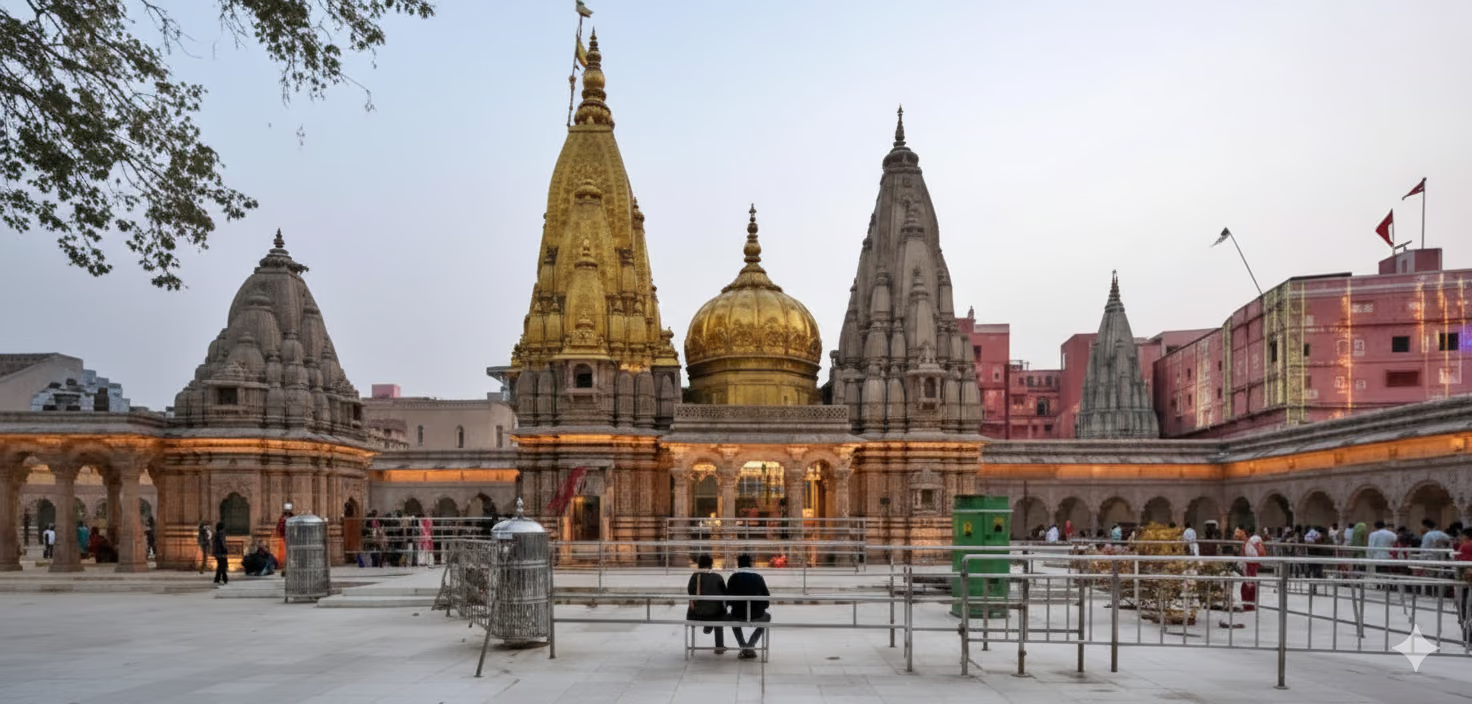
- Rose-pink fortress walls with Mughal-style domes
Religious Significance
Hanuman Garhi holds profound significance as the guardian temple of Ayodhya, believed to protect the city and its pilgrims. It is a key site in the Ramayana circuit, where devotees traditionally offer prayers to Hanuman before visiting the Ram Mandir, reflecting the belief that Hanuman clears the path for devotees. The temple's management by the Ramanandi Sampradaya underscores its importance in the Vaishnava tradition, linking it to the broader narrative of Lord Rama's life and devotion.
Dress Code
Visitors are advised to dress modestly, covering shoulders and knees, as a mark of respect in this sacred space. Traditional Indian attire is welcomed, and it is customary to remove footwear before entering the temple premises.
Facilities
The temple offers basic amenities including shoe storage, drinking water, and prasad stalls. Restrooms are available, and the surrounding area has shops selling religious items and offerings.
Festivals
- •Hanuman Garhi comes alive during Hanuman Jayanti, celebrated with great fervor, drawing thousands of devotees for special prayers and processions.
- •The temple also observes Ram Navami, when the idol of Hanuman is taken in a grand procession to the Ram Janmabhoomi, symbolizing his eternal service to Lord Rama.
- •Weekly Tuesday and Saturday observances are particularly popular, with devotees offering sindoor, laddoos, and chanting the Hanuman Chalisa.
History
- •Hanuman Garhi's origins are steeped in legend, believed to have been established in the 10th century by the revered saint Yagyavalkya, who enshrined a murti of Hanuman to protect the city of Ayodhya.
- •The temple gained prominence under the patronage of the Nawabs of Awadh, who added to its structure over time.
- •It has long been a stronghold of the Ramanandi Sampradaya, with the Bairagi Mahants of the Nirvani Akhara overseeing its rituals and administration.
- •This sacred site has served as a spiritual and cultural hub, witnessing centuries of devotion and historical events.
Architecture
- •The temple's architecture is a distinctive blend of fortress-like and North Indian temple styles, characterized by its elevated position and a long flight of 76 steps leading to the main sanctum.
- •The entrance is marked by a grand gate, and the complex is adorned with intricate carvings and a prominent shikhara.
- •Inside, the sanctum houses the central idol of Hanuman in a seated posture, facing south, with a murti of Lord Rama and Sita nearby.
- •The temple's layout, with its high walls and strategic location, reflects its historical role as a protective bastion for the city.
Travel Tips
- Designate a group meeting point and time: The temple premises are busy and the group can easily split while climbing or during darshan. Fix a clear meeting spot (like the main entrance gate or the big bell) and a time, and have one person carry a mobile phone with a local SIM for emergencies.
- Keep footwear in a dedicated bag and wear slip-on shoes: You must remove shoes before entering the temple, and the shoe stand can get chaotic. Carry a small cloth bag to hold your footwear, and wear easy-to-remove sandals or slip-ons to avoid bending or fumbling.
- Use the doli (palanquin) service for easy ascent: If walking the 70+ steps is difficult, hire a doli or a porter at the base for a safe, assisted ride up. Agree on the price beforehand, and ask your group to share one doli to split the cost.
- Carry your own water and light snacks: The climb and the temple area have limited clean drinking water options, and queues for prasad can be long. Bring a small backpack with bottled water, glucose biscuits, and any personal medication, but avoid heavy meals before the climb.
- Start early to avoid crowds and heat: Reach Hanuman Garhi by 7 AM, as the temple gets crowded by mid-morning and the steps are steep. Early visits also mean cooler weather, which is easier on the heart and knees for senior travellers.
Things to Do
Take a guided heritage walk around the fort’s history
1.5 hoursHire a local guide or join a small group to learn about the temple’s 10th-century origins, its role in Awadh’s history, and the story behind its name “Hanuman Garhi” (fort of Hanuman). The narration brings alive the legends of Tulsidas and the temple’s guardianship of Ayodhya.
Visit the small shrines and murals within the temple complex
1 hourWander through the inner courtyards to see lesser-known shrines dedicated to Rama, Sita, and Lakshmana, along with colourful murals depicting scenes from the Ramayana. It’s a peaceful way to understand the region’s mythological heritage without the crowd.
Watch the sunset from the temple’s upper terrace
45 minutesHead to the open terrace near the main dome during late afternoon to watch the sun dip below the horizon, casting golden light over the temple spires and the city below. It’s a calm, unhurried moment perfect for seniors and group travellers.
Explore the panoramic views from the hilltop ramparts
45 minutesWalk along the fort’s elevated perimeter to enjoy sweeping views of Ayodhya’s skyline, including the Sarayu River and distant temples. This is a serene spot for photography and quiet reflection, especially during sunrise or sunset.
Climb the 76 steps to the Hanuman Garhi temple sanctum
1 hourAscend the iconic staircase that leads to the main temple dedicated to Lord Hanuman, where you can offer prayers and witness the devoted atmosphere. The climb is steep but manageable, with railings and resting spots along the way.
Attend the evening aarti at the main shrine
1 hourJoin the vibrant and soulful evening aarti ceremony, where the temple resonates with chanting, bells, and the glow of oil lamps. It’s a deeply spiritual experience that draws both locals and pilgrims, offering a glimpse into Ayodhya’s living faith.
Frequently Asked Questions
Hanuman Garhi is about 1.5 kilometers from Ayodhya Junction, a short 10-minute auto-rickshaw or cycle-rickshaw ride. You can also walk if you are comfortable, but the climb to the temple starts after a steep 76-step staircase, so most senior travellers prefer taking a rickshaw to the base.
Yes, there is a separate queue and a lift facility for senior citizens, pregnant women, and differently-abled visitors, which reduces the waiting time and avoids the steep steps. You will need to show a valid ID (like Aadhaar or a senior citizen card) at the help desk near the entrance to access this facility. It is best to go early morning (6-7 AM) to avoid long queues even in the special lane.
Early morning (around 5:30-7:00 AM) is ideal, as the temple is less crowded and the weather is cooler, making it comfortable for a leisurely visit. Plan to spend about 45 minutes to 1 hour, which includes darshan, a quick circumambulation, and time to sit in the courtyard. Avoid visiting during midday (12-3 PM) in summer, as the stone floor gets very hot.
There is no strict dress code, but modest clothing is expected—cover shoulders and knees, and remove your shoes before climbing the steps or entering the main sanctum. You must deposit your footwear at the free shoe stand near the base; carrying socks is helpful for the hot stone floor. Photography is not allowed inside the inner sanctum, but you can take photos from the outer courtyard.
Yes, there are several small eateries and sweet shops just outside the temple complex, serving prasad (like besan laddoos and chana) and simple vegetarian meals like puri-sabzi and kachori. For rest, there are shaded benches in the temple courtyard and a few dharamshalas nearby that allow day-use restrooms for a small fee. For group travellers, it is advisable to carry your own water bottles and light snacks, as the options are basic.
Quick Information
Best Time
October to March
Related Topics
Tour Packages for Ayodhya





Explore More of Ayodhya
Destination Hub
Ayodhya OverviewSpiritual & Temple Guides
Places to Explore
Discover attraction
Discover attraction
Discover attraction
Discover attraction
Discover attraction
Discover attraction
Discover attraction
Discover attraction
Discover attraction
Discover attraction
Discover attraction
Discover attraction
Discover attraction
Discover attraction
Discover attraction