
Odisha ·
Bhubaneswar
Bhubaneswar, the capital of Odisha, lies on the banks of the River Kuakhai which is part of the Mahanadi River delta. Together with Konark and Puri, it forms the Swarna Tribhuja or Golden Triangle of Odisha tourism.
Bhubaneswar at a Glance
Why Bhubaneswar?
The highlights, landmarks and experiences that make this destination worth visiting.
- Ananta Vasudeva Temple
- Somabaresvara Siva Temple
- Ghanteswara Siva Temple
- Kartikesvara Siva Temple
- Regional Museum of Natural History
- Odisha State Museum
Bhubaneswar at a Glance
Essential travel information to understand Bhubaneswar before planning your visit.
Can be combined with
Explore Bhubaneswar
Places to Visit
- Ananta Vasudeva Temple: Ananta Vasudeva Temple is a Hindu temple dedicated to Krishna, an avatar of Vishnu located in Bhubaneswar, the state capital of Odisha, India. The temple was constructed in the thirteenth century, and the complete murtis of Krishna, Balarama and Subhadra are worshipped there.
- Somabaresvara Siva Temple: The Somabaresvara Siva Temple is located in the Kapilesvara temple precinct (Lat- 200 15’ 53" N., Long- 850 51’ 40" E., Elev- 56 ft). The enshrined deity is a Sivalingam over a square yonipitha made of sandstone.
- Ghanteswara Siva Temple: Ghanteswara Siva Temple is located in the Kapileswara precinct. The enshrined deity is a Siva-lingam over a square yonipitha made of laterite.
- Kartikesvara Siva Temple: Kartikesvara Siva Temple (Location: Lat. 73 ft) is situated at a distance of about 100 m from eastern gateway of Lingaraj temple.
- Regional Museum of Natural History: The Regional Museum of Natural History, Bhubaneswar is a museum in Bhubaneswar, Odisha, India with exhibits on plants, animals and geology of the eastern region of India. The Regional Museum of Natural History at Bhubaneswar, was inaugurated in 2004.
- Odisha State Museum: Odisha State Museum is a museum in Bhubaneswar, Odisha. In its original form it was established in 1932 and later moved to the current building in 1960.
Things to Do
- Pathani Samanta Planetarium: The planetarium is named after the famous Odia astrologer Samanta Chandra Sekhar Mahapatra, who was popularly known as Pathani Samanta. The planetarium runs four shows daily between 2PM to 6PM – two in Odia, one in Hindi and one in English.
- Kalinga Stadium: Kalinga Stadium is worth a visit while in Bhubaneswar.
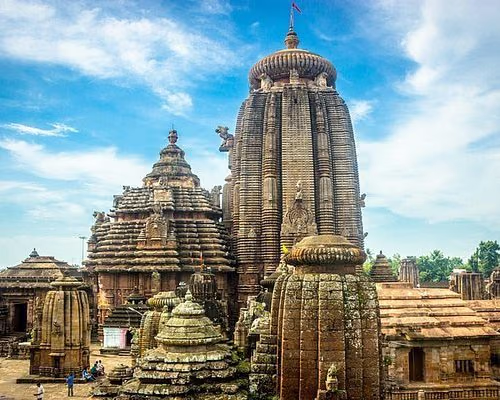
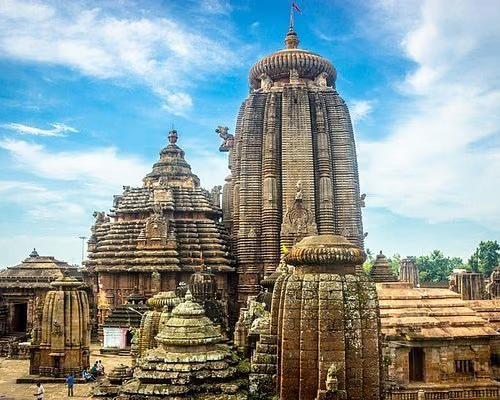
- Lingaraja Temple: The 10th or 11th-century temple of Bhubaneswar has been described as "the truest fusion of dream and reality". A rare masterpiece, the Lingaraja temple has been rated one of the finest examples of a purely Hindu temple in India by Ferguson, the noted art critic and historian.
- Muktesvara Temple: Built in 996 CE, the Muktesvara Temple marks an important transition point between the early and the later phases of the Kalinga architecture. This temple is considered to be the gem of Odishan architecture.
- Parasuramesvara Temple: Dating to 650 AD this is the oldest surviving temple in Bhubaneswar, and possibly Odisha. It is the earliest example of Odisha temple architecture and is considered as the seed of the mighty Kalinga temples of Jagannath Temple, Lingaraja Temple and Konark Sun Temple.
- Rajarani Temple: This temple got its name from a red-gold sandstone used, which is called Rajarani locally. It is an abandoned temple and has no presiding deity.
Sightseeing Places
- Ananta Vasudeva Temple: Ananta Vasudeva Temple is a Hindu temple dedicated to Krishna, an avatar of Vishnu located in Bhubaneswar, the state capital of Odisha, India. The temple was constructed in the thirteenth century, and the complete murtis of Krishna, Balarama and Subhadra are worshipped there.
- Somabaresvara Siva Temple: The Somabaresvara Siva Temple is located in the Kapilesvara temple precinct (Lat- 200 15’ 53" N., Long- 850 51’ 40" E., Elev- 56 ft). The enshrined deity is a Sivalingam over a square yonipitha made of sandstone.
- Ghanteswara Siva Temple: Ghanteswara Siva Temple is located in the Kapileswara precinct. The enshrined deity is a Siva-lingam over a square yonipitha made of laterite.
- Kartikesvara Siva Temple: Kartikesvara Siva Temple (Location: Lat. 73 ft) is situated at a distance of about 100 m from eastern gateway of Lingaraj temple.
- Regional Museum of Natural History: The Regional Museum of Natural History, Bhubaneswar is a museum in Bhubaneswar, Odisha, India with exhibits on plants, animals and geology of the eastern region of India. The Regional Museum of Natural History at Bhubaneswar, was inaugurated in 2004.
- Odisha State Museum: Odisha State Museum is a museum in Bhubaneswar, Odisha. In its original form it was established in 1932 and later moved to the current building in 1960.
Temples
- Ananta Vasudeva Temple: Ananta Vasudeva Temple is a Hindu temple dedicated to Krishna, an avatar of Vishnu located in Bhubaneswar, the state capital of Odisha, India. The temple was constructed in the thirteenth century, and the complete murtis of Krishna, Balarama and Subhadra are worshipped there.
- Somabaresvara Siva Temple: The Somabaresvara Siva Temple is located in the Kapilesvara temple precinct (Lat- 200 15’ 53" N., Long- 850 51’ 40" E., Elev- 56 ft). The enshrined deity is a Sivalingam over a square yonipitha made of sandstone.
- Ghanteswara Siva Temple: Ghanteswara Siva Temple is located in the Kapileswara precinct. The enshrined deity is a Siva-lingam over a square yonipitha made of laterite.
- Kartikesvara Siva Temple: Kartikesvara Siva Temple (Location: Lat. 73 ft) is situated at a distance of about 100 m from eastern gateway of Lingaraj temple.
- Narasimha Temple: Narasimha Temple is a 14th–15th-century Hindu temple in Bhubaneswar city of the Indian state of Odisha. The time period of its construction is estimated from its architectural features.
- Isanesvara Siva Temple: Isanesvara Siva Temple is a 13th-century temple in Bhubaneswar in the state of Orissa, India. The date of its construction is estimated from its architectural features and it is suggests the temple to ganga period.
Places That Define Bhubaneswar
Explore the most iconic landmarks and sacred sites.
Ananta Vasudeva Temple
Ananta Vasudeva Temple is a Hindu temple dedicated to Krishna, an avatar of Vishnu located in Bhubaneswar, the state capital of Odisha, India. The temple was constructed in the thirteenth century, and the complete murtis of Krishna, Balarama and Subhadra are worshipped there.
Somabaresvara Siva Temple
The Somabaresvara Siva Temple is located in the Kapilesvara temple precinct (Lat- 200 15’ 53" N., Long- 850 51’ 40" E., Elev- 56 ft). The enshrined deity is a Sivalingam over a square yonipitha made of sandstone.
Ghanteswara Siva Temple
Ghanteswara Siva Temple is located in the Kapileswara precinct. The enshrined deity is a Siva-lingam over a square yonipitha made of laterite.
Kartikesvara Siva Temple
Kartikesvara Siva Temple (Location: Lat. 73 ft) is situated at a distance of about 100 m from eastern gateway of Lingaraj temple.
Regional Museum of Natural History
The Regional Museum of Natural History, Bhubaneswar is a museum in Bhubaneswar, Odisha, India with exhibits on plants, animals and geology of the eastern region of India. The Regional Museum of Natural History at Bhubaneswar, was inaugurated in 2004.
Odisha State Museum
Odisha State Museum is a museum in Bhubaneswar, Odisha. In its original form it was established in 1932 and later moved to the current building in 1960.
Narasimha Temple
Narasimha Temple is a 14th–15th-century Hindu temple in Bhubaneswar city of the Indian state of Odisha. The time period of its construction is estimated from its architectural features.
Isanesvara Siva Temple
Isanesvara Siva Temple is a 13th-century temple in Bhubaneswar in the state of Orissa, India. The date of its construction is estimated from its architectural features and it is suggests the temple to ganga period.
Paradaresvara Siva Temple
Paradaresvara Siva Temple is a 13th-century AD temple in Bhubaneswar, Odisha. The time period of its construction is estimated from its architectural features and it suggests that the temple must belong to the ganga period.
Laxmi Narayan Temple
Laxmi Narayan Temple is located in the Kapileswar temple precinct. The enshrined deity is Laxmi- Narayana seated in padmasana over a lotus pedestal.
Parsurameswara Temple
Parsurameswara Temple also spelt Parashurameshvara, is a Hindu temple, located in the East Indian city of Bhubaneswar, the capital of Odisha, India, is considered the best preserved specimen of an early Odia Hindu temple dated to the Shailodbhava period between the 7th and 8th centuries CE.
Kedareswar Temple
Kedareswar Temple, one of the eight Astasambhu Temples, is near the Mukteswar Temple, in Bhubaneswar, Odisha. The presiding deity is Shiva, referred to locally by the name ‘Kedareshwar’.
Explore Destination on Map
Discover all sub-destinations, routes and detailed navigation information on an interactive map.
Explore Bhubaneswar on Map
Open the destination map to discover attractions and routes.
Plan Bhubaneswar Your Way
Plan Your Trip
Plan Your Way
- When to Visit: Climate-based guidance for choosing your dates.
- Getting Around: How to reach and move around.
- Budget & Practical Tips: Costs and safety notes from local guidebook sources.
All Itineraries
- 1 Day in Bhubaneswar: 1 days with detailed day plans
- 2 Days in Bhubaneswar: 2 days with detailed day plans
How to Reach
- By Air: The nearest airport is Biju Patnaik International Airport (BBI), about 3 km from Bhubaneswar.
- By Train: The nearest railway station is Bhubaneswar railway station, about 1 km from central Bhubaneswar.
- By Road: Buses travel to and from major cities in the region, originating at Baramunda Bus Station. The station should be reached by auto as it is not central at all.
Best Time to Visit
- Summer: Summer in Bhubaneswar (Apr, May, Jun) averages 27–36°C with about 113 mm of rain per month.
- Monsoon: Monsoon in Bhubaneswar (Jul, Aug, Sep) averages 26–31°C with about 728 mm of rain per month.
- Post-monsoon: Post-monsoon in Bhubaneswar (Oct, Nov) averages 22–30°C with about 96 mm of rain per month.
- Winter: Winter in Bhubaneswar (Dec, Jan, Feb) averages 17–29°C with about 4 mm of rain per month.
Weather
- Summer: Average highs of 36°C and lows of 27°C.
- Monsoon: Average highs of 31°C and lows of 26°C.
- Post-monsoon: Average highs of 30°C and lows of 22°C.
- Winter: Average highs of 29°C and lows of 17°C.
Travel Tips
- Staying safe: Bhubaneswar is one of the greenest cities in India and it has a clean look, with adequate arrangement for dustbins made by the local municipal authorities. It is a generally peaceful city with hardly any history of violence.
- Getting around: Bhubaneswar's roads are well-laid out by Indian standards, and the newer parts of the city are well-planned. Getting around is easy and inexpensive.
- Climate: Bhubaneswar has a tropical savanna climate, designated Aw under the Köppen climate classification. Temperatures in Bhubaneswar usually range from 11 to 44 °C (52 to 111 °F).
- Heat: Daytime highs reach about 36°C in April; carry water and plan outdoor sightseeing for the morning.
- Rain: The wettest months are June, July, August, September and October; check road and site conditions before travelling.
Local Transport
- By bus: Town buses ply throughout the city. These are government-run and cheap.
- By taxi: There are several online cab-hailing companies, such as Ola Cabs (Auto, Share Taxis, Cabs, Full day rental cabs), Uber (Cabs), Clear Car Rental (Cabs), TaxiBhubaneswar (Cabs), TravelSangi (Cabs), Jugnoo (Auto) and Rapido (Bikes) operating in Bhubaneswar.
- By auto-rickshaw: Auto-rickshaws are the lifeline of Bhubaneswar and can be found on most streets of the city. Drivers are generally courteous and honest.
- On foot: The temples of Bhubaneswar are clustered around a small area. The area is overcrowded and connected with narrow roads and lanes, this area is best explored on foot.
Suggested Itinerary
Choose the perfect duration for your Bhubaneswar trip.
Spiritual & Religious
History
- Summary: Bhubaneswar, the capital of Odisha, lies on the banks of the River Kuakhai which is part of the Mahanadi River delta. Together with Konark and Puri, it forms the Swarna Tribhuja or Golden Triangle of Odisha tourism.
- Overview: Bhubaneswar, the capital of Odisha, lies on the banks of the River Kuakhai which is part of the Mahanadi River delta. Together with Konark and Puri, it forms the Swarna Tribhuja or Golden Triangle of Odisha tourism. This city makes an ideal starting point for the traveller who wishes to explore the magnificence of Kalinga architecture, worship at its grand temples or enjoy the beaches of Puri.
- Ancient History: Bhubaneswar stands near the ruins of Sisupalgarh. Dhauli, near Bhubaneswar was the site of the Kalinga War, in which the Mauryan emperor Ashoka invaded and annexed Kalinga. One of the most complete edicts of the Mauryan Emperor, Ashoka, dating from between 272 and 236 BCE, remains carved in rock, 8 kilometres (5.0 mi) to the southwest of the modern city. After the decline of the Mauryan empire, the area came under the rule of Mahameghavahana dynasty, whose most well-known ruler is Kharavela.
Festivals
- Overview: Bhubaneswar, the capital of Odisha, lies on the banks of the River Kuakhai which is part of the Mahanadi River delta. Together with Konark and Puri, it forms the Swarna Tribhuja or Golden Triangle of Odisha tourism. This city makes an ideal starting point for the traveller who wishes to explore the magnificence of Kalinga architecture, worship at its grand temples or enjoy the beaches of Puri.
- Best Festival Time: The most comfortable months are January, February, November and December.
Religious Significance
- Summary: Bhubaneswar, the capital of Odisha, lies on the banks of the River Kuakhai which is part of the Mahanadi River delta. Together with Konark and Puri, it forms the Swarna Tribhuja or Golden Triangle of Odisha tourism.
- Famous For: Known for Ananta Vasudeva Temple, Somabaresvara Siva Temple and Ghanteswara Siva Temple.
- Overview: Bhubaneswar, the capital of Odisha, lies on the banks of the River Kuakhai which is part of the Mahanadi River delta. Together with Konark and Puri, it forms the Swarna Tribhuja or Golden Triangle of Odisha tourism. This city makes an ideal starting point for the traveller who wishes to explore the magnificence of Kalinga architecture, worship at its grand temples or enjoy the beaches of Puri.
Planning Guide
- Overview: Bhubaneswar, the capital of Odisha, lies on the banks of the River Kuakhai which is part of the Mahanadi River delta. Together with Konark and Puri, it forms the Swarna Tribhuja or Golden Triangle of Odisha tourism. This city makes an ideal starting point for the traveller who wishes to explore the magnificence of Kalinga architecture, worship at its grand temples or enjoy the beaches of Puri.
- Accommodation: There is a variety of options from as cheap as ₹150 up to ₹4000. Listed options include City Lodge, Ginger Bhubaneshwar and Hotel Pushpak.
- Best Way To Explore: Bhubaneswar's roads are well-laid out by Indian standards, and the newer parts of the city are well-planned. Getting around is easy and inexpensive.
The Sacred Heart of Bhubaneswar
A timeless journey of faith and devotion.
Significance
Hindus form the majority in the city with more than 95% of the total population, as of 2011 Census of India. Muslims forms the second largest minority with 3.3% and Christians with 0.92%.
Spiritual Significance
Hindus form the majority in the city with more than 95% of the total population, as of 2011 Census of India. Muslims forms the second largest minority with 3.3% and Christians with 0.92%.
Pilgrimage Traditions
Bhubaneswar is supposed to have had over one thousand temples, earning the tag of the 'Temple City of India'.
Sacred Heritage
Bhubaneswar stands near the ruins of Sisupalgarh. Dhauli, near Bhubaneswar was the site of the Kalinga War, in which the Mauryan emperor Ashoka invaded and annexed Kalinga.
Frequently Asked Questions
Bhubaneswar is most comfortable in January, February, November and December, when average daytime highs stay at or below 32°C and rainfall is low. The hottest month is April (average high 36°C) and the wettest months are June, July, August, September and October.
The nearest airport is Biju Patnaik International Airport (BBI), about 3 km away. The nearest railway station is Bhubaneswar railway station, about 1 km away. See the How to Reach page for road, rail and air details.
Main attractions include Ananta Vasudeva Temple, Somabaresvara Siva Temple, Ghanteswara Siva Temple, Kartikesvara Siva Temple, Regional Museum of Natural History and Odisha State Museum.
A stay of 2 days covers the main sights. Ready-made 1-day and 2-day itineraries are linked on this page.
Average highs range from 27°C to 36°C over the year, with about 2747 mm of rain in total.
Tour Packages for Bhubaneswar


Your Bhubaneswar Journey Starts Here
Explore top attractions, local culture, and the experiences that make this destination worth visiting.