
2 Days in Bodh Gaya
Planning 2 days in Bodh Gaya? This 2-day itinerary immerses you in Bodh Gaya, the most sacred site in Buddhism, where Siddhartha Gautama attained enlightenment under the Bodhi Tree. Explore the Mahabodhi Temple Complex, visit international monasteries, and enjoy a half-day meditation session. It includes a detailed day-wise schedule, activities, meal suggestions, transportation tips and an estimated budget to help you plan your trip with less guesswork.
Day 1: Mahabodhi Temple Complex & Sacred Sites
Day 1
Begin your pilgrimage at the Mahabodhi Temple Complex, a UNESCO World Heritage Site. Walk the circumambulation path, meditate under the Bodhi Tree, and visit the Vajrasana and the seven sacred spots (Saptasthana) where the Buddha spent weeks after enlightenment.
Activities
- Sunrise visit to the Mahabodhi Temple Complex (opens at 5:00 AM) – witness the morning prayers and the serene atmosphere.
- Meditate or sit quietly under the Bodhi Tree (descendant of the original) and pay respects at the Vajrasana (Diamond Throne).
- Explore the Saptasthana sites: Animeshlochan Chaitya (where the Buddha gazed at the tree for a week), Ratnachakrama (jeweled walkway), and the Muchalinda Lake (Lotus Pond) with its ancient statue.
- Visit the Archaeological Museum (near the temple) to see artifacts from the site's long history, including Gupta-era sculptures.
Meals
- •Breakfast at your hotel or a local café (e.g., Tibetan-style porridge).
- •Lunch at a monastery-run restaurant (e.g., Thai Monastery's vegetarian food).
- •Dinner at a rooftop restaurant overlooking the temple, such as The Bodhi Tree Restaurant.
Day 2: International Monasteries & Half-Day Meditation
Day 2
Spend the morning touring the international monasteries that make Bodh Gaya a global Buddhist hub. After lunch, engage in a half-day meditation session at a reputable center, then conclude with a visit to the Great Buddha Statue at sunset.
Activities
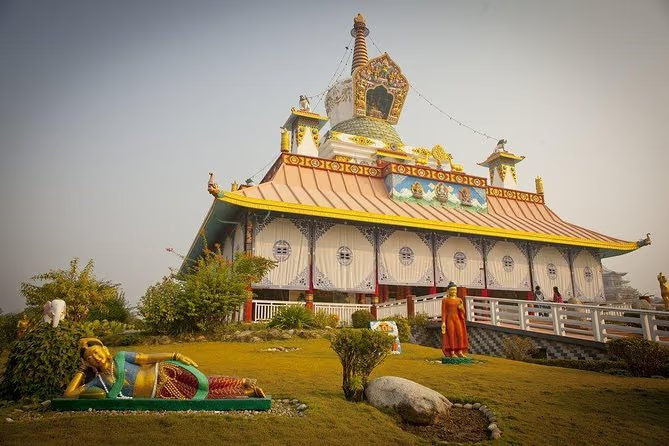
- Morning tour of international monasteries: start with the Thai Monastery (Wat Thai) with its beautiful curved roof and gardens, then the Bhutanese Monastery (colorful murals), the Japanese Monastery (peaceful pagoda), and the Tibetan Monastery (with its prayer wheels).
- Continue to the Myanmar Monastery (Burmese style) and the Vietnamese Monastery (distinctive architecture).
- Half-day meditation session (2:00 PM – 5:00 PM) at the International Meditation Centre or Root Institute for Wisdom Culture – learn basic Vipassana or mindfulness techniques.
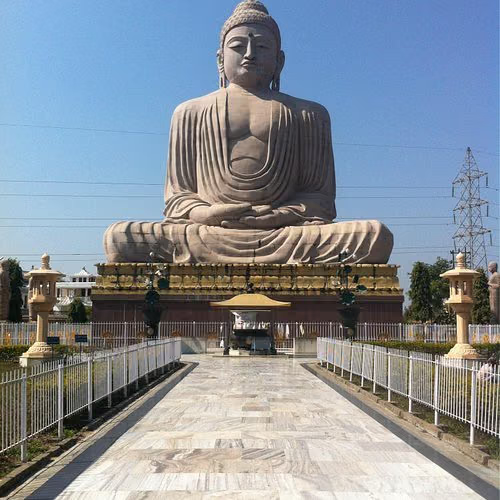
- At sunset, walk to the Great Buddha Statue (80 feet tall, consecrated by the Dalai Lama in 1989) and enjoy the illuminated view of the Mahabodhi Temple from the nearby park.
Meals
- •Breakfast at your hotel.
- •Lunch at a Korean or Japanese monastery restaurant (e.g., Korean Temple's simple vegan meal).
- •Dinner at a local restaurant like The Tathagat Hotel or a café near the temple.
Detailed Timeline
Day 1
9 activities
Morning
Wake up and prepare for sunrise visit
Set an early alarm and dress modestly. Carry a flashlight for the short walk to the temple. Most hotels are within walking distance; otherwise, hire an auto-rickshaw for about ₹50-100. Wear comfortable shoes and bring a shawl or light jacket as mornings can be cool.
Enter Mahabodhi Temple Complex and witness morning prayers
The temple opens at 5:00 AM. Join the monks and pilgrims for chanting and offerings. Entry is free, but a small donation (₹10-20) is appreciated. Photography is allowed in some areas but avoid using flash near the shrine. Be respectful and maintain silence.
Meditate under the Bodhi Tree and pay respects at Vajrasana
Sit quietly under the descendant of the original Bodhi Tree, where the Buddha attained enlightenment. The Vajrasana (Diamond Throne) marks the exact spot. You may sit for as long as you like; bring your own meditation cushion if desired. There is no cost, but a small donation for temple maintenance is welcome.
Explore the Saptasthana (seven sacred spots)
Walk the circuit to Animeshlochan Chaitya (where the Buddha gazed at the tree for a week), Ratnachakrama (jeweled walkway), and Muchalinda Lake (Lotus Pond) with its ancient statue. The sites are within the complex and well-signposted. Allow 1-2 hours. No entry fee, but a guide (₹200-300) can enrich the experience.
Visit the Archaeological Museum
Located near the temple (about 200 meters). The museum houses Gupta-era sculptures and artifacts from the site. Entry fee is ₹10 for Indians, ₹100 for foreigners. Open from 9:00 AM to 5:00 PM (closed on Fridays). Photography is prohibited inside. Spend about 45 minutes.
Afternoon
Lunch at a monastery-run restaurant
Head to the Thai Monastery's vegetarian restaurant (about 10 minutes walk) for a simple, delicious meal. Expect to pay around ₹150-250 for a thali or rice and curry. The food is clean and safe. Alternatively, the Bhutanese Monastery also offers meals. Always drink bottled water.
Return to the Mahabodhi Temple for afternoon meditation
The temple is less crowded in the afternoon. You can sit near the Bodhi Tree or in the meditation hall. There is no fixed schedule; you may stay as long as you wish. Some monks offer informal guidance. Donations are optional. Spend 1-2 hours in quiet reflection.
Evening prayers and light display at the temple
As dusk falls, the temple is lit with butter lamps and colorful lights. Evening chanting begins around 5:30 PM. Stay for the serene atmosphere. No cost. Afterwards, take a final walk around the complex. Then head to a rooftop restaurant for dinner.
Evening
Dinner at The Bodhi Tree Restaurant
This rooftop restaurant offers views of the illuminated temple. Try their Indian and continental dishes; a meal costs around ₹300-500. Make a reservation in advance (phone: +91-631-2200-123). After dinner, return to your hotel for a restful night.
Day 2
8 activities
Morning
Breakfast at your hotel
Enjoy a hearty breakfast at your hotel. If your hotel doesn't include breakfast, try a local café for South Indian or Tibetan fare. Budget ₹100-200. Plan to start your monastery tour by 8:30 AM.
Tour of Thai Monastery (Wat Thai) and Bhutanese Monastery
Start at Wat Thai, known for its curved roof and gardens. It is about 1 km from the temple; walk or take an auto-rickshaw (₹50). Entry is free, but donations are welcome. Then walk to the Bhutanese Monastery (500 meters) to see its colorful murals. Spend about 45 minutes at each.
Visit Japanese Monastery and Tibetan Monastery
The Japanese Monastery (about 1.5 km) features a peaceful pagoda. Then head to the Tibetan Monastery (nearby) with its prayer wheels. Both are free to enter. Dress modestly and remove shoes before entering prayer halls. Allow 30-40 minutes per site.
Continue to Myanmar Monastery and Vietnamese Monastery
The Myanmar (Burmese) Monastery is about 2 km away; take an auto-rickshaw (₹80-100). Its architecture is distinct. The Vietnamese Monastery is a short walk from there. Both are free. Spend about 30 minutes each. Keep hydrated; carry water.
Afternoon
Lunch at Korean or Japanese monastery restaurant
The Korean Temple offers simple vegan meals (about ₹200). Alternatively, the Japanese Monastery has a small café. These are often open to visitors. Confirm timings; some close by 2 PM. Enjoy a quiet meal and rest before meditation.
Half-day meditation session at International Meditation Centre
Arrive by 1:45 PM. The session runs from 2:00 PM to 5:00 PM. A donation of ₹200-500 is suggested. Wear loose, comfortable clothing. The centre teaches basic Vipassana or mindfulness. No prior experience needed. Follow instructions and maintain noble silence during the session.
Walk to the Great Buddha Statue and enjoy sunset views
After meditation, walk to the 80-foot Great Buddha Statue (about 15 minutes). The statue is illuminated at dusk. The adjacent park offers views of the Mahabodhi Temple. Entry is free. Spend 30-45 minutes taking photos and soaking in the atmosphere.
Evening
Dinner at The Tathagat Hotel or local café
The Tathagat Hotel restaurant serves Indian and Chinese dishes; a meal costs ₹300-400. Alternatively, try a café near the temple for thukpa or momos. After dinner, you may take a final evening stroll around the temple complex before retiring.
Food Recommendations
The Bodhi Tree Restaurant (near the temple)
Multi-cuisine (Indian, Continental, Chinese)Must Try: Vegetarian thali and fresh fruit lassi
₹200–₹500 per person
Thai Monastery's Dining Hall (open to visitors during meal times)
Thai vegetarianMust Try: Thai green curry with rice and spring rolls
₹100–₹300 (donation-based or fixed)
Tibetan Kitchen (near the main square)
Tibetan and IndianMust Try: Momos (dumplings) and thukpa (noodle soup)
₹150–₹400 per person
Transportation Tips
- Bodh Gaya is well-connected by air: Gaya International Airport (IATA: GAY) is just 5 km away with flights from Kolkata, Bangkok, and Paro (Bhutan).
- From Gaya railway station (17 km), take a pre-paid taxi or auto-rickshaw (₹300–₹500) to Bodh Gaya; the journey takes about 30–40 minutes.
- Within Bodh Gaya, walking is the best way to explore the temple complex and monasteries, as they are within a 2–3 km radius; bicycle rickshaws are available for short trips (₹20–₹50).
- For a broader Buddhist circuit, hire a private car for day trips to Sarnath (near Varanasi, ~250 km) or Rajgir and Nalanda (nearby Buddhist sites, ~70 km).
Budget Breakdown
Total Estimated Per Person
₹4,000–₹12,000 (for 2 days, excluding international travel)
Accommodation
₹1,500–₹8,000 per night (budget guesthouses to mid-range hotels)
Food
₹500–₹1,500 per day
Transport
₹300–₹1,000 (local transport and airport transfers)
Miscellaneous
₹500–₹1,000 (entry fees, donations, meditation course)
More Itineraries
Explore other pilgrimage durations and special trips.
Tour Packages for Bodh Gaya
Explore More of Bodh Gaya
Destination Hub
Bodh Gaya OverviewSpiritual & Temple Guides
Places to Explore
Discover attraction
Discover attraction
Discover attraction
Discover attraction
Discover attraction
Discover attraction
Discover attraction
Discover attraction
Discover attraction