
Odisha ·
Cuttack
Cuttack, officially Kataka, is the second-largest city of Odisha after Bhubaneswar. The state's former capital is steeped in old traditions, with a perfect combination of traditional and modern lifestyles.
Cuttack at a Glance
Why Cuttack?
The highlights, landmarks and experiences that make this destination worth visiting.
- Dhabaleswar Temple
- Barabati fort
- Museum of Justice
- Odisha State Maritime Museum
Cuttack at a Glance
Essential travel information to understand Cuttack before planning your visit.
Can be combined with
Explore Cuttack
Places to Visit
- Dhabaleswar Temple: Dhabaleswar Temple is dedicated to the worship of Lord Shiva. It is situated at a distance of 27 km from the city of Cuttack, Odisha, India, on the riverine island of Lord Dhabaleshwar.
- Barabati fort: Barabati Fort is a 987 CE fort built by Marakata Keshari of Somavanshi (Keshari) dynasty in Cuttack, Odisha. The ruins of the fort remain with its moat, gate, and the earthen mound of the nine-storied palace.
- Museum of Justice: A law museum hosted in a colonial-era bungalow, which was once the residence of the Chief Justice of the Orissa High Court. It is not just a repository of antiques, rather it is a cultural space for legal academicians, researchers and also commoners.
- Odisha State Maritime Museum: The museum came up in 2013 and is housed in the former complex of the River Boat Construction and Repair Workshop.
Things to Do
- Barabati Stadium: A multipurpose stadium used for cricket, football and hockey. It is a regular venue for international cricket and is the home ground of Odisha cricket team.
- Jawaharlal Nehru Indoor Stadium: Jawaharlal Nehru Indoor Stadium is worth a visit while in Cuttack.
- Barabati Fort: A 13th-century fort built by the Eastern Ganga emperor Anangabhimadeva III (1211-1238). Later, the Gajapatis, the Chalukyas, the Bengal Sultans, the Mughals and the Marathas took over the fort.
- Museum of Justice: A law museum hosted in a colonial-era bungalow, which was once the residence of the Chief Justice of the Orissa High Court. It is not just a repository of antiques, rather it is a cultural space for legal academicians, researchers and also commoners.
- Netaji Birth Place Museum: Janakinath Bhavan, the birthplace of Indian independence activist Netaji Subhas Chandra Bose is converted into a museum and is named the Netaji Birth Place Museum. A huge gate on the Jail Road leads visitors towards the museum.
- Odisha State Maritime Museum: The museum came up in 2013 and is housed in the former complex of the River Boat Construction and Repair Workshop.
Sightseeing Places
- Dhabaleswar Temple: Dhabaleswar Temple is dedicated to the worship of Lord Shiva. It is situated at a distance of 27 km from the city of Cuttack, Odisha, India, on the riverine island of Lord Dhabaleshwar.
- Barabati fort: Barabati Fort is a 987 CE fort built by Marakata Keshari of Somavanshi (Keshari) dynasty in Cuttack, Odisha. The ruins of the fort remain with its moat, gate, and the earthen mound of the nine-storied palace.
- Museum of Justice: A law museum hosted in a colonial-era bungalow, which was once the residence of the Chief Justice of the Orissa High Court. It is not just a repository of antiques, rather it is a cultural space for legal academicians, researchers and also commoners.
- Odisha State Maritime Museum: The museum came up in 2013 and is housed in the former complex of the River Boat Construction and Repair Workshop.
Temples
- Dhabaleswar Temple: Dhabaleswar Temple is dedicated to the worship of Lord Shiva. It is situated at a distance of 27 km from the city of Cuttack, Odisha, India, on the riverine island of Lord Dhabaleshwar.
Places That Define Cuttack
Explore the most iconic landmarks and sacred sites.
Dhabaleswar Temple
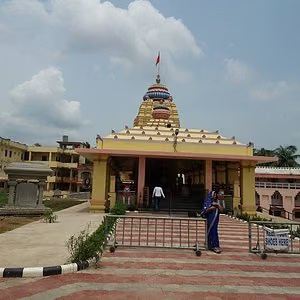
Dhabaleswar Temple is dedicated to the worship of Lord Shiva. It is situated at a distance of 27 km from the city of Cuttack, Odisha, India, on the riverine island of Lord Dhabaleshwar.
Barabati fort
Barabati Fort is a 987 CE fort built by Marakata Keshari of Somavanshi (Keshari) dynasty in Cuttack, Odisha. The ruins of the fort remain with its moat, gate, and the earthen mound of the nine-storied palace.
Museum of Justice
A law museum hosted in a colonial-era bungalow, which was once the residence of the Chief Justice of the Orissa High Court. It is not just a repository of antiques, rather it is a cultural space for legal academicians, researchers and also commoners.
Odisha State Maritime Museum
The museum came up in 2013 and is housed in the former complex of the River Boat Construction and Repair Workshop.
Explore Destination on Map
Discover all sub-destinations, routes and detailed navigation information on an interactive map.
Explore Cuttack on Map
Open the destination map to discover attractions and routes.
Plan Your Trip
Plan Your Way
- When to Visit: Climate-based guidance for choosing your dates.
- Getting Around: How to reach and move around.
- Budget & Practical Tips: Costs and safety notes from local guidebook sources.
How to Reach
- By Air: The nearest airport is Biju Patnaik International Airport (BBI), about 30 km from Cuttack.
- By Train: The nearest railway station is Radhakishorepur railway station, about 5 km from central Cuttack.
Best Time to Visit
- Summer: Summer in Cuttack (Apr, May, Jun) averages 27–36°C with about 121 mm of rain per month.
- Monsoon: Monsoon in Cuttack (Jul, Aug, Sep) averages 26–31°C with about 602 mm of rain per month.
- Post-monsoon: Post-monsoon in Cuttack (Oct, Nov) averages 22–30°C with about 97 mm of rain per month.
- Winter: Winter in Cuttack (Dec, Jan, Feb) averages 16–28°C with about 1 mm of rain per month.
Weather
- Summer: Average highs of 36°C and lows of 27°C.
- Monsoon: Average highs of 31°C and lows of 26°C.
- Post-monsoon: Average highs of 30°C and lows of 22°C.
- Winter: Average highs of 28°C and lows of 16°C.
Suggested Itinerary
Choose the perfect duration for your Cuttack trip.
Spiritual & Religious
History
- Summary: Cuttack, officially Kataka, is the second-largest city of Odisha after Bhubaneswar. The state's former capital is steeped in old traditions, with a perfect combination of traditional and modern lifestyles.
- Overview: Cuttack, officially Kataka, is the second-largest city of Odisha after Bhubaneswar. The state's former capital is steeped in old traditions, with a perfect combination of traditional and modern lifestyles. Its silver filigree works have led the city to earn the nickname "Silver City".
- Ancient History: The earliest written history of Cuttack may go back to the Keshari dynasty. As stated by the historian Andrew Stirling, present-day Cuttack was established as a military cantonment by king Nrupa Keshari of the Keshari dynasty in 989 CE. Stirling based his opinion on the Madala Panji, a chronicle of the Jagannatha temple of Puri. The reign of Maharaja Markata Keshari was distinguished for the stone embank built to protect the new capital from flooding in 1002 CE.
Festivals
- Overview: Cuttack, officially Kataka, is the second-largest city of Odisha after Bhubaneswar. The state's former capital is steeped in old traditions, with a perfect combination of traditional and modern lifestyles. Its silver filigree works have led the city to earn the nickname "Silver City".
- Best Festival Time: The most comfortable months are January, February, November and December.
Planning Guide
- Overview: Cuttack, officially Kataka, is the second-largest city of Odisha after Bhubaneswar. The state's former capital is steeped in old traditions, with a perfect combination of traditional and modern lifestyles. Its silver filigree works have led the city to earn the nickname "Silver City".
- Accommodation: Hotel Neeladri, Mangalabag, Telephone +91 671 2614221/ 2614331, Tariff ₹250 – 700.
- Best Way To Explore: Hired cars, auto rickshaws and cycle rickshaws are readily available for moving around. City/Town Buses cover part of the city.
The Sacred Heart of Cuttack
A timeless journey of faith and devotion.
Significance
The earliest written history of Cuttack may go back to the Keshari dynasty. As stated by the historian Andrew Stirling, present-day Cuttack was established as a military cantonment by king Nrupa Keshari of the Keshari dynasty in 989 CE.
Historical Significance
The earliest written history of Cuttack may go back to the Keshari dynasty. As stated by the historian Andrew Stirling, present-day Cuttack was established as a military cantonment by king Nrupa Keshari of the Keshari dynasty in 989 CE.
Architectural Legacy
Cuttack is known as a place of Bawan Bazar Tepan Gali (meaning '52 Markets, 53 Lanes'). This place might give you the impression of an old place with very small and dirty lanes, but that's how you define a lotus.
Frequently Asked Questions
Cuttack is most comfortable in January, February, November and December, when average daytime highs stay at or below 32°C and rainfall is low. The hottest month is April (average high 37°C) and the wettest months are June, July, August, September and October.
The nearest airport is Biju Patnaik International Airport (BBI), about 30 km away. The nearest railway station is Radhakishorepur railway station, about 5 km away. See the How to Reach page for road, rail and air details.
Main attractions include Dhabaleswar Temple, Barabati fort, Museum of Justice and Odisha State Maritime Museum.
A stay of 1 day covers the main sights. Ready-made 1-day and 2-day itineraries are linked on this page.
Average highs range from 26°C to 37°C over the year, with about 2373 mm of rain in total.
Tour Packages for Cuttack


Your Cuttack Journey Starts Here
Explore top attractions, local culture, and the experiences that make this destination worth visiting.