
Odisha ·
Sambalpur
Sambalpur is the biggest city in western Odisha (formerly known as Orissa). It is a historically important place, mainly because of the number of freedom fights against the British, Veer Surendra Sai being one of the many who died fighting the British.
Sambalpur at a Glance
Why Sambalpur?
The highlights, landmarks and experiences that make this destination worth visiting.
- Samleswari Temple
- Hirakud Dam
- Veer Surendra Sai Museum
- Ushakothi Wildlife Sanctuary
- Debrigadh Willife Sanctury
- Huma Leaning Temple
Sambalpur at a Glance
Essential travel information to understand Sambalpur before planning your visit.
Can be combined with
Explore Sambalpur
Places to Visit
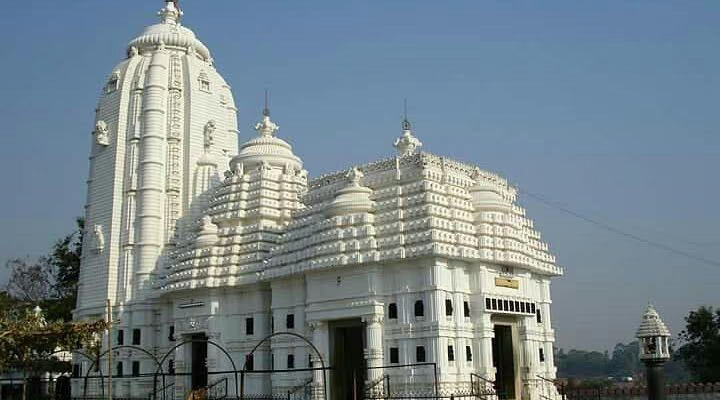
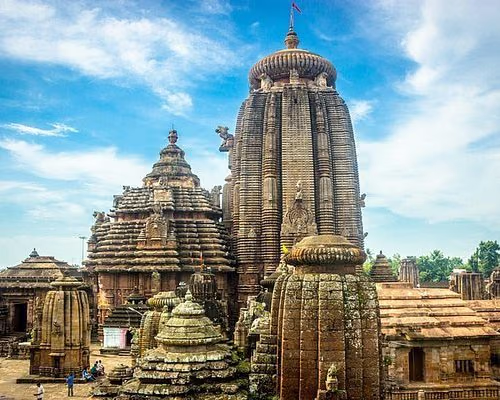
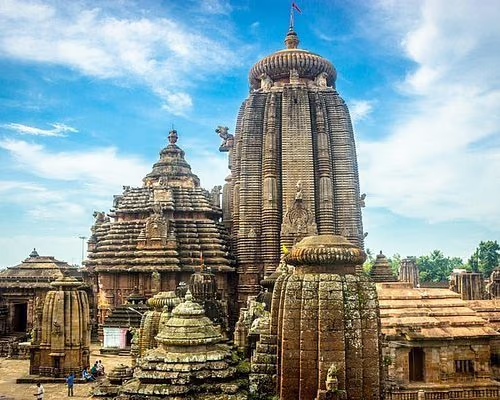
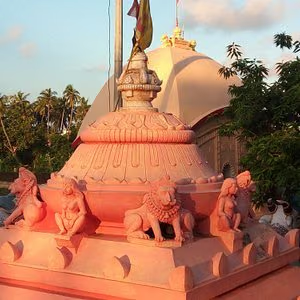
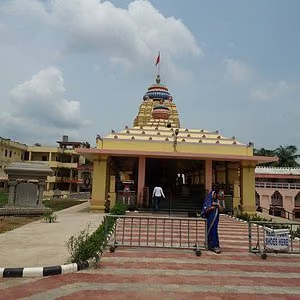
- Samleswari Temple: Samaleswari Temple is a Hindu temple in Sambalpur, Odisha, India, dedicated to the goddess known as 'Samaleswari', also known among the natives as Samalei Maa, meaning Mother Samaleswari.
- Hirakud Dam: Longest earth dam in the world. The reservoir forms an artificial lake with an area of 746 km² having a shoreline of over 640 km.
- Veer Surendra Sai Museum: Veer Surendra Sai Museum, formerly known as Victoria Town Hall, is a cultural and historical museum in Sambalpur, Odisha. It was originally constructed in 1902, was renovated and inaugurated as a museum in April 2026.
- Ushakothi Wildlife Sanctuary: A population of tigers, leopards, panthers, sloth bears, elephants, sambal, gaur, chital and nilgai in a forest area of about 304 km². Watch towers provide a good view of the animals flocking the nearby watering points at night.
- Debrigadh Willife Sanctury: It stands out amongst all the wildlife sanctuaries in Odisha in terms of sighting wild animals, particularly in summer when trees shed their leaves. It stretches across the Lohara and Debrigadh Reserve Forests on the Barapahad hills in Baragarh district.
- Huma Leaning Temple: Famous for its Shiva temple, Huma contains the only leaning temple of Odisha. The Mahanadi river flows close by.
Things to Do
- Hirakud Dam: Longest earth dam in the world. The reservoir forms an artificial lake with an area of 746 km² having a shoreline of over 640 km.
- Huma Leaning Temple: Famous for its Shiva temple, Huma contains the only leaning temple of Odisha. The Mahanadi river flows close by.
- Nrusimhanath: The temple of Vidala-Nrusimha stands at the foot of the picturesque Gandhamardan hill believed to be part of the hill which Hanuman carried on his shoulders from the Himalayas for saving the life of Lakshmana. On the other side of this hill is Harisankar temple and a waterfall.
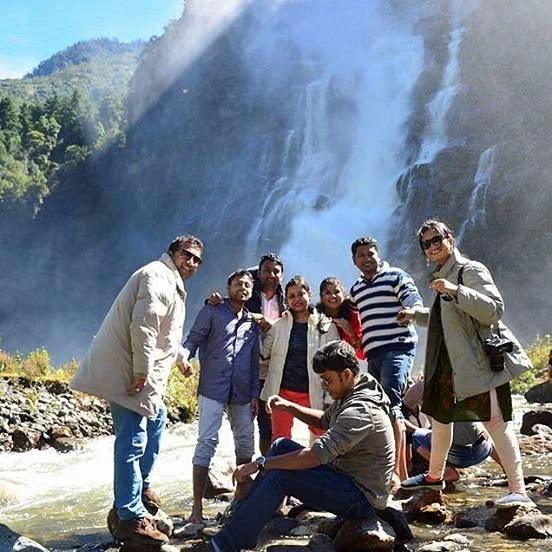
- Pradhanpat Waterfalls: The Pradhanpat hill with its waterfalls offers a rare scenic beauty. These falls are close to Deogarh town which is 96 km from Sambalpur on NH.6.
- Samleswari Temple: Erected by the Chauhans in the mid-16th century. Samaleswari Temple is dedicated to the goddess known as 'Maa', also known among the natives as samalei maa, meaning Mother Samaleswari.
- Debrigadh Willife Sanctury: It stands out amongst all the wildlife sanctuaries in Odisha in terms of sighting wild animals, particularly in summer when trees shed their leaves. It stretches across the Lohara and Debrigadh Reserve Forests on the Barapahad hills in Baragarh district.
Sightseeing Places
- Samleswari Temple: Samaleswari Temple is a Hindu temple in Sambalpur, Odisha, India, dedicated to the goddess known as 'Samaleswari', also known among the natives as Samalei Maa, meaning Mother Samaleswari.
- Hirakud Dam: Longest earth dam in the world. The reservoir forms an artificial lake with an area of 746 km² having a shoreline of over 640 km.
- Veer Surendra Sai Museum: Veer Surendra Sai Museum, formerly known as Victoria Town Hall, is a cultural and historical museum in Sambalpur, Odisha. It was originally constructed in 1902, was renovated and inaugurated as a museum in April 2026.
- Ushakothi Wildlife Sanctuary: A population of tigers, leopards, panthers, sloth bears, elephants, sambal, gaur, chital and nilgai in a forest area of about 304 km². Watch towers provide a good view of the animals flocking the nearby watering points at night.
- Debrigadh Willife Sanctury: It stands out amongst all the wildlife sanctuaries in Odisha in terms of sighting wild animals, particularly in summer when trees shed their leaves. It stretches across the Lohara and Debrigadh Reserve Forests on the Barapahad hills in Baragarh district.
- Huma Leaning Temple: Famous for its Shiva temple, Huma contains the only leaning temple of Odisha. The Mahanadi river flows close by.
Temples
- Samleswari Temple: Samaleswari Temple is a Hindu temple in Sambalpur, Odisha, India, dedicated to the goddess known as 'Samaleswari', also known among the natives as Samalei Maa, meaning Mother Samaleswari.
- Huma Leaning Temple: Famous for its Shiva temple, Huma contains the only leaning temple of Odisha. The Mahanadi river flows close by.
Places That Define Sambalpur
Explore the most iconic landmarks and sacred sites.
Samleswari Temple
Samaleswari Temple is a Hindu temple in Sambalpur, Odisha, India, dedicated to the goddess known as 'Samaleswari', also known among the natives as Samalei Maa, meaning Mother Samaleswari.
Hirakud Dam
Longest earth dam in the world. The reservoir forms an artificial lake with an area of 746 km² having a shoreline of over 640 km.
Veer Surendra Sai Museum
Veer Surendra Sai Museum, formerly known as Victoria Town Hall, is a cultural and historical museum in Sambalpur, Odisha. It was originally constructed in 1902, was renovated and inaugurated as a museum in April 2026.
Ushakothi Wildlife Sanctuary
A population of tigers, leopards, panthers, sloth bears, elephants, sambal, gaur, chital and nilgai in a forest area of about 304 km². Watch towers provide a good view of the animals flocking the nearby watering points at night.
Debrigadh Willife Sanctury
It stands out amongst all the wildlife sanctuaries in Odisha in terms of sighting wild animals, particularly in summer when trees shed their leaves. It stretches across the Lohara and Debrigadh Reserve Forests on the Barapahad hills in Baragarh district.
Huma Leaning Temple
Famous for its Shiva temple, Huma contains the only leaning temple of Odisha. The Mahanadi river flows close by.
Explore Destination on Map
Discover all sub-destinations, routes and detailed navigation information on an interactive map.
Explore Sambalpur on Map
Open the destination map to discover attractions and routes.
Plan Your Trip
Plan Your Way
- When to Visit: Climate-based guidance for choosing your dates.
- Getting Around: How to reach and move around.
- Budget & Practical Tips: Costs and safety notes from local guidebook sources.
All Itineraries
- 1 Day in Sambalpur: 1 days with detailed day plans
- 2 Days in Sambalpur: 2 days with detailed day plans
How to Reach
- By Air: The nearest airport is Jharsuguda Airport (JRG), about 50 km from Sambalpur.
- By Train: The nearest railway station is Sambalpur Road railway station, about 1 km from central Sambalpur.
Best Time to Visit
- Summer: Summer in Sambalpur (Apr, May, Jun) averages 27–37°C with about 30 mm of rain per month.
- Monsoon: Monsoon in Sambalpur (Jul, Aug, Sep) averages 26–31°C with about 558 mm of rain per month.
- Post-monsoon: Post-monsoon in Sambalpur (Oct, Nov) averages 21–30°C with about 58 mm of rain per month.
- Winter: Winter in Sambalpur (Dec, Jan, Feb) averages 15–28°C with about 0 mm of rain per month.
Weather
- Summer: Average highs of 37°C and lows of 27°C.
- Monsoon: Average highs of 31°C and lows of 26°C.
- Post-monsoon: Average highs of 30°C and lows of 21°C.
- Winter: Average highs of 28°C and lows of 15°C.
Suggested Itinerary
Choose the perfect duration for your Sambalpur trip.
Spiritual & Religious
History
- Summary: Sambalpur is the biggest city in western Odisha (formerly known as Orissa).
- Overview: Sambalpur is the biggest city in western Odisha (formerly known as Orissa). It is a historically important place, mainly because of the number of freedom fights against the British, Veer Surendra Sai being one of the many who died fighting the British.
- Ancient History: Artifacts have been discovered that indicate settlement in prehistoric times. Some historians identify it as the city of "Sambalaka" mentioned by the second century CE Roman geographer Ptolemy, who mentioned that the city produces diamonds. In the fourth century CE, the Gupta emperor conquered the territory of "Dakshina Koshala", comprising roughly present day Sambalpur, Bilaspur, and Raipur. In the early sixth century CE Chalukya king Pulakesin II is said to have conquered south Kosala by defeating the then Panduvamsi king Balarjuna Sivagupta.
The Sacred Heart of Sambalpur
A timeless journey of faith and devotion.
Significance
Artifacts have been discovered that indicate settlement in prehistoric times. Some historians identify it as the city of "Sambalaka" mentioned by the second century CE Roman geographer Ptolemy, who mentioned that the city produces diamonds.
Historical Significance
Artifacts have been discovered that indicate settlement in prehistoric times. Some historians identify it as the city of "Sambalaka" mentioned by the second century CE Roman geographer Ptolemy, who mentioned that the city produces diamonds.
Frequently Asked Questions
Sambalpur is most comfortable in January, February, November and December, when average daytime highs stay at or below 32°C and rainfall is low. The hottest month is April (average high 38°C) and the wettest months are July, August, September and October.
The nearest airport is Jharsuguda Airport (JRG), about 50 km away. The nearest railway station is Sambalpur Road railway station, about 1 km away. See the How to Reach page for road, rail and air details.
Main attractions include Samleswari Temple, Hirakud Dam, Veer Surendra Sai Museum, Ushakothi Wildlife Sanctuary, Debrigadh Willife Sanctury and Huma Leaning Temple.
A stay of 1 day covers the main sights. Ready-made 1-day and 2-day itineraries are linked on this page.
Average highs range from 25°C to 38°C over the year, with about 1888 mm of rain in total.
Tour Packages for Sambalpur

Your Sambalpur Journey Starts Here
Explore top attractions, local culture, and the experiences that make this destination worth visiting.