
Day 1: Faridabad – Dehradun/Haridwar – Barkot
The spiritual journey commences with an arrival from the originating city at Dehradun or Haridwar, accessible by air, train, or bus. Upon arrival, a vehicle awaits to transport pilgrims to Barkot. Barkot, a beautiful town nestled in the Uttarkashi district, serves as a significant stopover on the Char Dham pilgrimage, offering serene views and comfortable lodging amidst the Garhwal Himalayas. The evening provides an opportunity for relaxation and preparation for the forthcoming spiritual endeavors.
Day 2: Barkot – Yamunotri Darshan – Barkot
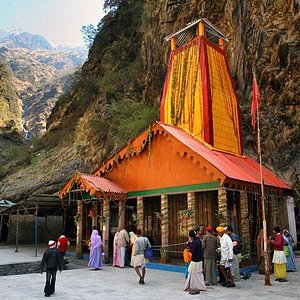
This day is dedicated to the revered Yamunotri Darshan. The journey from Barkot typically involves a drive to Janki Chatti, followed by a trek or pony ride to the Yamunotri temple. Yamunotri Temple is dedicated to Goddess Yamuna, the source of the Yamuna River. This sacred shrine is situated amidst the majestic peaks of the Bandarpoonch range and is known for its thermal springs, where pilgrims prepare rice and potatoes to offer. Yamunotri Temple on Wikipedia After the holy darshan and taking a dip in the holy waters, the return journey to Barkot for an overnight stay completes the day.
Day 3: Barkot – Gangotri Sightseeing – Uttarkashi
The journey proceeds from Barkot towards Uttarkashi, with a significant detour for Gangotri sightseeing. Gangotri Temple stands majestically on the banks of the Bhagirathi River, marking the origin of the holy Ganga. Dedicated to Goddess Ganga, the temple is surrounded by stunning Himalayan vistas and holds immense religious importance, attracting devotees seeking purification and spiritual merit. Gangotri Temple on TripAdvisor Following the sacred darshan, the onward drive to Uttarkashi for an overnight stay allows for rest. Uttarkashi, also known as Devbhoomi (Land of Gods), is an ancient town situated on the banks of the Bhagirathi River and is a significant pilgrimage center.
Day 4: Uttarkashi to Phata
A scenic drive from Uttarkashi leads to Phata. This day primarily involves travel through the captivating landscapes of Uttarakhand. Phata is a crucial base for pilgrims heading to Kedarnath, especially those opting for helicopter services, due to its strategic location and connectivity. The day concludes with an overnight stay in Phata, preparing for the challenging yet rewarding pilgrimage to Kedarnath.
Day 5: Phata – Kedarnath (by helicopter/pony/trekking) – Kedarnath Camp Stay
The most awaited part of the pilgrimage begins with the journey to Kedarnath. Pilgrims can choose to reach Kedarnath by helicopter from Phata, by pony/doli, or by undertaking a strenuous trek. Kedarnath Temple is one of the twelve Jyotirlingas of Lord Shiva, nestled amidst the majestic Garhwal Himalayas. The ancient stone temple, standing at an elevation of 3,583 meters, is a testament to unwavering faith and architectural marvel, surrounded by snow-capped peaks and the Mandakini River. Kedarnath Temple on Wikipedia An overnight stay at a camp near Kedarnath allows for a deeply spiritual experience under the Himalayan stars.
Day 6: Kedarnath – Phata
After the spiritual morning rituals and darshan at Kedarnath, the descent back to Phata commences. This return journey, whether by helicopter, pony, or trek, offers more opportunities to soak in the pristine beauty of the Himalayan valleys. The evening brings pilgrims back to Phata for a comfortable overnight stay, providing a much-needed rest after the arduous journey to Kedarnath.
Day 7: Phata – Badrinath – Mana Village – Badrinath Stay
The journey continues towards the final Dham, Badrinath. Upon arrival, pilgrims visit the sacred Mana Village, often referred to as the “last Indian village” before the Tibetan border. This picturesque village is steeped in mythology and is believed to be where Ved Vyasa dictated the Mahabharata. Mana Village on Wikipedia After exploring Mana Village, the group proceeds to Badrinath for an overnight stay.
Day 8: Badrinath Sightseeing – Pipalkoti
The day is dedicated to Badrinath Temple darshan and local sightseeing. The temple, dedicated to Lord Vishnu, is one of the four principal pilgrimage sites in India. Situated on the banks of the Alaknanda River, it is revered for its ancient history, spiritual ambiance, and the therapeutic hot springs of Tapt Kund. Badrinath Temple on TripAdvisor After the holy darshan and exploring the area, the group drives to Pipalkoti for an evening stay. Pipalkoti is a small, charming town offering tranquil surroundings, serving as a convenient halt on the return journey.
Day 9: Pipalkoti – Rishikesh – Haridwar Drop
The final day involves a scenic drive towards Rishikesh. En route, stops are made at significant confluences (Prayags) of rivers: Nand Prayag, where Alaknanda meets Mandakini; Karna Prayag, where Alaknanda meets Pindar; Rudra Prayag, where Alaknanda meets Mandakini; and Dev Prayag, the sacred confluence of the Alaknanda and Bhagirathi rivers, officially forming the Ganga. An evening visit to Rishikesh, the “Yoga Capital of the World,” allows for exploration of its spiritual vibes and iconic bridges like Lakshman Jhula. The tour concludes with a night drop in Haridwar by 8 PM, marking the end of a profound spiritual journey.
This segment of the pilgrimage focuses on the sacred sources of two major rivers, Yamuna and Ganga, offering profound spiritual experiences and breathtaking natural beauty in the Garhwal Himalayas.
The core of the Chardham pilgrimage unfolds with visits to the revered shrines of Lord Shiva and Lord Vishnu, Kedarnath and Badrinath. This section details the spiritual highlights and historical significance of these iconic destinations.
The return journey encompasses visits to spiritually significant confluences and the bustling spiritual hub of Rishikesh, offering a blend of natural grandeur and cultural immersion as the pilgrimage concludes.
Accommodation during the Chardham Yatra is provided in well-regarded 3-star hotels and camps, ensuring comfort and convenience for pilgrims. These establishments are carefully selected for their hospitality, amenities, and proximity to key pilgrimage sites or transit points. Locations include Barkot, Uttarkashi, Phata, Kedarnath (camp), Badrinath, and Pipalkoti, offering a restful retreat after each day’s spiritual exploration.
Here are the per-person package prices for the Chardham Yatra from Faridabad:
These prices are calculated based on a 3-star hotel stay, breakfast only, and AC vehicle as per group size, inclusive of driver allowance, parking, and tolls, with a 20% administrative and profit margin.
Breakfast, all sightseeing as per itinerary, AC vehicle Dzire or Innova or Tempo Traveller as per group size, driver allowance, parking, tolls, and stay in 3star AC hotels.
Anything not mentioned in inclusions, entry tickets, boating, guide services, personal expenses, camera fees, or meals other than breakfast.
Child up to 6 years Free
Child 6 to 8 years Half charge
Child above 8 years Full charge
20 percent advance at time of booking
20 percent after getting hotel booking voucher
60 percent during tour in parts
For tours between 15 Dec to 2 Jan, 50 percent advance payment required.
Minimum Rs. 3000 cancellation charge per person
10 percent or Rs. 3000 per person whichever is higher
25 percent cancellation between 46 to 30 days before departure
50 percent cancellation between 30 to 15 days before departure
75 percent cancellation between 15 to 5 days before departure
100 percent cancellation within 5 days of departure or noshow
Cancellation charges are calculated as percentage of total tour cost.
Visit our main website for more incredible travel deals: Trypdeals Home
Explore our wide range of tour packages across various destinations: All Tours by Trypdeals
Discover the most sought-after travel destinations with Trypdeals: Top Travel Destinations
This Chardham Yatra tour from Faridabad commences with the auspicious journey to Yamunotri.
The revered abode of Goddess Yamuna, Yamunotri stands majestically in the Garhwal Himalayas at an altitude of 3,293 meters. It is the source of the Yamuna River, drawing countless devotees to its ancient temple and natural thermal springs. The challenging yet rewarding trek to the temple, beginning from Janki Chatti, offers pilgrims serene views and a profound connection to nature. Yamunotri embodies spiritual purity and serves as the first stop in the sacred Chardham pilgrimage, inspiring pilgrims with its tranquil beauty and religious significance.
Situated at an elevation of 3,100 meters, Gangotri is the high-altitude spiritual retreat marking the origin of the holy River Ganga (Bhagirathi). The sacred Gangotri Temple, dedicated to Goddess Ganga, is a cornerstone of the Chardham Yatra. Surrounded by pristine snow-capped peaks and the gushing Bhagirathi, the site is steeped in mythology, believed to be where King Bhagirath performed penance to bring Ganga to earth. Its serene ambiance and breathtaking natural beauty make it a truly divine experience for all visitors.
Perched dramatically at 3,583 meters above sea level in the Garhwal Himalayas, Kedarnath is one of the twelve Jyotirlingas of Lord Shiva. The ancient stone temple, a testament to enduring faith, is set against a backdrop of towering peaks and the confluence of the Mandakini and Saraswati rivers. Pilgrims undertake a challenging journey to reach this revered shrine, seeking blessings and spiritual solace. The raw, majestic beauty of Kedarnath, coupled with its profound religious significance, leaves an indelible mark on every devotee.
The holy town of Badrinath, nestled between the Nar and Narayan mountain ranges at an elevation of 3,133 meters, is a prominent pilgrimage site dedicated to Lord Vishnu. It is one of the four principal Dhams in India and the last stop on the Chardham Yatra. The vibrant Badrinath Temple, with its distinctive colorful façade, sits on the banks of the Alaknanda River, surrounded by therapeutic hot springs like Tapt Kund. The spiritual aura and stunning Himalayan scenery make Badrinath a deeply moving destination for devotees.
Often hailed as the “Yoga Capital of the World,” Rishikesh is a vibrant town situated at the foothills of the Himalayas, where the sacred Ganges River flows. It is renowned for its spiritual retreats, yoga ashrams, and adventure sports. Pilgrims and tourists alike are drawn to its iconic suspension bridges, Lakshman Jhula and Ram Jhula, and the evening Ganga Aarti ceremonies. Rishikesh offers a unique blend of spiritual tranquility and exhilarating activities, serving as a perfect concluding point for a pilgrimage or a refreshing getaway.