
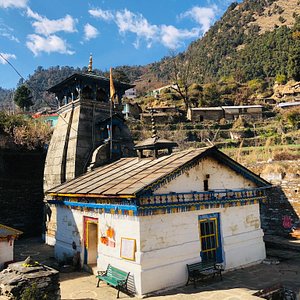
Chardham Yatra Tour Package from Visakhapatnam
- Places Covered: Chardham Yatra
- Tour Type: Private Tour
- Transport: Private Cab
- Customization: Available
Visakhapatnam to Chardham Tour Package Itinerary
This 9-day Chardham Yatra is a sacred pilgrimage covering the four revered shrines of Yamunotri, Gangotri, Kedarnath, and Badrinath, starting from the plains and ascending into the majestic Himalayas.
Day 1: Arrival in Dehradun/Haridwar & Transfer to Barkot
The journey commences with an arrival in Dehradun or Haridwar, either by air, train, or bus, where a pickup awaits. From here, a scenic drive leads to Barkot, a picturesque town located on the banks of the Yamuna River. Barkot serves as a crucial halt before the pilgrimage to Yamunotri, offering serene views and a tranquil environment for an overnight stay.
Day 2: Yamunotri Darshan
This day is dedicated to the pilgrimage to Yamunotri, the source of the Yamuna River and the seat of Goddess Yamuna. The trek to the temple involves a journey from Barkot to Janki Chatti, followed by a trek or pony ride to the sacred shrine. The Yamunotri Temple is nestled amidst the raw, natural beauty of the mountains, featuring hot water springs where pilgrims can cook rice and potatoes as ‘prasad’. (Learn more about Yamunotri Temple). After darshan, return to Barkot for an overnight stay.
Day 3: Barkot to Gangotri & Uttarkashi Stay
Following breakfast, the drive proceeds from Barkot towards Gangotri, the origin of the holy River Ganga. The route offers stunning vistas of the Himalayan landscape. Upon reaching Gangotri, devotees perform darshan at the Gangotri Temple, dedicated to Goddess Ganga. The temple is situated on the banks of the Bhagirathi River (Ganga’s source name) and holds immense spiritual significance. (Explore Gangotri). After the spiritual experience, the journey continues to Uttarkashi for an overnight stay.
Day 4: Uttarkashi to Phata
Today involves a drive from Uttarkashi to Phata, a key base for the Kedarnath pilgrimage. The route traverses through enchanting valleys and alongside the Mandakini River. Phata is chosen for its proximity to the helicopter services point for Kedarnath, making it a convenient stop. The evening allows for rest and preparation for the arduous yet rewarding Kedarnath yatra. Overnight stay in Phata.
Day 5: Kedarnath Yatra & Overnight Camp Stay
From Phata, pilgrims proceed towards Kedarnath. Guests opting for a helicopter ride will take a short flight to Kedarnath, while others may choose a pony or trek. The Kedarnath Temple is one of the twelve Jyotirlingas of Lord Shiva, situated at an altitude of 3,583 meters amidst the majestic Garhwal Himalayas. The spiritual aura here is profound, surrounded by snow-capped peaks. (Discover Kedarnath Temple). An overnight camp stay near Kedarnath offers a unique spiritual experience.
Day 6: Return from Kedarnath to Phata
After morning prayers and darshan at Kedarnath, the descent begins. Pilgrims return from Kedarnath to Phata, either by helicopter, pony, or trekking, retracing the path through the scenic valleys. The evening is spent relaxing in Phata after the intense spiritual journey to Kedarnath. Overnight stay in Phata.
Day 7: Phata to Badrinath & Mana Village Visit
The journey continues from Phata to the revered Badrinath, one of the most important pilgrimage sites in Hinduism. Upon arrival, pilgrims visit the sacred Badrinath Temple, dedicated to Lord Vishnu. The temple stands magnificently on the banks of the Alaknanda River, with the towering Neelkanth Peak in the background. A visit to the nearby Mana Village, often referred to as India’s ‘last village’ before the Tibetan border, is also included. This village holds mythological significance with connections to the Mahabharata. (Learn about Badrinath Temple). Overnight stay in Badrinath.
Day 8: Badrinath Sightseeing & Transfer to Pipalkoti
After morning rituals and a more extensive exploration of Badrinath and its surroundings, including the Tapt Kund (natural hot springs) and the serene Brahma Kapal, the journey proceeds towards Pipalkoti. This allows for a more relaxed exploration of the divine abode before heading to the next stop. Pipalkoti offers a comfortable halt before the final leg of the tour. Overnight stay in Pipalkoti.
Day 9: Pipalkoti to Rishikesh & Departure from Haridwar
The final day involves a drive from Pipalkoti towards Rishikesh. En route, stops are made at significant river confluences (Prayags) like Nand Prayag, Karna Prayag, Rudra Prayag, and Dev Prayag, where the spectacle of two rivers merging into one is a truly divine sight. In the evening, a visit to the spiritual town of Rishikesh is undertaken, known as the ‘Yoga Capital of the World’, with its iconic Lakshman Jhula and Ram Jhula bridges. (Explore Rishikesh). The tour concludes with a drop-off at Haridwar by 8 PM for onward journey.
3 Star Hotels in Chardham and nearby cities
Accommodation during the Chardham Yatra is carefully selected to provide comfort and convenience, typically featuring 3-star hotels or equivalent guesthouses in locations like Barkot, Uttarkashi, Phata, Kedarnath (camp/guesthouse), Badrinath, and Pipalkoti. These properties offer essential amenities, clean rooms, and respectful services, ensuring a pleasant stay amidst the spiritual journey. Effort is made to choose hotels that provide good views and are well-located for access to the pilgrimage sites or the main town areas, facilitating an enriching travel experience for all pilgrims.
Chardham Yatra Tour Package from Visakhapatnam Price
The final per person package prices for the Chardham Yatra from Visakhapatnam are detailed below, based on the group size:
- For 2 Persons: Rs. 33120 per person
- For 3 Persons: Rs. 25920 per person
- For 4-7 Persons: Starting from Rs. 20777 per person
- For 8-10 Persons: Starting from Rs. 20160 per person
- For 11-12 Persons: Starting from Rs. 18720 per person
Inclusions in Chardham Yatra Tour Package from Visakhapatnam
Breakfast, all sightseeing as per itinerary, AC vehicle Dzire or Innova or Tempo Traveller as per group size, driver allowance, parking, tolls, and stay in 3star AC hotels.
Exclusions in Chardham Yatra Tour Package from Visakhapatnam
Anything not mentioned in inclusions, entry tickets, boating, guide services, personal expenses, camera fees, meals other than breakfast, helicopter tickets for Kedarnath, or pony/doli charges.
Child Policy for Chardham Yatra from Visakhapatnam Trip
Child up to 6 years Free
Child 6 to 8 years Half charge
Child above 8 years Full charge
Payment Policy for Chardham Yatra Tour Package from Visakhapatnam Booking
20 percent advance at time of booking
20 percent after getting hotel booking voucher
60 percent during tour in parts
For tours between 15 Dec to 2 Jan, 50 percent advance payment required.
Cancellation Policy for Chardham Yatra Tour
Minimum Rs. 3000 cancellation charge per person
10 percent or Rs. 3000 per person whichever is higher
25 percent cancellation between 46 to 30 days before departure
50 percent cancellation between 30 to 15 days before departure
75 percent cancellation between 15 to 5 days before departure
100 percent cancellation within 5 days of departure or noshow
Cancellation charges are calculated as percentage of total tour cost.
Frequently Asked Questions – Chardham Travel Guide
What is the best time to visit Chardham?
The ideal time to undertake the Chardham Yatra is from April to June and then from September to early November. The temples remain closed during winter due to heavy snowfall.
Are there age restrictions for the Chardham Yatra?
There are no official age restrictions, but the yatra involves trekking at high altitudes, which can be challenging for very young children or elderly individuals with health conditions. Consultation with a doctor is recommended.
What kind of clothes should be packed for the Chardham Yatra?
Layered clothing is advisable. Pack warm woolen clothes, thermal wear, a windproof jacket, gloves, and caps, even during summer months, as temperatures can drop significantly, especially at night and at higher altitudes.
Is it safe to travel to Chardham post-monsoon?
Yes, post-monsoon (September to early November) is considered a safe and beautiful time to travel. The monsoon rains have subsided, leaving lush green landscapes and clear skies.
Are medical facilities available along the Chardham route?
Basic medical aid and first aid centers are available at various points. For serious conditions, patients may need to be evacuated to larger towns or cities. Carrying personal medications is highly recommended.
Can non-vegetarians find food during the Chardham Yatra?
The Chardham Yatra route is predominantly vegetarian due to the sacred nature of the pilgrimage. Non-vegetarian food options are extremely limited or non-existent in most areas.
Is a permit required for the Chardham Yatra?
As of recent regulations, a biometric registration (Yatra Pass) is often required for pilgrims. It is advisable to check the latest government guidelines before commencing the tour.
What are the accommodation options like on the Yatra?
Accommodation ranges from basic guesthouses to 3-star hotels. In more remote locations like Kedarnath, basic camp or dormitory-style stays are common.
Is internet connectivity reliable on the Chardham route?
Internet and mobile connectivity can be intermittent and unreliable, particularly in higher altitude and remote areas. BSNL and Jio networks tend to have better coverage in some parts.
What is the significance of the river confluences (Prayags)?
The confluences of rivers, known as Prayags, are considered highly sacred in Hindu mythology. Each confluence marks the merging of two holy rivers, believed to have immense spiritual power and importance for purification.
How can one reach the starting point of the tour from Visakhapatnam?
Pilgrims from Visakhapatnam can reach Dehradun or Haridwar by direct flights, connecting flights, or train services, which are well-connected to major Indian cities.
What local transport is used during the Chardham Yatra?
During the Chardham Yatra, AC vehicles (Dzire, Innova, Tempo Traveller) are utilized for inter-city travel, depending on the group size. For actual darshan at places like Yamunotri and Kedarnath, pilgrims may use ponies, palanquins, or helicopter services (at an additional cost).
Important Travel Information for Chardham Package
- Biometric Registration: Ensure completion of biometric registration (Yatra Pass) which is mandatory for all pilgrims. This can be done online or at designated counters.
- Health Preparedness: Undertaking a medical check-up before the tour is highly recommended, especially for individuals with pre-existing health conditions, given the high altitudes involved.
- Acclimatization: Allow sufficient time for acclimatization to the varying altitudes to avoid acute mountain sickness (AMS). Hydration is key.
- Weather Fluctuations: Be prepared for sudden weather changes. Sunny mornings can quickly turn into cold, rainy, or snowy afternoons, especially in the mountains.
- Emergency Contacts: Carry a list of emergency contact numbers, including tour operator details, family contacts, and local emergency services.
- Cash Availability: ATM facilities may be limited in remote areas. It is advisable to carry sufficient cash for personal expenses, offerings, and emergencies.
- Footwear: Sturdy, comfortable, waterproof walking shoes with good grip are essential for trekking and navigating uneven terrains.
- Power Backup: Portable power banks are highly recommended as electricity supply can be erratic, and charging points may be scarce in some hotels or camps.
- Respect Local Customs: Observe local customs, traditions, and religious sentiments. Dress modestly when visiting temples and follow temple rules.
- Environmental Responsibility: Practice responsible tourism by not littering and respecting the pristine environment of the Himalayas.
- Photography Restrictions: Be aware of photography restrictions at certain temple premises. Seek permission where required.
- Travel Insurance: Consider purchasing travel insurance to cover unforeseen circumstances like medical emergencies, trip cancellations, or delays.
Trypdeals tour packages you might be interested in
Visit our main website for more incredible travel deals: Trypdeals Home
Explore our wide range of tour packages across various destinations: All Tours by Trypdeals
Discover the most sought-after travel destinations with Trypdeals: Top Travel Destinations
Yamunotri
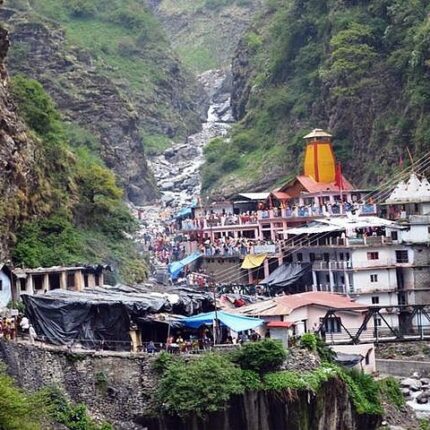
Yamunotri, the westernmost shrine of the Chardham Yatra, is the source of the sacred Yamuna River. This revered pilgrimage site invites devotees to seek blessings at the Yamunotri Temple, dedicated to Goddess Yamuna, set against a backdrop of majestic peaks and gushing waterfalls. The journey to Yamunotri is not just a physical trek but a spiritual ascent, culminating in the pristine embrace of nature’s untouched beauty.
Perched high in the Garhwal Himalayas, Yamunotri is renowned for its thermal springs, notably the Surya Kund, where pilgrims traditionally cook rice and potatoes. The raw, untamed landscape, coupled with the profound spiritual atmosphere, offers a deeply moving experience. Visitors are captivated by the serene environment and the challenging yet rewarding path that leads to this divine abode, making it a cornerstone of the Chardham pilgrimage.
Gangotri
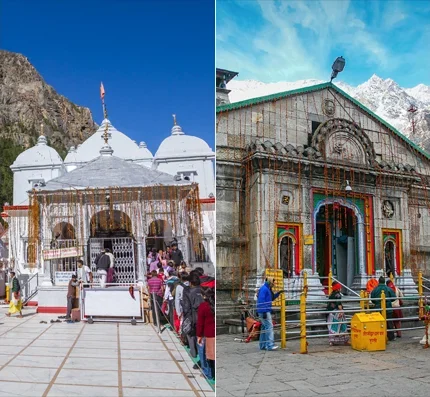
Gangotri, the celestial abode of Goddess Ganga, marks the origin of the holiest river in India, the River Ganga (known as Bhagirathi at its source). The Gangotri Temple, a pristine white structure, stands gracefully on the banks of the Bhagirathi, drawing pilgrims to witness the sacred waters and seek spiritual solace. This revered site is a testament to natural grandeur and profound faith.
The town of Gangotri is enveloped by dramatic mountain scenery, dense forests, and the tranquil flow of the river, creating an environment ripe for introspection and devotion. Pilgrims often perform rituals and take holy dips in the freezing waters, believing it cleanses their sins. The breathtaking vistas and the spiritual significance associated with the genesis of Ganga make Gangotri an indispensable part of the Chardham Yatra, offering both spiritual rejuvenation and stunning natural beauty.
Kedarnath
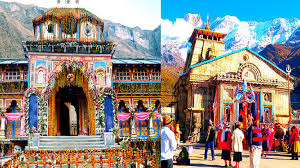
Kedarnath, a prominent shrine of Lord Shiva and one of the twelve Jyotirlingas, is nestled amidst the awe-inspiring peaks of the Garhwal Himalayas. The ancient Kedarnath Temple, a stone marvel, stands as a symbol of enduring faith and resilience, drawing countless devotees to its sacred precincts. It is a place where the majestic forces of nature and profound spirituality converge.
The arduous journey to Kedarnath, whether by trek, pony, or helicopter, is often considered a pilgrimage of immense spiritual merit. Surrounded by snow-capped mountains and the Mandakini River, the temple’s location exudes an unparalleled sense of peace and reverence. Kedarnath’s powerful spiritual aura, coupled with its dramatic and beautiful setting, offers a uniquely challenging and deeply rewarding experience, making it a cornerstone of the Chardham pilgrimage.
Badrinath
Badrinath, the most revered of the Chardham sites, is the sacred abode of Lord Vishnu, situated elegantly between the Nar and Narayan mountain ranges. The vibrant Badrinath Temple, with its colorful facade, stands majestically on the banks of the Alaknanda River, captivating pilgrims with its spiritual grandeur and the surrounding natural splendor. This revered destination is a beacon of devotion and tranquility.
Beyond the temple, Badrinath offers several attractions, including the Tapt Kund, a natural hot spring where pilgrims bathe before darshan, and Mana Village, the last Indian village before the Tibetan border, steeped in mythological tales. The breathtaking views of the Neelkanth Peak and the serene river create an atmosphere of divine peace. Badrinath represents the pinnacle of the Chardham Yatra, promising a deeply enriching spiritual and visual experience.
Rishikesh
Rishikesh, often hailed as the ‘Yoga Capital of the World,’ is a vibrant spiritual town nestled at the foothills of the Himalayas, where the holy River Ganga descends from the mountains to the plains. This serene destination is renowned for its ashrams, yoga and meditation centers, and adventure sports, making it a confluence of spirituality, wellness, and excitement. It serves as a perfect final stop for reflection on the Chardham journey.
Iconic landmarks like the Lakshman Jhula and Ram Jhula bridges span the Ganga, offering panoramic views and connecting various temples and ashrams. The evening Ganga Aarti at the ghats creates a mesmerizing spectacle of devotion and light. Rishikesh provides a calming conclusion to the Chardham pilgrimage, inviting visitors to partake in its spiritual ambiance, explore its markets, and enjoy the refreshing energy of the Ganga. It’s a place where ancient traditions meet modern wellness practices.
There are no reviews yet.