
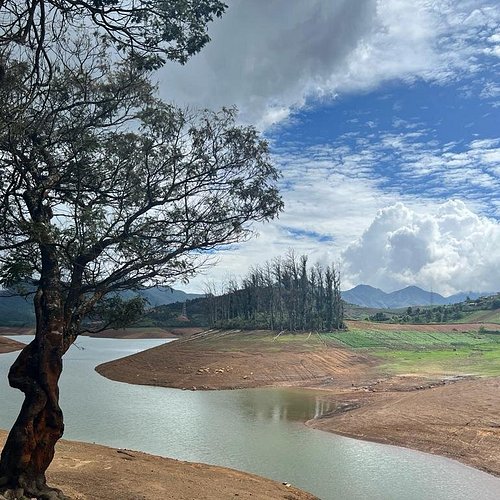
The itinerary presents a comprehensive five-day exploration of the Nilgiri mountain range, starting from Bangalore and covering the scenic locales of Ooty, Coonoor, and Mudumalai.
Day 1: Arrival in Bangalore and Transfer to Ooty
Arrival at Bangalore airport or railway station marks the beginning of the expedition. A private vehicle facilitates the scenic drive toward Ooty. Upon arrival, check-in at the hotel allows for relaxation after the journey. The evening remains free for a leisure stroll through the local markets.
Day 2: Ooty Local Sightseeing
The day is dedicated to exploring the core attractions of Ooty. The itinerary includes visits to botanical marvels and historical landmarks that define the region’s heritage.
Day 3: Coonoor and Pykara Sightseeing
The journey continues toward the neighboring hill station of Coonoor, followed by a visit to the scenic Pykara region.
Day 4: Mudumalai and Bandipur Sightseeing
The itinerary transitions from the hills to the dense forests of the wildlife sanctuaries before returning to Bangalore.
Day 5: Departure from Bangalore
Following breakfast, the vehicle provides transport to the Bangalore airport or railway station for the return journey to Jalandhar, concluding the five-day tour.
The sightseeing includes the Government Rose Garden, which houses one of the largest collections of roses in India, and the Tea Museum, which illustrates the history of tea production in the Nilgiris. Dolphin’s Nose in Coonoor provides spectacular views of Catherine Falls.
The return route encompasses a drive through the protected forest corridors of the Mysore-Ooty highway. Depending on time availability, a brief stop at the historic Mysore Palace or the Chamundi Hills is possible before reaching the Bangalore transit points.
The package includes stays in reputable 3-star establishments such as Hotel Lakeview or Meadows Residency in Ooty, and Quality Inn or similar categorized hotels in Bangalore. These properties ensure comfortable bedding, hygienic environments, and essential amenities.
Breakfast, all sightseeing as per itinerary, AC vehicle Dzire or Innova or Tempo Traveller as per group size, driver allowance, parking, tolls, and stay in 3star AC hotels.
Anything not mentioned in inclusions, entry tickets, boating, guide services, personal expenses, camera fees, or meals other than breakfast.
Child up to 6 years Free
Child 6 to 8 years Half charge
Child above 8 years Full charge
20 percent advance at time of booking
20 percent after getting hotel booking voucher
60 percent during tour in parts
For tours between 15 Dec to 2 Jan, 50 percent advance payment required.
Minimum Rs. 3000 cancellation charge per person
10 percent or Rs. 3000 per person whichever is higher
25 percent cancellation between 46 to 30 days before departure
50 percent cancellation between 30 to 15 days before departure
75 percent cancellation between 15 to 5 days before departure
100 percent cancellation within 5 days of departure or noshow
Cancellation charges are calculated as percentage of total tour cost.
What is the best time to visit Ooty? The period between April to June and September to November is considered ideal.
How is the mobile connectivity in Ooty? Major networks provide stable 4G and 5G connectivity in the town area.
Are woolens required in Ooty? Yes, light woolens are recommended even in summer as evenings can be chilly.
What is the distance between Bangalore and Ooty? The distance is approximately 270 kilometers, taking 6 to 7 hours by road.
Is Ooty safe for solo travelers? Ooty is generally very safe for all types of travelers.
Are there ATMs available in Ooty? Numerous ATMs are located throughout the main market and town center.
Is the toy train booking available online? Yes, reservations can be made via the IRCTC website in advance.
What are the local specialties for shopping? Tea, homemade chocolates, and aromatic oils are popular purchases.
Can the itinerary be customized? Yes, the flow of sightseeing can be adjusted based on arrival timings.
Are entry fees included in the package? No, entry fees for parks and museums must be paid directly at the counters.
Is Hindi spoken in Ooty? Many locals understand basic Hindi and English besides Tamil.
What is the altitude of Ooty? Ooty is situated at an elevation of approximately 2,240 meters.
Carry a valid government ID for hotel check-ins. Ensure all electronic devices are charged before long drives. Plastic bags are strictly banned in Ooty; eco-friendly alternatives are required. Respect local traditions when visiting temples or rural areas. Maintain distance from wild animals during the forest drives. Photography might be restricted in certain areas of the national parks. Check the weather forecast before heading to Doddabetta Peak for clear views. Traffic in Bangalore can be heavy, so plan airport transfers with buffer time. Carry basic medicines for motion sickness during the hair-pin bend climbs. Only bottled water should be consumed during the journey. Pre-book the Nilgiri Mountain Railway seats at least two months in advance. Follow the instructions of the driver regarding parking and safety.
Visit our main website for more incredible travel deals: Trypdeals Home
Explore our wide range of tour packages across various destinations: All Tours by Trypdeals
Discover the most sought-after travel destinations with Trypdeals: Top Travel Destinations
Ooty, officially known as Udhagamandalam, serves as the premier hill station of South India. Nestled in the Nilgiri district, it was originally inhabited by the Toda people before being developed by the British as a summer capital. The town is characterized by its rolling hills, tea plantations, and colonial-era architecture. The cool climate and the scenic beauty of Ooty Lake and the Botanical Gardens attract millions of visitors annually. It remains a vital hub for tea production and tourism, offering a serene atmosphere that contrasts sharply with the bustling urban centers of the plains.
Mudumalai National Park and Wildlife Sanctuary is a significant ecological corridor located at the junction of the Western Ghats and Nilgiri Hills. It serves as a vital habitat for endangered megafauna, including the Indian Elephant and the Bengal Tiger. The landscape is a mosaic of deciduous forests and scrubland, providing a rich biodiversity that includes over 200 species of birds. The sanctuary is integral to the Nilgiri Biosphere Reserve and offers a unique opportunity for scientific study and wildlife observation, emphasizing the importance of conservation in the southern Indian peninsula.