
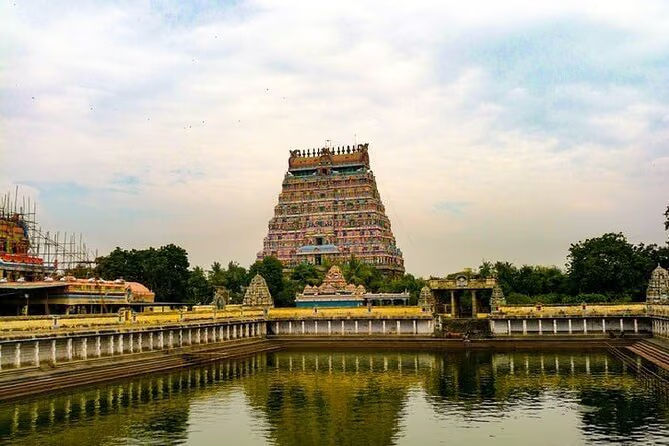
Kampaheswarar Temple, Chidambaram
Overview
- •The Kampaheswarar Temple, also known as Kampahareswarar Temple, is a historic Hindu shrine dedicated to Lord Shiva, located in the village of Thirubuvanam in Thanjavur district, Tamil Nadu.
- •Situated on the Mayiladuthurai-Kumbakonam road, about 53.5 km from Chidambaram, this temple is renowned as the last of the four great architectural masterpieces of the Medieval Chola era.
- •Its serene setting and intricate stone carvings make it a rewarding stop for pilgrims and history enthusiasts alike.
Highlights
- Intricate Chola-era stone carvings and sculptures
- Last of the four great Chola masterpieces
- Peaceful, less-crowded atmosphere compared to other Chola temples
- Legendary association with the removal of the king's trembling
Religious Significance
The temple holds religious importance as it commemorates the legend of Shiva removing the trembling (kampa) of a king who was tormented by a Brahmarakshasa, hence the name 'Kampahareswarar'. Historically, it marks the culmination of Chola temple architecture, built during the reign of Kulothunga Chola III, and is one of the four celebrated Chola masterpieces, though it is less visited than the others. Its significance lies in its representation of late Chola artistic and devotional traditions, offering insight into the transition of temple design.
Dress Code
Modest, traditional attire is recommended; men often wear dhoti or trousers, and women should wear sarees or salwar kameez, covering shoulders and legs.
Facilities
Basic facilities include a small temple office and restrooms. There are no dedicated visitor amenities such as a cafeteria, but local shops and eateries are available in the village.
Rituals
- •Daily rituals include abhishekam (sacred bathing of the deity) and aarti (offering of light) performed at specified times.
- •Special pujas are conducted on Pradosham days and during the Tamil month of Aadi, drawing local devotees.
Festivals
- •The temple celebrates Maha Shivaratri with special abhishekams and night-long prayers, and the annual Brahmotsavam festival in the Tamil month of Vaikasi (May-June) features processions of the deities.
- •These festivals attract devotees from surrounding villages but remain modest in scale.
Darshan Guide
- •The temple is open for darshan throughout the day, with a break during midday hours.
- •Visitors can have a close view of the sanctum; however, photography is typically restricted inside the inner sanctum.
- •The temple is less crowded than major Chola temples, allowing for a peaceful darshan experience.
Rituals
- •Daily rituals include abhishekam (sacred bathing of the deity) and aarti (offering of light) performed at specified times.
- •Special pujas are conducted on Pradosham days and during the Tamil month of Aadi, drawing local devotees.
History
- •The temple was constructed by Kulothunga Chola III, a powerful ruler of the Medieval Chola dynasty, in the 12th century CE.
- •It is considered the last of the four major Chola architectural masterpieces, following the Brihadeeswarar Temple at Thanjavur, the Gangaikonda Cholapuram Temple, and the Airavatesvara Temple at Darasuram.
- •According to local legend, the king was afflicted by a Brahmarakshasa (a vengeful spirit) and sought relief by worshiping Shiva here; the deity is said to have removed his trembling, giving the temple its name.
- •The temple remained an active place of worship through subsequent centuries, though it never gained the prominence of its earlier counterparts.
Architecture
- •The temple exemplifies late Chola architecture with a grand vimana (tower) and intricate granite and soapstone carvings.
- •The gopuram (entrance tower) and the main shrine are adorned with detailed sculptures depicting various deities and mythological scenes.
- •The temple's layout follows the traditional Dravidian style, with a spacious courtyard and a sanctum that houses the primary lingam.
Temple Layout
- •The temple complex is oriented east-west, with a five-tiered gopuram at the entrance leading into a large pillared hall (mandapa).
- •The main sanctum enshrines Lord Kampahareswarar in the form of a Shiva lingam, while a separate shrine is dedicated to his consort, Goddess Soundaranayaki.
- •The temple also features a Nandi mandapa and several sub-shrines within its prakara (enclosure).
Travel Tips
- Combine your visit with the nearby Airavatesvara Temple at Darasuram and the Brihadeeswarar Temple at Thanjavur for a full Chola architecture circuit.
- Hire a local guide in Thirubuvanam to explain the intricate carvings and legend, as on-site signage is minimal.
- Carry water and sun protection, as the temple grounds are largely exposed and the region can be hot, especially in summer.
Frequently Asked Questions
The temple is located about 53.5 kilometers from Chidambaram, roughly a 1.5 to 2-hour drive via the Mayiladuthurai-Kumbakonam road. It is easily accessible by taxi or bus from Chidambaram, with Thirubuvanam being a small village along the route.
According to local tradition, a king was afflicted by a Brahmarakshasa (a restless spirit) that caused him to tremble uncontrollably. He prayed to Shiva at this site, and the deity removed his trembling, earning the name 'Kampahareswarar' (one who removes the quaking). This mythological event is central to the temple's identity.
Yes, the Kampaheswarar Temple is an active place of worship. Daily rituals and periodic festivals are conducted by the temple priests, and devotees visit regularly for darshan. The temple is maintained by the Hindu Religious and Charitable Endowments Department of the Government of Tamil Nadu.
Quick Information
Best Time
The best time to visit is from November to February when the weather is pleasant, and the temple is especially vibrant during Maha Shivaratri (February-March).
Timings
6:00 AM - 12:00 PM, 4:00 PM - 8:30 PM
Entry Fee
Free
Related Topics
Tour Packages for Chidambaram




Explore More of Chidambaram
Destination Hub
Chidambaram OverviewSpiritual & Temple Guides
Places to Explore
Discover attraction
Discover attraction
Discover attraction
Discover attraction
Discover attraction
Discover attraction
Discover attraction
Discover attraction
Discover attraction
Discover attraction
Discover attraction
Discover attraction
Discover attraction
Discover attraction
Discover attraction
Discover attraction
Discover attraction
Discover attraction
Discover attraction
Discover attraction
Discover attraction
Discover attraction
Discover attraction
Discover attraction
Discover attraction
Discover attraction
Discover attraction
Discover attraction
Discover attraction
Discover attraction
Discover attraction
Discover attraction
Discover attraction
Discover attraction
Discover attraction