
Oppliappan Temple, Chidambaram
Overview
- •Oppiliappan Temple, also known as Thiruvinnagar Temple, is a revered Hindu shrine dedicated to Vishnu, located near Thirunageswaram on the outskirts of Kumbakonam, Tamil Nadu.
- •This ancient temple, constructed in the Dravidian style, is one of the 108 Divya Desams and is celebrated in the early medieval Tamil hymns of the Alvar saints.
- •It lies approximately 56.4 km from Chidambaram, making it a serene and spiritually significant stop for pilgrims exploring the region.
Highlights
- One of the 108 Divya Desams, glorified in the Divya Prabandham
- Unique depiction of Vishnu as Oppiliappan with Bhudevi
- Ancient Dravidian architecture with intricate carvings
- Serene atmosphere near Kumbakonam, ideal for peaceful worship
Religious Significance
As the 60th Divya Desam, the temple holds a special place in Sri Vaishnavism, being glorified in the Naalayira Divya Prabandham by the Alvar saints from the 6th–9th centuries CE. It is dedicated to Vishnu as Oppiliappan, with his consort Lakshmi worshiped as Bhudevi, and is one of the few temples where the goddess is depicted in a distinct form. The temple's ancient origins and its mention in canonical Tamil literature make it a key pilgrimage site for devotees of Vishnu.
Dress Code
Traditional attire is expected; men may wear dhoti or pants with shirt, and women should wear saree or salwar kameez, covering shoulders and legs.
Facilities
Basic facilities include restrooms, a small temple office, and a few stalls selling prasadam and flowers. Parking is available near the temple, but amenities are limited, so visitors should plan accordingly.
Rituals
- •Daily rituals include multiple pujas (worship services) such as Ushathkalam (morning) and Sayarakshai (evening), following Vaishnava traditions.
- •Special abhishekams (ritual anointings) are performed on auspicious days, and devotees often offer tulsi (holy basil) and betel leaves, which are significant in Vishnu worship.
Festivals
- •The temple celebrates major Vaishnava festivals, including Vaikunta Ekadasi in the Tamil month of Margazhi (December–January), which draws large crowds.
- •Other festivals like Rama Navami and the annual Brahmotsavam are observed with processions and special rituals, adding to the temple's vibrant calendar.
Darshan Guide
- •Darshan is open to all devotees, and the temple is typically less crowded than major pilgrimage centers, allowing for a peaceful visit.
- •Visitors can offer prayers at the main sanctum and seek blessings from Bhudevi's shrine; it is advisable to check local timings for special pujas.
Rituals
- •Daily rituals include multiple pujas (worship services) such as Ushathkalam (morning) and Sayarakshai (evening), following Vaishnava traditions.
- •Special abhishekams (ritual anointings) are performed on auspicious days, and devotees often offer tulsi (holy basil) and betel leaves, which are significant in Vishnu worship.
History
- •The temple's history is deeply rooted in the early medieval period, as it is celebrated in the Divya Prabandham composed between the 6th and 9th centuries CE.
- •Its old toponym, Thiruvinnagar, reflects its ancient heritage, and it has been a center of Vaishnava worship for over a millennium.
- •While exact founding dates are not recorded, the temple's architecture and literary references attest to its long-standing religious importance.
Architecture
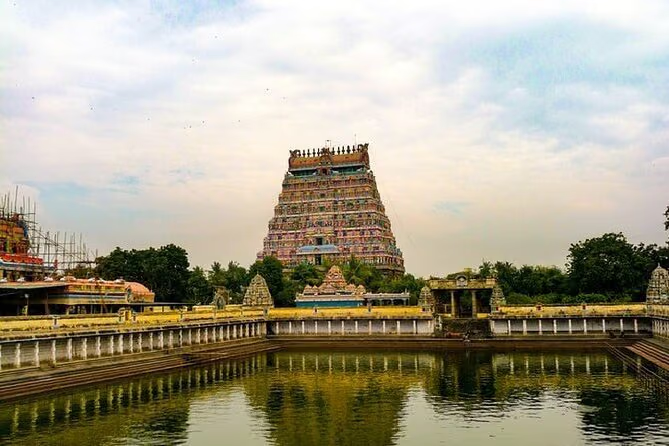
- •The temple is built in the classic Dravidian style, featuring a prominent gopuram (gateway tower) and intricate stone carvings typical of South Indian temple architecture.
- •The sanctum and surrounding structures follow traditional layouts, with pillared halls and ornate pillars that showcase the craftsmanship of the era.
- •The temple's design harmonizes with the region's rich architectural heritage, reflecting centuries of devotional art.
Temple Layout
- •The temple complex is oriented around a central sanctum housing the deity Oppiliappan, with a separate shrine for Bhudevi.
- •It includes a spacious courtyard, a flagstaff (dwajasthambam), and a temple tank, which is often used for ritual bathing.
- •The layout follows conventional Dravidian temple planning, with circumambulatory paths and subsidiary shrines dedicated to other deities.
Travel Tips
- Combine your visit with nearby attractions like Thirunageswaram's Rahu temple or the temples of Kumbakonam for a fuller spiritual tour.
- Carry sufficient cash for offerings and prasadam, as ATMs may not be nearby.
- Respect local customs by removing footwear before entering the temple and following the dress code.
Frequently Asked Questions
Oppiliappan Temple is one of the 108 Divya Desams, sacred to Vishnu, and is praised in the Naalayira Divya Prabandham by Alvar saints. It is unique as Vishnu is worshiped here as Oppiliappan with his consort Lakshmi as Bhudevi, a form not commonly seen elsewhere. The temple's ancient lineage and literary references make it a key pilgrimage site for Vaishnavites.
The temple is located approximately 56.4 kilometers from Chidambaram, which is about a 1.5-hour drive by road. It is situated near Thirunageswaram, on the outskirts of Kumbakonam, making it accessible for a day trip. Visitors can hire taxis or take local buses to reach the temple.
The temple is typically open from 6:00 AM to 12:00 PM in the morning and again from 4:00 PM to 8:30 PM in the evening. These hours may vary during festivals or special occasions, so it is advisable to check locally before planning your visit. The temple remains closed during afternoon hours for rest and rituals.
Quick Information
Best Time
The best time to visit is from October to March when the weather is pleasant, and during festivals like Vaikunta Ekadasi for a vibrant experience.
Timings
6:00 AM - 12:00 PM, 4:00 PM - 8:30 PM
Entry Fee
Free
Related Topics
Tour Packages for Chidambaram




Explore More of Chidambaram
Destination Hub
Chidambaram OverviewSpiritual & Temple Guides
Places to Explore
Discover attraction
Discover attraction
Discover attraction
Discover attraction
Discover attraction
Discover attraction
Discover attraction
Discover attraction
Discover attraction
Discover attraction
Discover attraction
Discover attraction
Discover attraction
Discover attraction
Discover attraction
Discover attraction
Discover attraction
Discover attraction
Discover attraction
Discover attraction
Discover attraction
Discover attraction
Discover attraction
Discover attraction
Discover attraction
Discover attraction
Discover attraction
Discover attraction
Discover attraction
Discover attraction
Discover attraction
Discover attraction
Discover attraction
Discover attraction
Discover attraction