
Nishat Bagh
Overview
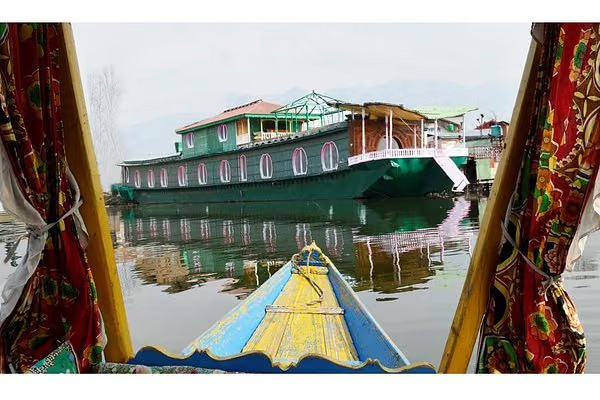
- •Located on the eastern banks of Dal Lake, with the Zabarwan Mountains as its backdrop, the garden was designed in 1633 by Asaf Khan, brother of Nur Jehan.
Highlights
- Located on the eastern banks of Dal Lake, with the Zabarwan Mountains as its backdrop, the garden was designed in 1633 by Asaf Khan, brother of Nur Jehan.
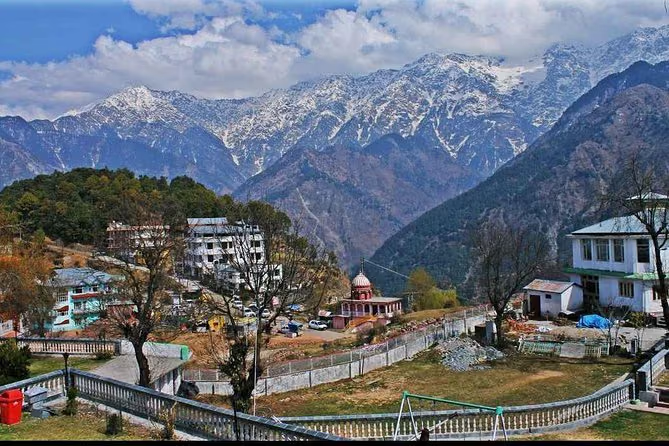
- Literally meaning the 'garden of bliss' it commands a magnificent view of the lake and the snow-capped Pir Panjal mountain range which stands far away to the west of the valley.
- Although a Mughal garden, it plans were altered because of the hilly terrain.
- It has an elongated plan (instead of a square plan of Mughal garden) of 548 m X 338 m and is centred around a water channel, measuring 4 m wide and 20 cm deep.
- The channel flows in the east to west direction and is decorated with fountains and occasionally fountain pools.
Dress Code
Modest, respectful clothing is expected at this site.
History
- •The garden is located on the bank of Dal Lake, with the Zabarwan Range as its backdrop, and views of the lake beneath the Pir Panjal Range.
- •The Bagh was designed and built in 1633 by Asif Khan, the elder brother of Nur Jahan.
- •The name 'Nishat Bagh' is derived from Urdu, meaning "Garden of Joy".
- •An anecdote is told of Mughal emperor Shah Jahan being in awe on beholding such a delightful garden.
Architecture
- •The layout of Nishat Bagh was based on the conceptual model of the Persian gardens, remodelled to fit the topographic and water source conditions at the site chosen in the Kashmir Valley.
- •The plan, instead of being central with four radiating arms in a square pattern as in the case of Chahar (suited for a flat countryside), was changed to an axial stream flow design to fit the hill condition with water source originating at the top of the hill end.
- •This resulted in planning a rectangular layout rather than a square layout.
- •This helped in dispensing with the long side arms.
Temple Layout
- •The layout of Nishat Bagh was based on the conceptual model of the Persian gardens, remodelled to fit the topographic and water source conditions at the site chosen in the Kashmir Valley.
- •The plan, instead of being central with four radiating arms in a square pattern as in the case of Chahar (suited for a flat countryside), was changed to an axial stream flow design to fit the hill condition with water source originating at the top of the hill end.
- •This resulted in planning a rectangular layout rather than a square layout.
- •This helped in dispensing with the long side arms.
Things to Do
Visit Nishat Bagh
FlexibleLocated on the eastern banks of Dal Lake, with the Zabarwan Mountains as its backdrop, the garden was designed in 1633 by Asaf Khan, brother of Nur Jehan.
Layout
FlexibleThe layout of Nishat Bagh was based on the conceptual model of the Persian gardens, remodelled to fit the topographic and water source conditions at the site chosen in the Kashmir Valley.
Architecture
FlexibleNishat Bagh has a broad cascade of terraces lined with avenues of chinar and cypress trees, which starts from the lakeshore and reaches up to an artificial façade at the hill's end.
Frequently Asked Questions
Located on the eastern banks of Dal Lake, with the Zabarwan Mountains as its backdrop, the garden was designed in 1633 by Asaf Khan, brother of Nur Jehan.
It is about 9.2 km from central Srinagar.
The most comfortable months are February, May, June, August and September; August is the hottest, with highs around 29°C.
Quick Information
Best Time
October to March
Related Topics
Tour Packages for Srinagar


Explore More of Srinagar
Destination Hub
Srinagar OverviewSpiritual & Temple Guides
Places to Explore
Discover attraction
Discover attraction
Discover attraction
Discover attraction
Discover attraction
Discover attraction
Discover attraction
Discover attraction
Discover attraction
Discover attraction
Discover attraction
Discover attraction