
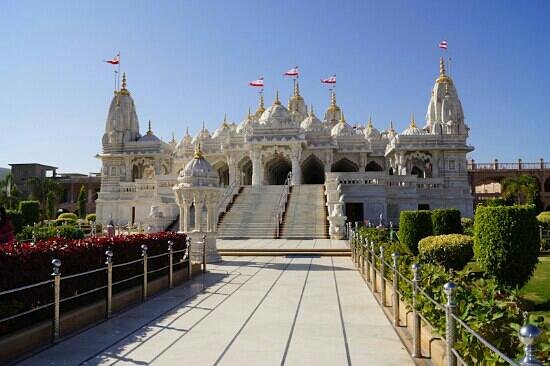
This 2-day itinerary offers a comprehensive spiritual and historical journey through Bhuj, featuring the grand Swaminarayan Temple and major heritage sites.
Day 1: Arrival in Bhuj and Heritage Exploration
Day 2: Cultural Immersion and Departure
The journey focuses on the architectural brilliance of the new Swaminarayan Temple followed by visits to the historic palaces of the Bhuj royal family. The flow allows for spiritual contemplation in the morning and historical exploration in the afternoon.
Before departure, the itinerary includes a visit to the regional museum and the local handicraft markets. This ensures a complete understanding of the Kutchi lifestyle before the final drop-off at the Bhuj transportation hub.
The package includes accommodations at premium 3-star hotels such as Hotel Prince, Regenta Resort Bhuj, or Hotel Seven Sky, ensuring a comfortable stay with modern amenities and quality service.
Breakfast, all sightseeing as per itinerary, AC vehicle Dzire or Innova or Tempo Traveller as per group size, driver allowance, parking, tolls, and stay in 3star AC hotels.
Anything not mentioned in inclusions, entry tickets, boating, guide services, personal expenses, camera fees, or meals other than breakfast.
Child up to 6 years Free
Child 6 to 8 years Half charge
Child above 8 years Full charge
20 percent advance at time of booking
20 percent after getting hotel booking voucher
60 percent during tour in parts
For tours between 15 Dec to 2 Jan, 50 percent advance payment required.
Minimum Rs. 3000 cancellation charge per person
10 percent or Rs. 3000 per person whichever is higher
25 percent cancellation between 46 to 30 days before departure
50 percent cancellation between 30 to 15 days before departure
75 percent cancellation between 15 to 5 days before departure
100 percent cancellation within 5 days of departure or noshow
Cancellation charges are calculated as percentage of total tour cost.
What is the best time to visit Bhuj? The months from October to March offer pleasant weather for sightseeing.
How can one reach Bhuj? Bhuj is well-connected by air, rail, and road to major Indian cities.
Are there entry fees for the palaces? Yes, both Aina Mahal and Prag Mahal require nominal entry fees.
What is the significance of the Swaminarayan Temple? It is a masterpiece of marble carving and a major spiritual center for the Swaminarayan sect.
Is photography allowed inside the temple? Photography is generally prohibited inside the inner sanctum but allowed in the outer courtyard.
What should visitors wear? Modest clothing that covers shoulders and knees is recommended for temple visits.
Is local transport easily available? Auto-rickshaws and taxis are readily available throughout the city.
Are there vegetarian food options? Most restaurants in Bhuj serve high-quality traditional Gujarati vegetarian cuisine.
Is the Kutch Museum open every day? The museum is typically closed on Wednesdays and public holidays.
Can one visit the White Rann from Bhuj? Yes, the White Rann is approximately 80 kilometers away and can be an extension trip.
Are guides available? Local guides are available at major historical sites for detailed explanations.
Is Bhuj safe for night walks? The city is generally safe, particularly around the well-lit lake and market areas.
Visit our main website for more incredible travel deals: Trypdeals Home
Explore our wide range of tour packages across various destinations: All Tours by Trypdeals
Discover the most sought-after travel destinations with Trypdeals: Top Travel Destinations
Bhuj
Bhuj serves as the cultural gateway to the Kutch region, offering a rich tapestry of history, art, and spirituality. Founded in 1510, the city has witnessed significant historical transformations, visible in its eclectic architecture ranging from the Italian Gothic style of Prag Mahal to the ornate mirrors of Aina Mahal. The city is globally recognized for the stunning Swaminarayan Temple, a beacon of modern marble architecture. Beyond its historical structures, Bhuj acts as a hub for traditional handicrafts, including Bandhani and lacquer work. The resilience of the city after the 2001 earthquake is reflected in its beautifully restored monuments and thriving local markets.