
Valley of Flowers Hemkund Sahib Auli tour package 7 days
- Places Covered: Valley of Flowers Hemkund Sahib Auli
- Tour Type: Private Tour
- Transport: Private Cab
- Customization: Available
Haridwar to Valley of Flowers Hemkund Sahib Auli Tour Package Itinerary
Pickup and drop city: Haridwar
Destination: Valley of Flowers, Hemkund Sahib, Auli
Days: 7 Days
SEO Keywords: Valley of Flowers Hemkund Sahib Auli tour package 7 days
Day 1: Haridwar to Joshimath/Govindghat (Approx. 290 km, 9-10 hours)
Upon arrival in Haridwar, the journey commences with a scenic drive through the Garhwal Himalayas towards Joshimath, a significant town often considered the gateway to several Himalayan expeditions and pilgrimages. The route offers glimpses of the Alaknanda River, winding through deep valleys and picturesque landscapes. Joshimath is a town with profound religious significance, being one of the four ‘Maths’ established by Adi Shankaracharya. It serves as a winter seat for Lord Badrinath and is a crucial base for trekkers heading to the Valley of Flowers and Hemkund Sahib, offering essential amenities and breathtaking mountain vistas.
Day 2: Joshimath – Auli Excursion – Joshimath
This day is dedicated to exploring the scenic splendor of Auli. A short drive or a captivating cable car ride (one of Asia’s longest) from Joshimath leads to this renowned hill station. Auli is famous for its panoramic views of snow-capped peaks like Nanda Devi and Kamet, earning it the title of a premier skiing destination in India. During non-winter months, it transforms into a lush green meadow offering serene walks and breathtaking vistas. The Auli artificial lake and the Gorson Bugyal trek are popular attractions.
Day 3: Joshimath/Govindghat to Ghangaria Trek
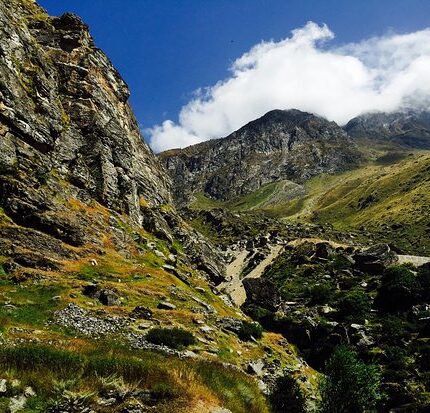
The journey continues to Govindghat, the starting point for the trek to Ghangaria. From Govindghat, travelers can either trek 13 km or take a pony/helicopter service to reach Ghangaria. Govindghat is a small hamlet located at the confluence of the Alaknanda and Lakshman Ganga rivers, serving as the primary base camp for treks to Hemkund Sahib and the Valley of Flowers. It is equipped with basic facilities for pilgrims and trekkers. Ghangaria is a tranquil settlement situated at the confluence of the Pushpawati River and Hemganga, acting as the base camp for both the Valley of Flowers and Hemkund Sahib. This ecologically sensitive area offers comfortable stays amidst pristine natural beauty, with clear streams and dense forests surrounding it.
Day 4: Ghangaria – Valley of Flowers – Ghangaria Trek
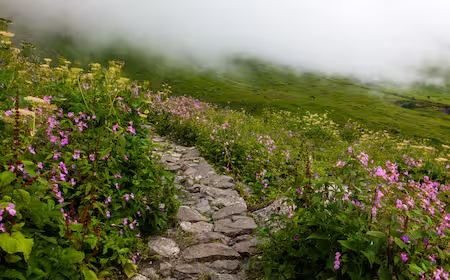
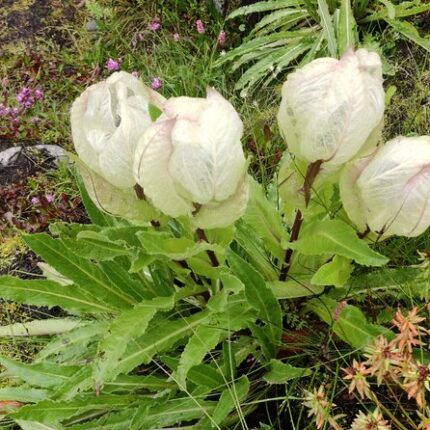
An early morning trek of approximately 3 km leads into the enchanting Valley of Flowers. Valley of Flowers National Park is a UNESCO World Heritage Site renowned for its endemic alpine flowers and rich diversity of flora. Discovered by mountaineer Frank S. Smythe in 1931, this spectacular valley transforms into a vibrant carpet of blooming flowers, typically from July to September. The Pushpawati River flows through the valley, enhancing its serene beauty and attracting botanists and nature lovers alike. Its delicate ecosystem supports rare and endangered species of animals, including the Asiatic black bear, snow leopard, and musk deer, making it a botanical paradise. (Refer to Wikipedia for more information).
Day 5: Ghangaria – Hemkund Sahib – Ghangaria Trek
This day involves a challenging but rewarding 6 km trek to Hemkund Sahib. Hemkund Sahib is a revered Sikh pilgrimage site and a Hindu pilgrimage site (Lokpal temple) dedicated to Lakshmana. It is situated at an altitude of approximately 4,632 meters (15,197 ft) and is surrounded by seven snow-capped peaks, with a pristine glacial lake reflecting the majestic surroundings. The Gurudwara stands on the shores of this lake, where Guru Gobind Singh, the tenth Sikh Guru, is said to have meditated in a previous incarnation. The arduous climb is rewarded with spiritual tranquility and unparalleled natural beauty. (Refer to TripAdvisor for visitor reviews and tips).
Day 6: Ghangaria to Rudraprayag/Srinagar Drive
After breakfast, begin the trek back to Govindghat. From Govindghat, a scenic drive leads to Rudraprayag or Srinagar for an overnight halt. Rudraprayag is one of the Panch Prayag (five confluences) of the Alaknanda River, where the Alaknanda meets the Mandakini River. It is a town of immense religious significance, named after Lord Shiva (Rudra) and is a gateway to Kedarnath and Badrinath. The confluence itself is a powerful sight, believed to cleanse sins. Srinagar Garhwal is another significant town nestled on the banks of the Alaknanda River, historically serving as the capital of the Garhwal Kingdom. It is an important cultural and educational center, offering a blend of ancient traditions and modern life. The town provides a comfortable stopover with various accommodation options.
Day 7: Rudraprayag/Srinagar to Haridwar Drop (Approx. 160 km, 5-6 hours)
After breakfast, embark on the final leg of the journey, driving back to Haridwar. The route offers final glimpses of the Himalayan foothills and the Ganges plains. Upon reaching Haridwar, travelers will be dropped off at their preferred location, concluding the
There are no reviews yet.