
Joshimath Auli Valley of Flowers Hemkund Sahib Badrinath Tour Package 8 Days from Haridwar
- Places Covered: Joshimath Auli Valley of Flowers Hemkund Sahib Badrinath
- Tour Type: Private Tour
- Transport: Private Cab
- Customization: Available
Haridwar to Badrinath Joshimath Auli Tour Package Itinerary
The journey for the Joshimath Auli Valley of Flowers Hemkund Sahib Badrinath tour package 8 days begins from Haridwar, traversing the picturesque Garhwal Himalayas. This well-structured itinerary is designed to offer a comprehensive exploration of spiritual sites, alpine meadows, and serene valleys, culminating in a drop-off back in Haridwar.
Day 1: Haridwar Arrival and Drive to Joshimath/Badrinath Region
The tour commences with arrival in Haridwar. A comfortable drive through the scenic route leads to the Badrinath Joshimath Auli region, a gateway to several revered destinations. The journey itself provides glimpses of the Himalayan foothills and winding rivers.
- Rishikesh: Known as the ‘Yoga Capital of the World’, Rishikesh is a spiritual hub situated on the banks of the Ganges River. It is famous for its ashrams, yoga centers, and the iconic Lakshman Jhula and Ram Jhula bridges. The town offers a serene atmosphere perfect for meditation and spiritual reflection.
- Devprayag: This sacred confluence marks the meeting point of the Alaknanda and Bhagirathi rivers, which then merge to form the holy Ganges. It is one of the five Panch Prayags and holds immense religious significance for Hindus. The vibrant turquoise waters against the backdrop of hills create a mesmerizing spectacle.
Day 2: Badrinath and Mana Village Excursion
Day two is dedicated to the revered Badrinath Temple, a paramount pilgrimage site. Post darshan, the exploration extends to Mana Village, the last Indian village before the Indo-Tibetan border.
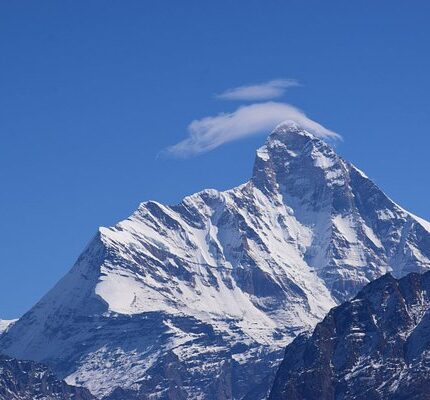
- Badrinath Temple: Dedicated to Lord Vishnu, this ancient temple is one of the four Char Dham pilgrimage sites. Its vibrant architecture and spiritual ambiance, set against the towering Neelkanth Peak, attract devotees from across the globe. The temple’s history dates back to ancient times, believed to have been re-established by Adi Shankara.
- Mana Village: Situated near Badrinath, Mana is the last inhabited village on the Indian side of the Indo-Tibetan border. It is culturally rich, known for its unique Bhotiya community and their traditional crafts. Visitors can explore local life, visit Vyas Gufa (cave), and see the origin of the Saraswati River.
Day 3: Auli Exploration and Return to Joshimath
Today, the high-altitude meadow of Auli awaits. A thrilling cable car ride offers panoramic views of the Himalayan peaks. After exploring Auli, the return journey to Joshimath provides time for relaxation.
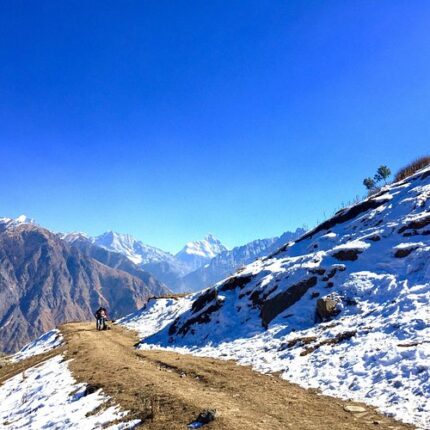
- Auli: Renowned as a prominent skiing destination in India, Auli offers breathtaking views of Nanda Devi, Kamet, Mana Parvat, and Dunagiri peaks. The Auli Ropeway, one of the longest in Asia, provides a stunning aerial journey. During summer, Auli transforms into a lush green meadow, ideal for trekking and nature walks. Visit Auli on Wikipedia for more details.
- Joshimath: An important pilgrimage center and the winter seat of Lord Badrinath, Joshimath is one of the four ‘Maths’ established by Adi Guru Shankaracharya. It serves as a base for treks to Valley of Flowers and Hemkund Sahib, and offers serene views of the surrounding mountains. The town is rich in ancient temples and spiritual significance.
Day 4: Drive to Govindghat / Ghangaria
The journey continues towards Govindghat, the starting point for the trek to Valley of Flowers and Hemkund Sahib. An overnight stay is typically arranged in Ghangaria, a small hamlet accessible via a trek from Govindghat.
- Govindghat: Situated at the confluence of the Alaknanda and Lakshman Ganga rivers, Govindghat is a crucial base camp for pilgrims and trekkers heading to Hemkund Sahib and Valley of Flowers. It offers essential amenities and a starting point for the scenic trek ahead.
- Ghangaria: This small village serves as the last human habitation point on the way to Hemkund Sahib and Valley of Flowers. Nestled amidst towering peaks, it offers a peaceful environment and necessary accommodation for trekkers. The village is surrounded by lush greenery and the soothing sound of flowing streams.
Day 5: Trek to Valley of Flowers National Park (Seasonal)
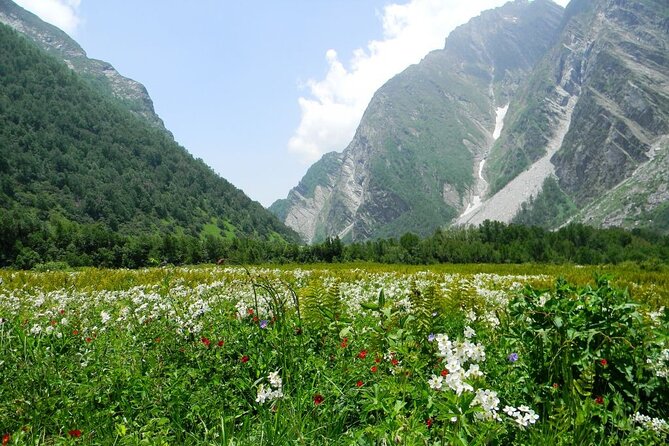
An invigorating trek leads into the surreal Valley of Flowers National Park, a UNESCO World Heritage site (seasonal opening). The vibrant floral carpet and stunning Himalayan backdrop create an unparalleled natural spectacle. A return trek to Ghangaria follows.
- Valley of Flowers National Park: This ethereal valley is a breathtaking expanse of alpine flowers, endemic to the Western Himalayas. Discovered in 1931 by mountaineer Frank S. Smythe, it is home to over 500 species of flowering plants, creating a riot of colors during monsoon. Its serene beauty and rich biodiversity make it a paradise for nature lovers and photographers. Learn more at Valley of Flowers on TripAdvisor.
Day 6: Trek to Hemkund Sahib
The trek to Hemkund Sahib is a spiritual and physically rewarding journey. This high-altitude Sikh pilgrimage site, nestled beside a pristine glacial lake, is surrounded by seven peaks. After offering prayers, the descent back to Ghangaria completes the day.
- Hemkund Sahib: This revered Sikh Gurudwara and Hindu temple dedicated to Lakshmana is situated at an elevation of over 4,600 meters. The star-shaped Gurudwara stands on the shores of the crystal-clear Hemkund Lake, believed to be where Guru Gobind Singh meditated. The arduous trek offers stunning views and a profound spiritual experience. Explore more about Hemkund Sahib.
Day 7: Trek Back to Govindghat and Drive to Rudraprayag/Srinagar
The descent trek from Ghangaria to Govindghat is undertaken today. From Govindghat, the journey continues by road to Rudraprayag or Srinagar, marking a gradual return from the higher altitudes.
- Rudraprayag: One of the five Panch Prayags, Rudraprayag is where the Alaknanda and Mandakini rivers converge. It is named after Lord Shiva (Rudra) and is a significant pilgrimage site, known for its ancient temples and picturesque setting. The confluence offers a powerful display of natural forces.
- Srinagar (Garhwal): Not to be confused with Srinagar in Kashmir, this Srinagar is an important commercial and educational hub in Uttarakhand, located on the banks of the Alaknanda River. It was once the capital of the Garhwal Kingdom and boasts a rich history and vibrant local culture.
Day 8: Drive Back to Haridwar and Departure
The final day involves a drive from Rudraprayag/Srinagar back to Haridwar, where the Joshimath Auli Valley of Flowers Hemkund Sahib Badrinath tour package 8 days concludes, leaving participants with cherished memories of the Himalayan journey.
- Haridwar: A revered Hindu pilgrimage city, Haridwar is famous for its Ganga Aarti at Har Ki Pauri, where thousands gather to witness the spiritual ritual. The city is considered one of the seven holiest places to Hindus. Its vibrant ghats and temples offer a deep insight into Indian spiritual traditions.
3 Star Hotels in Joshimath and nearby cities
The tour utilizes comfortable 3-star accommodations, ensuring a pleasant stay after each day’s exploration. Hotels are selected for their convenient locations, amenities, and hospitality, providing a relaxing environment in destinations like Joshimath, Badrinath region, Ghangaria, and Rudraprayag/Srinagar.
Joshimath Auli Valley of Flowers Hemkund Sahib Badrinath Tour Package Price from Haridwar
| Number of Persons | Per Person Price (INR) |
|---|---|
| 2 Adults | 29280 |
| 3 Adults | 22880 |
| 4-7 Adults | 19817 |
| 8-10 Adults | 18684 |
| 11-12 Adults | 16771 |
Inclusions in Joshimath Auli Valley of Flowers Hemkund Sahib Badrinath Tour Package 8 Days
Breakfast, all sightseeing as per itinerary, AC vehicle Dzire or Innova or Tempo Traveller as per group size, driver allowance, parking, tolls, and stay in 3star AC hotels.
Exclusions in Joshimath Auli Valley of Flowers Hemkund Sahib Badrinath Package from Haridwar
Anything not mentioned in inclusions, entry tickets, boating, guide services, personal expenses, camera fees, or meals other than breakfast.
Child Policy for Joshimath Auli Valley of Flowers Hemkund Sahib Badrinath Trip from Haridwar
Child up to 6 years Free
Child 6 to 8 years Half charge
Child above 8 years Full charge
Payment Policy for Joshimath Auli Valley of Flowers Hemkund Sahib Badrinath Package Booking
20 percent advance at time of booking
20 percent after getting hotel booking voucher
60 percent during tour in parts
For tours between 15 Dec to 2 Jan, 50 percent advance payment required.
Cancellation Policy for Joshimath Auli Valley of Flowers Hemkund Sahib Badrinath Tour
Minimum Rs. 3000 cancellation charge per person
10 percent or Rs. 3000 per person whichever is higher
25 percent cancellation between 46 to 30 days before departure
50 percent cancellation between 30 to 15 days before departure
75 percent cancellation between 15 to 5 days before departure
100 percent cancellation within 5 days of departure or noshow
Cancellation charges are calculated as percentage of total tour cost.
Frequently Asked Questions – Joshimath Auli Valley of Flowers Hemkund Sahib Badrinath Travel Guide
- What is the best time to visit Badrinath and Valley of Flowers?
The best time to visit Badrinath is from May to October, excluding the monsoon months. For the Valley of Flowers, July to September is ideal when the flowers are in full bloom. - Is the trek to Valley of Flowers and Hemkund Sahib difficult?
The trek is moderately challenging, requiring a reasonable level of physical fitness. It involves walking for several kilometers over hilly terrain. - Are there any medical facilities available during the tour?
Basic medical facilities are available in major towns like Joshimath and Govindghat. It is advisable to carry personal medications. - What kind of clothing should be carried for this tour?
Layered clothing, including warm jackets, thermal wear, rain gear, and comfortable trekking shoes, is recommended due to varying altitudes and weather conditions. - Is it safe for solo female travelers?
Uttarakhand is generally considered safe. However, solo travelers are advised to take standard precautions, especially during treks and in remote areas. - Are there ATMs available on the route?
ATMs are available in larger towns like Haridwar and Joshimath, but their availability may be limited in remote areas. It is recommended to carry sufficient cash. - What are the opening and closing dates for Badrinath Temple?
Badrinath Temple typically opens in late April or early May and closes for winter in October or November, depending on auspicious dates. - Can we visit Hemkund Sahib and Valley of Flowers on the same day?
No, visiting both requires separate full-day treks from Ghangaria due to the distance and elevation. - Are there any permits required for Valley of Flowers?
Yes, an entry permit is required for Valley of Flowers National Park, which can be obtained at the entrance. - What is the altitude of Hemkund Sahib?
Hemkund Sahib is situated at an altitude of approximately 4,632 meters (15,197 feet) above sea level. - Is photography allowed inside the temples and Gurudwara?
Photography is generally not allowed inside the main sanctum of temples and Gurudwaras. It is best to check local rules. - What food options are available during the trek?
Basic vegetarian meals, including Maggi, rice, and dal, are available at dhabas and small eateries along the trekking routes.
Important Travel Information for Joshimath Auli Valley of Flowers Hemkund Sahib Badrinath Package
- Acclimatization: Due to the varying altitudes, it is crucial to acclimatize properly, especially when ascending to higher elevations like Hemkund Sahib and Badrinath. Gradual ascent and staying hydrated are recommended.
- Physical Fitness: The tour involves significant walking and trekking, particularly for Valley of Flowers and Hemkund Sahib. Participants should ensure a moderate level of physical fitness.
- Weather Conditions: Himalayan weather can be unpredictable. Be prepared for sudden changes in temperature, rainfall, and clear skies. Check forecasts before and during the trip.
- Altitude Sickness: Be aware of symptoms of acute mountain sickness (AMS) such as headache, nausea, and dizziness. Descend immediately if symptoms worsen and seek medical attention.
- Connectivity: Mobile network connectivity can be erratic in remote areas. BSNL/Jio generally have better coverage in Uttarakhand compared to other providers.
- Responsible Tourism: Practice responsible tourism by not littering, respecting local customs, and preserving the natural environment. Avoid using single-use plastics.
- Carry Essentials: Pack essentials like a first-aid kit, power bank, sunscreen, sunglasses, personal toiletries, and a rain cover for bags.
- Footwear: Invest in good quality, waterproof trekking shoes with ankle support for comfort and safety during treks.
- Hydration: Drink plenty of water to stay hydrated and avoid dehydration, which can exacerbate altitude sickness.
- Permits: Carry identification documents and ensure any necessary permits for protected areas like Valley of Flowers are obtained and carried.
- Local Culture: Respect the local culture and traditions, especially when visiting religious sites. Dress modestly and observe local etiquette.
- Emergency Contacts: Keep a list of emergency contacts, including tour operator details, local police, and medical services.
Trypdeals tour packages you might be interested in
Visit our main website for more incredible travel deals: Trypdeals Home
Explore our wide range of tour packages across various destinations: All Tours by Trypdeals
Discover the most sought-after travel destinations with Trypdeals: Top Travel Destinations
Joshimath
Joshimath, nestled in the Chamoli district of Uttarakhand, serves as a significant gateway to several Himalayan expeditions and pilgrimage sites. It is one of the four ‘Maths’ or monastic institutions established by Adi Guru Shankaracharya, holding immense spiritual importance. During winter, it becomes the abode of Lord Badrinath’s idol when the main Badrinath Temple is closed. The town offers stunning views of the surrounding mountains and is a vital base for trekkers heading to Valley of Flowers and Hemkund Sahib. Its ancient temples, including the Narsingh Temple, narrate tales of rich history and religious fervor. Visitors often use Joshimath as a launching pad for the Auli ropeway, leading to the renowned ski destination.
Overview of the Joshimath Auli Valley of Flowers Hemkund Sahib Badrinath tour package 8 days: This incredible journey combines spiritual reverence with breathtaking natural beauty, exploring sacred temples, serene valleys, and majestic Himalayan landscapes over eight days.
Auli
Auli, often referred to as a ‘heaven for skiers’, is a picturesque hill station and a premier skiing destination in the Garhwal Himalayas of Uttarakhand. Perched at an elevation of about 2,500 to 3,050 meters, it offers panoramic views of some of India’s highest peaks, including Nanda Devi, Mana Parvat, and Dunagiri. The famous Auli Ropeway, one of the longest in Asia, provides a thrilling ride with spectacular aerial vistas. Beyond winter sports, Auli transforms into a lush green meadow during summer, ideal for tranquil nature walks and trekking to nearby Gorson Bugyal. The crisp mountain air and stunning scenery make Auli a rejuvenating retreat for nature lovers and adventure enthusiasts alike, providing a serene escape from urban life.
Valley of Flowers
The Valley of Flowers National Park, a UNESCO World Heritage Site in Uttarakhand, is an ethereal expanse celebrated for its vibrant carpets of alpine flowers. Discovered by mountaineer Frank S. Smythe in 1931, this enchanting valley becomes a riot of colors from July to September, showcasing hundreds of species of rare and exotic flowers like the Himalayan Balsam, Blue Poppy, and Cobra Lily. Set against the majestic backdrop of the Zanskar and Great Himalayan ranges, it is a paradise for botanists, nature photographers, and trekkers. The valley is also home to diverse fauna, including the Asiatic black bear, snow leopard, and musk deer. Its pristine beauty and serene atmosphere offer an unforgettable experience, embodying a delicate ecosystem within the high Himalayas.
Hemkund Sahib
Hemkund Sahib is a highly revered Sikh pilgrimage site and Hindu temple nestled amidst the majestic Himalayan peaks in Uttarakhand. Situated at an astounding altitude of over 4,600 meters (15,197 ft), this star-shaped Gurudwara stands beside the pristine waters of a glacial lake, believed to be the place where Guru Gobind Singh, the tenth Sikh Guru, meditated in a previous incarnation. Surrounded by seven towering peaks, the serene environment and the arduous trek to reach it offer a profound spiritual experience. Alongside the Gurudwara, a small Lakshman Temple is also present. The journey to Hemkund Sahib is physically challenging but rewards pilgrims with breathtaking natural beauty and a deep sense of peace, making it a truly unique spiritual endeavor.
Badrinath
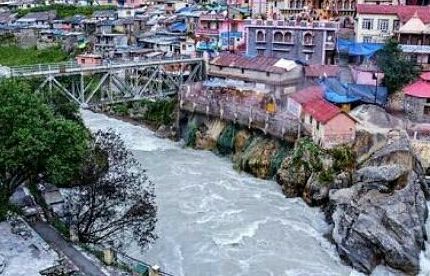
Badrinath is one of the holiest pilgrimage towns in India, situated in the Garhwal Himalayas of Uttarakhand. It is home to the revered Badrinath Temple, dedicated to Lord Vishnu, and forms one of the four Char Dham pilgrimage sites. Nestled between the Nar and Narayan mountain ranges, with the Neelkanth Peak in the backdrop, the temple’s vibrant architecture and spiritual ambiance attract millions of devotees annually. The town is located on the banks of the Alaknanda River, and nearby Tapt Kund (a natural thermal spring) is believed to have medicinal properties. The sacred Mana Village, the last inhabited village near the Indo-Tibetan border, is just a few kilometers away, adding to the cultural and historical richness of the region.
There are no reviews yet.