
Kedarnath Badrinath Mana Village Tour Package 6 Days from Haridwar
- Places Covered: Kedarnath Badrinath Mana Village
- Tour Type: Private Tour
- Transport: Private Cab
- Customization: Available
Haridwar to Kedarnath Badrinath Mana Village Tour Package Itinerary
Day 1: Haridwar – Guptkashi/Sitapur (Drive 7-8 hours)
Arrival in Haridwar and transfer to Guptkashi or Sitapur. The journey traverses through scenic Garhwal hills, offering glimpses of the pristine Ganga and Alaknanda rivers. Upon arrival, check into the hotel and prepare for the spiritual ascent to Kedarnath on the following day. Guptkashi is a significant pilgrimage town known for its ancient Vishwanath Temple.
Day 2: Guptkashi/Sitapur – Kedarnath – Guptkashi/Sitapur (Trek/Pony/Heli & Drive)
Early morning, proceed to Sonprayag/Gaurikund, the starting point for the Kedarnath trek.
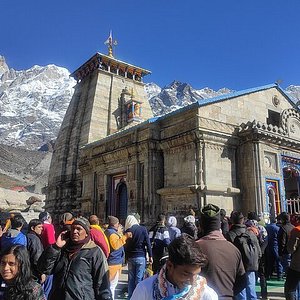
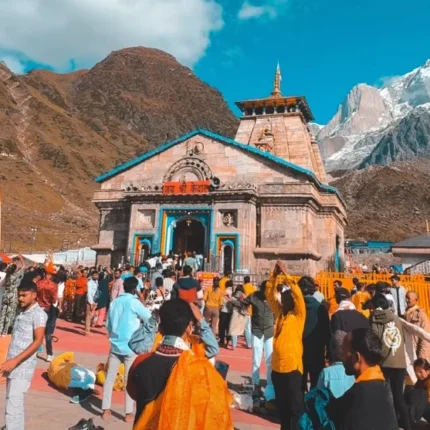
- Kedarnath Temple: Situated at an altitude of 3,583 meters amidst the majestic Garhwal Himalayas, Kedarnath is one of the twelve Jyotirlingas of Lord Shiva. The ancient stone temple, believed to have been built by the Pandavas and revived by Adi Shankaracharya, stands as a symbol of unwavering faith against a backdrop of snow-capped peaks and the Mandakini River. Its remote location adds to its mystical allure, attracting devotees who undertake a challenging pilgrimage.
- Gaurikund: This sacred spot is significant as the place where Goddess Parvati meditated to win Lord Shiva’s affection and where Lord Ganesha gained his elephant head. It serves as the base camp for the trek to Kedarnath, offering thermal springs that pilgrims often use for a purifying bath before their arduous journey.
After Darshan and exploring the surroundings, trek back to Sonprayag/Gaurikund and drive to Guptkashi/Sitapur for overnight stay.
Day 3: Guptkashi/Sitapur – Badrinath (Drive 8-9 hours)
After breakfast, embark on a scenic drive to Badrinath. The route passes through several picturesque towns like Joshimath.
- Joshimath: This town holds immense religious and historical importance as the winter seat of Lord Badrinath and one of the four ‘Maths’ established by Adi Shankaracharya. It serves as a gateway to several Himalayan expeditions and pilgrimage sites, known for its ancient temples and the Narsingh Temple.
- Devprayag: This is one of the Panch Prayags, or five holy confluences, where the Bhagirathi River (considered the source of the Ganga) and the Alaknanda River meet. The confluence is a deeply spiritual site, marked by the Raghunathji Temple, attracting pilgrims who believe a dip here cleanses sins.
Upon arrival in Badrinath, check into the hotel. Evening Aarti at Badrinath Temple.
Day 4: Badrinath – Mana Village – Pipalkoti/Joshimath (Drive 2-3 hours)
Morning darshan at Badrinath Temple.
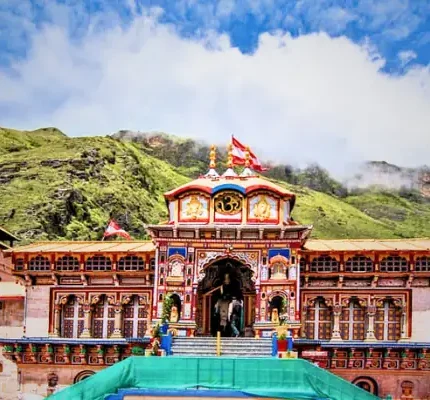
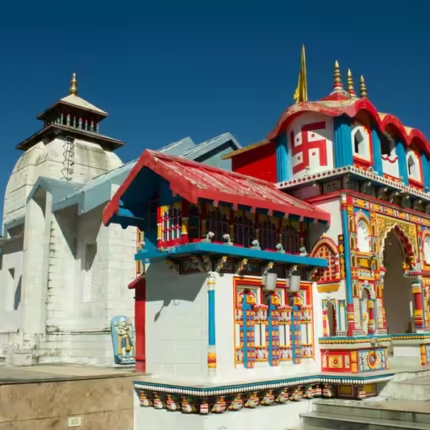
- Badrinath Temple: Dedicated to Lord Vishnu, the Badrinath Temple is one of the four Char Dham pilgrimage sites and stands majestically on the banks of the Alaknanda River. Its vibrant façade and spiritual aura are complemented by the natural hot springs of Tapt Kund, where pilgrims bathe before entering the temple. The idol of Lord Badrinarayan is revered for its ancient origins and spiritual power. [https://en.wikipedia.org/wiki/Badrinath_Temple]
- Mana Village: Situated just 3 km from Badrinath, Mana is hailed as the ‘Last Indian Village’ before the Tibetan border. This quaint village is steeped in mythology, believed to be the place where Vyas Rishi dictated the Mahabharata to Lord Ganesha. Visitors can explore ancient caves like Vyas Gufa and Ganesh Gufa, and witness the unique Bhim Pul natural bridge. [https://en.wikipedia.org/wiki/Mana,_India]
- Tapt Kund: A natural thermal spring located just below the Badrinath Temple, Tapt Kund is revered for its medicinal properties. Pilgrims traditionally take a holy dip in its warm waters before entering the temple, believing it to cleanse both body and soul.
After exploring Mana Village, drive back towards Pipalkoti/Joshimath for overnight stay.
Day 5: Pipalkoti/Joshimath – Rudraprayag/Srinagar (Drive 4-5 hours)
After breakfast, begin the journey downstream along the Alaknanda River, passing through several significant towns and confluences.
- Karanprayag: This is the confluence of the Alaknanda and Pindar rivers, another of the Panch Prayags. It is believed that Karna of the Mahabharata meditated here, and the town is home to the Uma Devi Temple, making it a sacred spot for devotees and a picturesque stopover.
- Rudraprayag: Marking the confluence of the Alaknanda and Mandakini rivers, Rudraprayag is named after Lord Shiva (Rudra). This sacred spot is culturally significant, with the Rudranath Temple dedicated to Shiva and the Chamunda Devi Temple nearby, offering spiritual solace amidst natural beauty. [https://en.wikipedia.org/wiki/Rudraprayag]
Check into the hotel in Rudraprayag or Srinagar.
Day 6: Rudraprayag/Srinagar – Haridwar (Drive 4-5 hours)
After breakfast, proceed with the final leg of the journey back to Haridwar. The drive offers final views of the majestic Himalayan foothills and the sacred rivers.
- Haridwar: A revered Hindu pilgrimage city located on the banks of the Ganges River, Haridwar is famous for its ‘Har ki Pauri’ ghat where pilgrims take a holy dip. It is one of the seven holiest places to Hindus and hosts the Kumbh Mela every 12 years. The city is a vibrant hub of spiritual activities and ancient traditions. [https://en.wikipedia.org/wiki/Haridwar]
Drop-off at Haridwar Railway Station/Bus Stand, concluding the ‘Kedarnath Badrinath Mana Village tour package 6 days’.
3 Star Hotels in Kedarnath Badrinath Mana Village Region
Accommodation typically includes well-regarded 3-star hotels in pilgrimage towns such as Guptkashi, Sitapur, Badrinath, Joshimath, Pipalkoti, Rudraprayag, and Srinagar. These hotels offer comfortable stays with essential amenities, ensuring a restful experience after days of travel and exploration. Efforts are made to provide clean rooms, efficient service, and often include options for in-house dining.
Kedarnath Badrinath Mana Village Package Price from Haridwar
- For 2 persons: Rs. 21600 per person
- For 3 persons: Rs. 16800 per person
- For 4-7 persons: Rs. 13371 – 14400 per person (Price varies based on group size and vehicle choice, typically Innova for this range)
- For 8-10 persons: Rs. 12960 – 14400 per person (Using 12-seater Tempo Traveller)
- For 11-12 persons: Rs. 12000 – 12436 per person (Using 12-seater Tempo Traveller)
Inclusions in Kedarnath Badrinath Mana Village tour package 6 days
Breakfast, all sightseeing as per itinerary, AC vehicle Dzire or Innova or Tempo Traveller as per group size, driver allowance, parking, tolls, and stay in 3star AC hotels.
Exclusions in Kedarnath Badrinath Mana Village tour package 6 days from Haridwar
Anything not mentioned in inclusions, entry tickets, boating, guide services, personal expenses, camera fees, or meals other than breakfast.
Child Policy for Kedarnath Badrinath Mana Village Trip from Haridwar
Child up to 6 years Free
Child 6 to 8 years Half charge
Child above 8 years Full charge
Payment Policy for Kedarnath Badrinath Mana Village Package Booking
20 percent advance at time of booking
20 percent after getting hotel booking voucher
60 percent during tour in parts
For tours between 15 Dec to 2 Jan, 50 percent advance payment required.
Cancellation Policy for Kedarnath Badrinath Mana Village Tour
Minimum Rs. 3000 cancellation charge per person
10 percent or Rs. 3000 per person whichever is higher
25 percent cancellation between 46 to 30 days before departure
50 percent cancellation between 30 to 15 days before departure
75 percent cancellation between 15 to 5 days before departure
100 percent cancellation within 5 days of departure or noshow
Cancellation charges are calculated as percentage of total tour cost.
Frequently Asked Questions – Kedarnath Badrinath Mana Village Travel Guide
- What is the best time to visit Kedarnath Badrinath Mana Village?
The best time to visit is from May to June and September to October. During these months, the weather is pleasant, and the pilgrimage routes are open and accessible. Monsoons (July-August) can bring heavy rainfall and landslides, making travel challenging. - How strenuous is the trek to Kedarnath?
The trek to Kedarnath is approximately 16-18 km from Gaurikund. It is considered moderately challenging. Options like ponies, palanquins (dolis), and helicopter services are available for those who prefer not to trek or have physical limitations. - Are there ATMs available on the route?
ATMs are available in major towns like Haridwar, Rishikesh, and Joshimath. However, it is advisable to carry sufficient cash as ATM availability can be scarce or unreliable in remote areas, especially closer to Kedarnath and Badrinath. - What kind of clothing should be carried for the trip?
Warm clothing is essential, even during summer months, as temperatures can drop significantly in the mountains, especially during mornings and evenings. Layers, woolen sweaters, jackets, caps, gloves, and comfortable walking shoes are highly recommended. - Is medical assistance readily available?
Basic medical facilities are available in major towns and near the temples during the pilgrimage season. However, for serious emergencies, evacuation might be required. Carrying personal medication and a basic first-aid kit is always advisable. - What is the significance of Mana Village?
Mana Village is considered the ‘Last Indian Village’ before the Indo-Tibetan border. It is historically significant as the place where Vyas Rishi is believed to have dictated the Mahabharata. It also features ancient caves and the mythical Bhim Pul. - Are mobile network and internet services available?
Mobile network connectivity can be intermittent and weak in many parts of the higher Himalayas. BSNL/MTNL generally have better coverage. Internet access is limited, mostly available at hotels in larger towns. - Is it safe for solo female travelers?
The region is generally safe for pilgrims and tourists. However, it is always recommended for solo female travelers to exercise caution, avoid late-night outings alone, and inform their tour operator or hotel about their whereabouts. - Are there any specific dietary restrictions?
Most restaurants and dhabas along the pilgrimage route serve vegetarian food due to the religious sanctity of the area. Alcohol and non-vegetarian food are generally not available, especially in the immediate vicinity of the temples. - What documents are required for the pilgrimage?
Identity proof (Aadhar Card, Voter ID, Passport) is mandatory. It is also advisable to carry copies of your tour booking vouchers, medical prescriptions (if any), and emergency contact numbers. - Can children and elderly people undertake this tour?
Children and elderly individuals can undertake this tour, but it requires careful consideration of their health and fitness. The high altitudes and trekking involved for Kedarnath might be challenging. Helicopter services are an option for Kedarnath. Consulting a doctor before the trip is recommended for the elderly. - Are there any rituals or customs to be followed at the temples?
Pilgrims are expected to dress modestly and respect local customs and traditions. Photography inside the inner sanctums of the temples is generally prohibited. Following the instructions of temple authorities and guides is essential.
Important Travel Information for Kedarnath Badrinath Mana Village Package
- High Altitude Acclimatization: The tour involves travel to high-altitude regions. It is crucial to acclimatize properly to avoid altitude sickness (Acute Mountain Sickness – AMS). Stay hydrated, avoid alcohol, and ascend gradually.
- Weather Conditions: Himalayan weather is unpredictable. Be prepared for sudden changes in temperature, rainfall, or even snowfall. Pack layers of clothing.
- Physical Fitness: A reasonable level of physical fitness is required, especially for the Kedarnath trek. Individuals with heart conditions, respiratory issues, or other serious health concerns should consult a doctor before planning the trip.
- Permits and Registrations: Mandatory registration for Char Dham Yatra is often required. Ensure all necessary permits and registrations are completed before commencing the journey. Your tour operator will typically assist with this.
- Road Conditions: Roads in the Himalayan region can be challenging due to terrain, landslides, and construction. Be prepared for longer travel times and potential delays.
- Accommodation: While 3-star hotels are provided, amenities might be basic in remote areas compared to urban centers. Expect clean but functional accommodations.
- Respect Local Culture: The region is deeply spiritual. Visitors are requested to respect local customs, traditions, and the sanctity of religious sites. Dress modestly, especially when visiting temples.
- Environmental Responsibility: Carry reusable water bottles and minimize plastic waste. Do not litter and help preserve the pristine Himalayan environment.
- Emergency Contacts: Keep a list of emergency contacts, including your tour operator, local police, and medical services.
- Connectivity: Mobile network coverage is patchy. Inform family/friends about limited connectivity in advance.
- Photography Rules: Adhere to photography rules at religious sites. Some areas may prohibit photography, especially inside temple sanctums.
- Travel Insurance: It is highly recommended to have comprehensive travel insurance covering medical emergencies, trip cancellations, and unforeseen circumstances.
Trypdeals tour packages you might be interested in
Visit our main website for more incredible travel deals: Trypdeals Home
Explore our wide range of tour packages across various destinations: All Tours by Trypdeals
Discover the most sought-after travel destinations with Trypdeals: Top Travel Destinations
Kedarnath
Kedarnath Badrinath Mana Village Tour Package 6 Days from Haridwar is a comprehensive spiritual and scenic journey through the revered Garhwal Himalayas. This tour covers the sacred shrines of Kedarnath and Badrinath, along with the culturally rich Mana Village.
The revered abode of Lord Shiva, Kedarnath stands majestically at an elevation of 3,583 meters in the Garhwal Himalayas. It is one of the twelve Jyotirlingas and a prominent site in the Char Dham pilgrimage. The ancient stone temple, enduring centuries of natural calamities, is a testament to profound faith. Surrounded by towering peaks, glaciers, and the Mandakini River, Kedarnath offers a surreal spiritual experience. Pilgrims undertake a challenging trek or opt for helicopter services to reach this sacred sanctuary, seeking blessings and tranquility amidst its breathtaking natural beauty. Its remote location enhances its mystical aura, making every journey here a deeply personal and transformative endeavor.
Badrinath
Perched gracefully on the banks of the Alaknanda River, Badrinath is a sacred town holding immense significance for Hindu devotees. It is one of the four principal Char Dham sites and is dedicated to Lord Vishnu. The vibrant Badrinath Temple, with its distinctive architecture, houses a black stone idol of Lord Badrinarayan. Pilgrims typically take a holy dip in the natural thermal springs of Tapt Kund before entering the temple, believed to possess medicinal properties. Surrounded by the towering Neelkanth Peak, the town’s serene atmosphere and profound spiritual energy offer a deeply moving experience. Badrinath serves as a gateway to other significant sites in the Garhwal Himalayas.
Mana Village
Just a short distance from Badrinath, Mana Village holds the unique distinction of being the ‘Last Indian Village’ before the Indo-Tibetan border. This quaint and picturesque hamlet is steeped in mythological lore, believed to be the place where Vyas Rishi composed the Mahabharata with Lord Ganesha as his scribe. Visitors can explore ancient caves like Vyas Gufa and Ganesh Gufa, and marvel at the natural rock bridge known as Bhim Pul. Surrounded by pristine Himalayan landscapes, Mana offers a fascinating glimpse into a traditional mountain way of life combined with rich spiritual history. Its serene beauty and cultural significance make it a compelling stop for any traveler.
There are no reviews yet.