
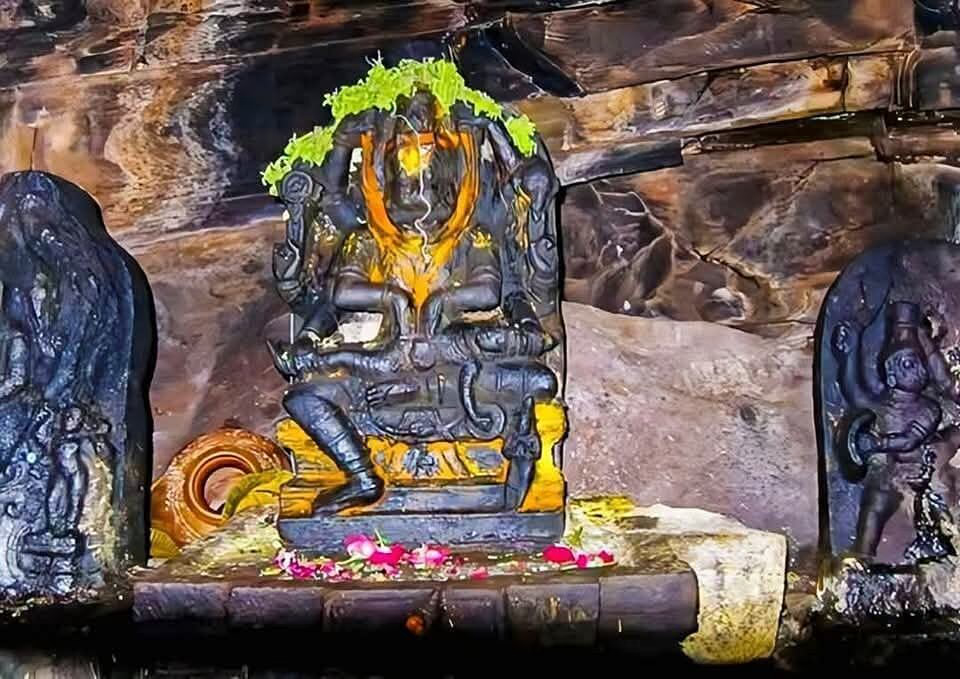
Thiruvalangaadu Vadaranyeshwarar Temple, Chennai
Overview
- •Thiruvalangaadu Vadaranyeshwarar Temple, located about 54 km from Chennai in Thiruvalangadu, Tiruvallur district, is a 12th-century Chola-era shrine dedicated to Lord Shiva.
- •It is one of the 275 Paadal Petra Sthalams, revered in the hymns of the Tamil Saiva saints, and offers a serene escape into ancient temple architecture and spirituality.
Highlights
- One of the 275 Paadal Petra Sthalams, revered in Tevaram hymns
- Authentic 12th-century Chola architecture and stone carvings
- Peaceful, less-crowded atmosphere ideal for contemplation
- Annual Brahmotsavam festival with colorful processions
Religious Significance
This temple is one of the 275 Paadal Petra Sthalams, a group of Shiva temples celebrated in the devotional hymns of the Nayanmars, making it a key pilgrimage site for Shaivites. Its historical importance lies in its Chola patronage and its association with the saint Sundarar, who is believed to have sung hymns here. The temple also holds a unique place in local legend, though its primary fame rests on its inclusion in the canonical Tamil Saiva literature.
Dress Code
Traditional and modest attire is recommended; men often wear dhotis or trousers, and women are advised to wear sarees or salwar kameez, covering shoulders and legs.
Facilities
Basic facilities only, including a few small shops near the temple for offerings and refreshments. Restrooms may be limited; visitors are advised to plan accordingly.
Rituals
- •Daily rituals include abhishekam (sacred bathing) of the lingam, alankaram (decoration), and naivedyam (food offering), performed by the temple priests.
- •Special pujas are conducted on Pradosham days and during the Tamil month of Aippasi (October-November).
Festivals
- •The annual Brahmotsavam festival, celebrated in the Tamil month of Vaikasi (May-June), is the major event, featuring processions of the deities on various vahanams (mounts).
- •Maha Shivaratri is also observed with special night-long prayers and abhishekams.
Darshan Guide
- •Darshan is typically open from early morning to noon and again in the evening, with a break during midday.
- •The temple is less crowded than major urban temples, allowing for a peaceful visit, but it is advisable to check local timings before arriving.
Rituals
- •Daily rituals include abhishekam (sacred bathing) of the lingam, alankaram (decoration), and naivedyam (food offering), performed by the temple priests.
- •Special pujas are conducted on Pradosham days and during the Tamil month of Aippasi (October-November).
History
- •The temple was built by the Cholas during the 12th century CE, a period of prolific temple construction in Tamil Nadu.
- •It is one of the shrines glorified in the Tevaram, the collection of hymns by the Nayanmar saints, which dates its religious significance to at least the early medieval period.
- •Later additions and renovations by subsequent dynasties have contributed to its current form, but the core structure retains its Chola character.
Architecture
- •The temple exhibits classic Chola architecture, featuring a granite base, a vimana (tower over the sanctum) with intricate stucco figures, and a spacious courtyard.
- •The gopuram (entrance tower) is modest in size but adorned with colorful sculptures of deities and mythological figures.
- •The pillars in the mandapas (halls) are carved with typical Chola motifs, reflecting the artistic conventions of the period.
Temple Layout
- •The temple complex is oriented east-west, with a prominent rajagopuram leading into a large outer courtyard.
- •The main sanctum houses Lord Vadaranyeshwarar (Shiva) as a lingam, and is surrounded by sub-shrines for Goddess Parvati (as Periyanayaki), Lord Muruga, and other deities.
- •A separate shrine for the goddess is located to the left of the main sanctum, following the usual Chola temple layout.
Travel Tips
- Carry your own water bottle and snacks, as options are limited in the immediate vicinity.
- Combine your visit with nearby attractions like the Tiruvallur Veeraraghava Perumal Temple to make the most of the trip.
- Dress conservatively and remove footwear before entering the inner sanctum, as is customary in Hindu temples.
Frequently Asked Questions
Thiruvalangaadu is about 54 km from Chennai, accessible by road via the Chennai-Tiruvallur route. You can hire a taxi or take a bus to Thiruvallur and then a local bus or auto to the temple. The drive typically takes about 1.5 to 2 hours depending on traffic.
The temple was built by the Cholas in the 12th century CE and is one of the 275 Paadal Petra Sthalams, meaning it is celebrated in the devotional hymns of the Nayanmar saints. This places it among the most sacred Shiva temples in Tamil literature and pilgrimage.
If you wish to witness special rituals, plan to visit on Pradosham days or during Maha Shivaratri, when elaborate abhishekams are performed. The annual Brahmotsavam in Vaikasi (May-June) is the grandest festival, featuring processions and cultural events.
Quick Information
Best Time
The best time to visit is from November to February when the weather is pleasant, and also during the festival months for a more vibrant experience.
Timings
6:00 AM - 12:00 PM, 4:00 PM - 8:00 PM
Entry Fee
Free
Related Topics
Tour Packages for Chennai




Explore More of Chennai
Destination Hub
Chennai OverviewSpiritual & Temple Guides
Places to Explore
Discover attraction
Discover attraction
Discover attraction
Discover attraction
Discover attraction
Discover attraction
Discover attraction
Discover attraction
Discover attraction
Discover attraction
Discover attraction
Discover attraction
Discover attraction
Discover attraction
Discover attraction
Discover attraction
Discover attraction
Discover attraction
Discover attraction
Discover attraction
Discover attraction
Discover attraction
Discover attraction
Discover attraction
Discover attraction
Discover attraction
Discover attraction
Discover attraction
Discover attraction
Discover attraction
Discover attraction
Discover attraction
Discover attraction
Discover attraction
Discover attraction
Discover attraction
Discover attraction
Discover attraction
Discover attraction
Discover attraction
Discover attraction
Discover attraction
Discover attraction
Discover attraction
Discover attraction
Discover attraction
Discover attraction
Discover attraction
Discover attraction
Discover attraction
Discover attraction
Discover attraction
Discover attraction
Discover attraction
Discover attraction
Discover attraction
Discover attraction
Discover attraction
Discover attraction
Discover attraction
Discover attraction
Discover attraction
Discover attraction
Discover attraction
Discover attraction
Discover attraction
Discover attraction
Discover attraction
Discover attraction
Discover attraction
Discover attraction
Discover attraction
Discover attraction
Discover attraction
Discover attraction
Discover attraction
Discover attraction
Discover attraction
Discover attraction
Discover attraction
Discover attraction
Discover attraction
Discover attraction
Discover attraction
Discover attraction
Discover attraction
Discover attraction
Discover attraction
Discover attraction
Discover attraction
Discover attraction
Discover attraction
Discover attraction
Discover attraction
Discover attraction
Discover attraction
Discover attraction
Discover attraction
Discover attraction
Discover attraction
Discover attraction
Discover attraction
Discover attraction
Discover attraction
Discover attraction
Discover attraction
Discover attraction
Discover attraction
Discover attraction
Discover attraction
Discover attraction
Discover attraction
Discover attraction