
Thiruvalluvar Koil, Chennai
Overview
- •Thiruvalluvar Koil, also known as the Ekambareswarar–Kamakshi Temple, is a historic Hindu shrine in the heart of Mylapore, Chennai.
- •Dedicated to the celebrated Tamil poet-saint Thiruvalluvar, this temple is traditionally regarded as his birthplace and holds a special place for Tamil literature enthusiasts.
- •Located about 4.8 km from central Chennai, it offers a peaceful retreat within the bustling city.
Highlights
- Ancient shrine dedicated to poet-saint Thiruvalluvar
- Traditional Dravidian architecture with vibrant gopuram
- Venue for regular Kural classes and Tamil literary gatherings
- Located in the culturally rich neighborhood of Mylapore
Religious Significance
The temple is uniquely dedicated to a secular poet-saint rather than a deity, making it a rare cultural and literary monument in Tamil Nadu. It is traditionally believed to mark the birthplace of Thiruvalluvar, author of the Tirukkural, and serves as a hub for Tamil language activities and Kural classes. Its historical importance lies in being the oldest temple built in honor of Valluvar, symbolizing the region's deep reverence for Tamil heritage.
Dress Code
Traditional or modest attire is recommended; men may wear dhoti or trousers, and women should wear sarees or salwar kameez, covering shoulders and knees.
Facilities
Basic facilities include a small shoe stand and drinking water. The temple is located in a busy market area, so nearby shops and restaurants are available for visitors.
Rituals
- •Daily abhishekam (ritual bathing) and deepa aradhanai (lamp offering) are performed to the image of Thiruvalluvar, similar to deity worship.
- •Special poojas are conducted on Tamil New Year's Day and during the month of Thai, attracting devotees and scholars alike.
Festivals
- •The temple celebrates Thiruvalluvar Day (typically in January) with special prayers, cultural programs, and recitations from the Tirukkural.
- •The Tamil New Year (Puthandu) is also marked with festive rituals and community gatherings.
Darshan Guide
- •Visitors can have darshan of Thiruvalluvar throughout the day, with the temple generally open from early morning until noon and again in the evening.
- •The sanctum is accessible for close viewing, and priests may offer a brief explanation of the saint's significance upon request.
Rituals
- •Daily abhishekam (ritual bathing) and deepa aradhanai (lamp offering) are performed to the image of Thiruvalluvar, similar to deity worship.
- •Special poojas are conducted on Tamil New Year's Day and during the month of Thai, attracting devotees and scholars alike.
History
- •The temple is believed to have been constructed in the early 16th century, though the exact origins are not documented.
- •It underwent extensive renovation in the 1970s, which helped preserve its structure and enhance its surroundings.
- •Over the centuries, it has remained a focal point for Tamil scholars and devotees, reinforcing its legacy as a cultural landmark.
Architecture
- •The temple follows the traditional Dravidian architectural style, featuring a modest gopuram (entrance tower) and a sanctum with intricate carvings.
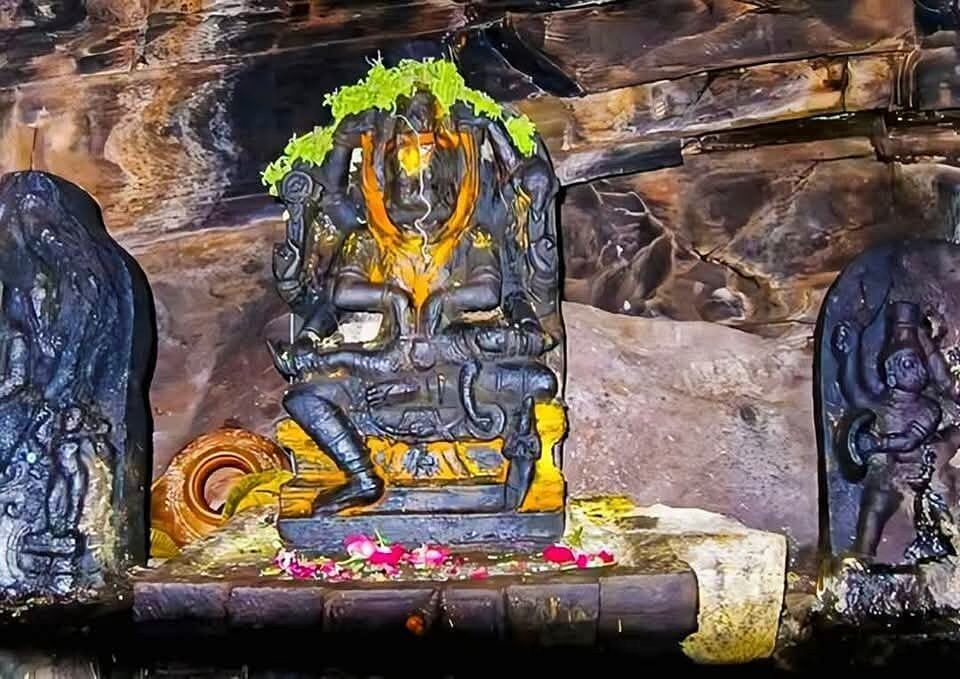
- •The main shrine houses an image of Thiruvalluvar, depicted in a seated posture, reflecting the simplicity and scholarly aura of the saint.
- •The complex is painted in vibrant hues, typical of South Indian temples, and includes a small mandapam (pillared hall) for gatherings.
Temple Layout
- •The temple is situated within the larger Ekambareswarar temple complex, which also contains shrines for Ekambareswarar (Lord Shiva) and Kamakshi (Goddess Parvati).
- •The main sanctum dedicated to Thiruvalluvar is the central focus, while the surrounding corridors house minor shrines and a courtyard for cultural events.
- •The layout is compact, allowing visitors to easily navigate the sacred spaces.
Travel Tips
- Combine your visit with a stroll through Mylapore to explore other landmarks like Kapaleeshwarar Temple and the San Thome Basilica.
- Use Chennai's metro (Mylapore station) or an auto-rickshaw for easy access, as parking is limited in the narrow streets.
- Visit during the early morning hours to see the temple's rituals and avoid the midday rush.
Frequently Asked Questions
Yes, Thiruvalluvar Koil is commonly known as the Ekambareswarar–Kamakshi Temple because it is located within the Ekambareswarar temple complex. The complex includes shrines for Ekambareswarar (Shiva) and Kamakshi (Parvati), but the main attraction is the shrine dedicated to Thiruvalluvar.
The temple is traditionally believed to be the birthplace of Thiruvalluvar, the author of the Tirukkural, a foundational text of Tamil literature and ethics. It is the oldest temple built in his honor and serves as a center for Tamil language enthusiasts, hosting Kural classes and literary meetings.
Yes, visitors can attend daily darshan and observe the rituals. The temple also conducts Kural classes and cultural events, which are open to the public. It's advisable to check with the temple authorities for the schedule of classes and special programs.
Quick Information
Best Time
The best time to visit is early morning or late evening to avoid the heat and experience the temple's peaceful atmosphere.
Timings
6:00 AM - 12:00 PM and 4:00 PM - 8:00 PM
Entry Fee
Free
Related Topics
Tour Packages for Chennai




Explore More of Chennai
Destination Hub
Chennai OverviewSpiritual & Temple Guides
Places to Explore
Discover attraction
Discover attraction
Discover attraction
Discover attraction
Discover attraction
Discover attraction
Discover attraction
Discover attraction
Discover attraction
Discover attraction
Discover attraction
Discover attraction
Discover attraction
Discover attraction
Discover attraction
Discover attraction
Discover attraction
Discover attraction
Discover attraction
Discover attraction
Discover attraction
Discover attraction
Discover attraction
Discover attraction
Discover attraction
Discover attraction
Discover attraction
Discover attraction
Discover attraction
Discover attraction
Discover attraction
Discover attraction
Discover attraction
Discover attraction
Discover attraction
Discover attraction
Discover attraction
Discover attraction
Discover attraction
Discover attraction
Discover attraction
Discover attraction
Discover attraction
Discover attraction
Discover attraction
Discover attraction
Discover attraction
Discover attraction
Discover attraction
Discover attraction
Discover attraction
Discover attraction
Discover attraction
Discover attraction
Discover attraction
Discover attraction
Discover attraction
Discover attraction
Discover attraction
Discover attraction
Discover attraction
Discover attraction
Discover attraction
Discover attraction
Discover attraction
Discover attraction
Discover attraction
Discover attraction
Discover attraction
Discover attraction
Discover attraction
Discover attraction
Discover attraction
Discover attraction
Discover attraction
Discover attraction
Discover attraction
Discover attraction
Discover attraction
Discover attraction
Discover attraction
Discover attraction
Discover attraction
Discover attraction
Discover attraction
Discover attraction
Discover attraction
Discover attraction
Discover attraction
Discover attraction
Discover attraction
Discover attraction
Discover attraction
Discover attraction
Discover attraction
Discover attraction
Discover attraction
Discover attraction
Discover attraction
Discover attraction
Discover attraction
Discover attraction
Discover attraction
Discover attraction
Discover attraction
Discover attraction
Discover attraction
Discover attraction
Discover attraction
Discover attraction
Discover attraction
Discover attraction
Discover attraction