
Chardham Yatra Tour Package from Vasai Virar – 9 Days Pilgrimage
- Places Covered: Chardham Yatra Virar
- Tour Type: Private Tour
- Transport: Private Cab
- Customization: Available
Vasai Virar to Chardham Tour Package Itinerary
The pilgrimage commences with arrival at a designated transfer point, leading to the spiritual heartland of Uttarakhand. This 9-day expedition meticulously covers the sacred shrines, ensuring a comprehensive spiritual experience amidst the majestic Himalayan landscape.
- Day 1: Arrival in Dehradun/Haridwar – Drive to Barkot
Upon morning arrival from the origin city to Dehradun or Haridwar by air, train, or bus, a pickup service initiates the journey. The drive proceeds towards Barkot, a picturesque town situated on the banks of the Yamuna River. It serves as a significant stopover en route to Yamunotri, offering serene views of the Bandarpoonch peak. This day culminates with an overnight stay in Barkot. - Day 2: Yamunotri Darshan – Barkot Stay
The second day involves an early morning drive to Jankichatti, the starting point for the trek to Yamunotri. Yamunotri Temple is dedicated to Goddess Yamuna, the source of the Yamuna River, nestled amidst the stunning Garhwal Himalayas. The temple’s revered status stems from its natural hot springs and the glacial origin of the river. Pilgrims typically trek or utilize ponies/palkis to reach this sacred site. After performing rituals and darshan, the return journey to Barkot for an overnight stay follows. - Day 3: Barkot to Gangotri Sightseeing – Uttarkashi Stay
Today’s journey heads towards Uttarkashi, a town revered for its spiritual significance and often referred to as ‘Devbhumi’ (Land of Gods). En route, a visit to Gangotri is undertaken. The Gangotri Temple is a Hindu pilgrimage site dedicated to the Goddess Ganga. It is located on the banks of the Bhagirathi River and marks the origin of the sacred Ganges River. The temple’s architectural style reflects traditional Hindu temple design, surrounded by a breathtaking natural environment. After the sacred darshan, the drive continues to Uttarkashi for an overnight stay. - Day 4: Uttarkashi to Phata Stay
Following breakfast, the drive proceeds from Uttarkashi towards Phata. This leg of the journey offers scenic views of the Himalayan terrain as the route traverses through verdant valleys and mountainous roads. Phata serves as a crucial base for pilgrims heading to Kedarnath, especially those opting for helicopter services, due to its proximity to the helipads. The day concludes with an overnight stay in Phata, preparing for the upcoming spiritual ascent. - Day 5: Phata to Kedarnath – Kedarnath Camp Stay
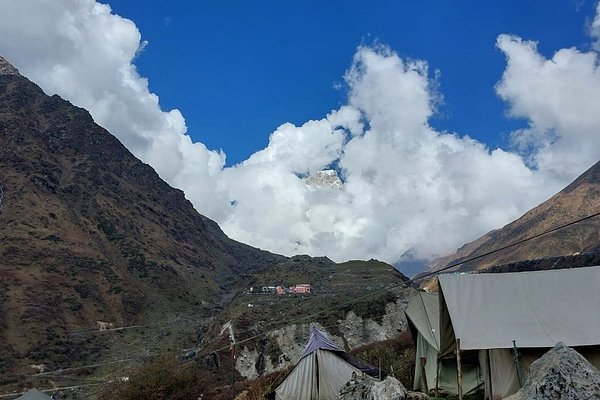
An early start marks the journey to Kedarnath. Pilgrims proceed to Kedarnath by helicopter, pony, or trekking, as per their booking arrangements. Kedarnath Temple is one of the twelve Jyotirlingas of Shiva, a revered Hindu shrine. Located near the Mandakini River, amidst the majestic Kedarnath mountain range, the temple is an epitome of ancient Indian architecture and resilience. Its remote location and extreme weather conditions make the pilgrimage challenging yet spiritually rewarding. An overnight camp stay near Kedarnath provides an authentic pilgrimage experience. - Day 6: Kedarnath to Phata Stay
After morning prayers and darshan at Kedarnath, the descent begins. Pilgrims return from Kedarnath to Phata using their pre-booked mode of transport (helicopter, pony, or trek). This day allows for rest and recuperation after the challenging but spiritually uplifting visit to Kedarnath. An overnight stay in Phata ensures comfort before the journey to the next destination. - Day 7: Phata to Badrinath – Visit Mana Village – Badrinath Stay
The journey continues from Phata towards Badrinath, one of the most significant pilgrimage sites in India. Upon arrival, a visit to Mana Village is scheduled. Mana Village is the last Indian village before the Indo-Tibetan border, known for its unique culture and mythological significance. It is believed to be the place where the Pandavas passed on their way to heaven. The village offers glimpses into local Himalayan life and ancient traditions. The day concludes with an overnight stay in Badrinath. - Day 8: Badrinath Sightseeing – Evening Pipalkoti Stay
The morning is dedicated to Badrinath Temple darshan. The Badrinath Temple is a revered Hindu temple dedicated to Vishnu, situated in the town of Badrinath in Uttarakhand, India. It is one of the four sites in India’s Chardham pilgrimage and is highly significant for Vaishnavites. The temple’s distinctive architecture, vibrant rituals, and the surrounding natural beauty, including the Tapt Kund hot springs, draw millions of devotees. After darshan and exploring the area, the journey proceeds to Pipalkoti for an overnight stay. - Day 9: Drive to Rishikesh – Enroute Confluences – Haridwar Drop
The final day involves a scenic drive towards Rishikesh. En route, stops are made at significant confluences of rivers: Nand Prayag, where Alaknanda meets Mandakini; Karna Prayag, where Alaknanda meets Pindar; Rudra Prayag, where Alaknanda meets Mandakini; and Dev Prayag, where Alaknanda meets Bhagirathi, forming the sacred Ganga. These confluences hold immense spiritual importance. In the evening, a visit to Rishikesh, the ‘Yoga Capital of the World’, offers a chance to experience its spiritual ambiance before being dropped off in Haridwar by 8 PM, marking the conclusion of the Chardham Yatra.
Chardham & Rishikesh Sightseeing Itinerary
The Chardham pilgrimage encompasses profound spiritual journeys through Yamunotri, Gangotri, Kedarnath, and Badrinath, each offering unique insights into Hindu mythology and natural grandeur. Yamunotri, the source of the Yamuna, is known for its thermal springs and the temple dedicated to the river goddess. Gangotri, where the Ganges descends from the heavens, presents a serene landscape beside the Bhagirathi River. Kedarnath, a revered Jyotirlinga, stands majestically amidst the Himalayas, symbolizing immense spiritual power. Badrinath, dedicated to Lord Vishnu, is famed for its vibrant temple and association with ancient sages. The journey also includes Rishikesh, a spiritual hub known for its ashrams, yoga centers, and the sacred Ganga. Visitors experience meditation, river Ganga Aarti, and explore iconic landmarks like Laxman Jhula and Ram Jhula, enriching the spiritual and cultural dimensions of the tour.
3 Star Hotels in Chardham and nearby cities
Throughout the Chardham Yatra, accommodations are carefully selected to provide comfort and convenience. Standard 3-star hotels are utilized in key stopovers such as Barkot, Uttarkashi, Phata, Badrinath, and Pipalkoti. These establishments typically offer essential amenities including clean rooms, attached bathrooms, and often provide basic dining facilities. The choice of hotels prioritizes proximity to essential services and scenic views where available, ensuring a restful retreat after each day’s spiritual journey. Every effort is made to secure well-reviewed properties that meet comfort and hygiene standards, enhancing the overall pilgrimage experience.
Chardham Yatra Tour Package Price from Vasai Virar
- 2 Adults: Rs. 33,120 per person
- 3 Adults: Rs. 25,920 per person
- 4 Adults: Rs. 22,320 per person
- 5-7 Adults: Rs. 20,778 – Rs. 24,480 per person (depending on group size, using Innova)
- 8-10 Adults: Rs. 20,160 – Rs. 22,320 per person (depending on group size, using 12-seater Tempo Traveller)
- 11-12 Adults: Rs. 18,720 – Rs. 19,374 per person (depending on group size, using 12-seater Tempo Traveller)
Inclusions in Chardham Yatra Tour Package from Vasai Virar
Breakfast, all sightseeing as per itinerary, AC vehicle Dzire or Innova or Tempo Traveller as per group size, driver allowance, parking, tolls, and stay in 3star AC hotels.
Exclusions in Chardham Yatra Tour Package from Vasai Virar
Anything not mentioned in inclusions, entry tickets, helicopter tickets, pony charges, boating, guide services, personal expenses, camera fees, or meals other than breakfast.
Child Policy for Chardham Yatra Trip from Vasai Virar
Child up to 6 years Free
Child 6 to 8 years Half charge
Child above 8 years Full charge
Payment Policy for Chardham Yatra Package Booking
20 percent advance at time of booking
20 percent after getting hotel booking voucher
60 percent during tour in parts
For tours between 15 Dec to 2 Jan, 50 percent advance payment required.
Cancellation Policy for Chardham Yatra Tour
Minimum Rs. 3000 cancellation charge per person
10 percent or Rs. 3000 per person whichever is higher
25 percent cancellation between 46 to 30 days before departure
50 percent cancellation between 30 to 15 days before departure
75 percent cancellation between 15 to 5 days before departure
100 percent cancellation within 5 days of departure or noshow
Cancellation charges are calculated as percentage of total tour cost.
Frequently Asked Questions – Chardham Travel Guide
- What is the best time to undertake the Chardham Yatra?
The ideal time for the Chardham Yatra is from May to June and September to October. During these months, the weather is pleasant, and the routes are generally clear. The temples are typically closed during winter due to heavy snowfall. - Is it mandatory to visit all four dhams in a specific order?
Traditionally, the Chardham Yatra is performed in a clockwise direction, starting from Yamunotri, then Gangotri, Kedarnath, and finally Badrinath. However, it is not strictly mandatory, and itineraries can be customized. - What kind of physical fitness is required for the Chardham Yatra?
The yatra involves trekking to Yamunotri and Kedarnath, which can be physically demanding. Pilgrims should ensure they are in good health, consult their doctor, and undertake light exercise prior to the trip. Helicopter services and pony/palki options are available for those with mobility concerns. - Are there medical facilities available during the Chardham Yatra?
Basic medical facilities, first-aid posts, and emergency services are available at various points along the yatra route. For serious conditions, pilgrims may need to be evacuated to larger hospitals in nearby towns. - What clothing should be packed for the Chardham Yatra?
Layered clothing is recommended as weather conditions can change rapidly in the Himalayas. Pack warm woolens, thermals, gloves, caps, and a waterproof jacket. Comfortable walking shoes are essential for trekking. - Is cell phone connectivity available throughout the Chardham route?
Cell phone connectivity is intermittent and generally poor in remote areas. BSNL and Jio networks tend to have better coverage in some regions compared to others. It is advisable to inform family members about potential communication challenges. - Are ATMs available along the Chardham Yatra route?
ATMs are available in larger towns like Barkot, Uttarkashi, and Badrinath, but their availability becomes sparse in more remote areas. It is recommended to carry sufficient cash for personal expenses and emergencies. - Are vegetarian food options readily available?
All major towns and temple areas along the Chardham route offer vegetarian food options, as meat and alcohol are generally prohibited due to the spiritual nature of the pilgrimage. Local dhabas and restaurants provide simple, wholesome meals. - Can children and elderly individuals undertake the Chardham Yatra?
Children and elderly individuals can undertake the yatra, provided they are in good health. It is advisable to consult a physician, especially for those with pre-existing medical conditions. Pony, palki, and helicopter services are available to ease the journey. - What permits or registrations are required for the Chardham Yatra?
The Uttarakhand government often requires pilgrims to register for the Chardham Yatra, particularly during peak season. This helps in managing crowds and ensuring pilgrim safety. It is advisable to check the latest requirements before departure. - Is photography allowed inside the temples?
Photography is generally restricted inside the main sanctum of the temples for security and religious reasons. However, photography is usually permitted in the temple complex outer areas and surrounding scenic landscapes. - What are the accommodation options during the yatra?
Accommodation ranges from basic guesthouses and dharamshalas to 3-star hotels in major towns. In remote areas like Kedarnath, simple camp stays or basic lodgings are provided due to the challenging terrain.
Important Travel Information for Chardham Package
- Altitude Sickness: The Chardham Yatra involves significant altitude gains. Pilgrims should acclimatize properly, stay hydrated, and report any symptoms of altitude sickness immediately.
- Weather Variability: Himalayan weather is unpredictable. Carry adequate warm clothing, rain gear, and be prepared for sudden changes in temperature and precipitation.
- Identity Proof: Always carry valid government-issued identity proof (Aadhaar Card, Voter ID, Passport) throughout the journey for verification purposes.
- Emergency Contacts: Keep a list of emergency contact numbers, including tour operator details, family, and local authorities, easily accessible.
- Footwear: Sturdy, waterproof, and comfortable trekking shoes are essential for the uneven terrain and long walking distances involved.
- Medicines: Carry all necessary personal medications, along with a basic first-aid kit containing pain relievers, antiseptics, and bandages.
- Power Backup: Electricity supply can be erratic in remote areas. A power bank or portable charger for electronic devices is highly recommended.
- Environmental Responsibility: Practice responsible tourism by not littering and respecting the fragile ecosystem of the Himalayas.
- Local Culture: Respect local customs, traditions, and religious practices. Dress modestly, especially when visiting temples.
- Food and Water: Consume boiled or bottled water and hygienically prepared food to avoid water-borne illnesses.
- Flexibility: While an itinerary is planned, unforeseen circumstances like weather or road closures may necessitate changes. A flexible approach is beneficial.
- Bookings: Ensure all bookings for accommodation, transportation, and special services (helicopter, pony) are confirmed well in advance, especially during peak season.
Trypdeals tour packages you might be interested in
Visit our main website for more incredible travel deals: Trypdeals Home
Explore our wide range of tour packages across various destinations: All Tours by Trypdeals
Discover the most sought-after travel destinations with Trypdeals: Top Travel Destinations
Chardham Yatra
The Chardham Yatra is a revered Hindu pilgrimage circuit in the Indian Himalayas, encompassing four holy sites: Yamunotri, Gangotri, Kedarnath, and Badrinath. This sacred journey holds immense spiritual significance for devotees, believed to cleanse sins and attain salvation. Each destination is dedicated to a specific deity or river goddess, nestled amidst breathtaking natural beauty, from glacial origins to high-altitude temples. The pilgrimage offers not just a spiritual quest but also an immersive experience of the Himalayas’ pristine landscapes, ancient traditions, and serene ambiance. The journey is a testament to faith, endurance, and the profound connection between humanity and the divine.
Yamunotri
Yamunotri, the westernmost shrine of the Chardham circuit, is the source of the sacred Yamuna River. Dedicated to Goddess Yamuna, the temple is nestled at an altitude of approximately 3,293 meters in the Garhwal Himalayas. Pilgrims embark on a scenic trek or use alternative transport from Janki Chatti to reach the temple. The region is renowned for its thermal springs, like Surya Kund, where devotees prepare rice and potatoes as ‘prasad’. The trek to Yamunotri offers stunning views of Bandarpoonch peak and surrounding lush valleys, making it a spiritually uplifting and visually rewarding experience for all who undertake the journey.
Gangotri
Gangotri stands as another pivotal shrine in the Chardham Yatra, the revered origin of the holy River Ganga (Bhagirathi). Situated at an elevation of about 3,100 meters, this sacred town houses the Gangotri Temple, dedicated to Goddess Ganga. Mythology states that Goddess Ganga descended to Earth at this very spot after King Bhagirath’s penance. The temple’s serene location on the banks of the Bhagirathi River, surrounded by the majestic Himalayan peaks, creates an intensely spiritual atmosphere. Pilgrims visit not only for darshan but also to witness the natural beauty and the powerful flow of the nascent Ganges.
Kedarnath
Kedarnath, one of the twelve Jyotirlingas of Lord Shiva, is among the most revered and challenging pilgrimage sites in India. Located at an astounding altitude of 3,583 meters near the Mandakini River, the ancient temple is an architectural marvel built of massive gray stone slabs. Its remote location amidst the towering Kedarnath range makes the journey arduous yet profoundly rewarding. The spiritual energy of the place, combined with the spectacular, untouched natural beauty of the Himalayas, leaves an indelible mark on every pilgrim. The temple symbolizes resilience and devotion, attracting thousands of devotees annually.
Badrinath
Badrinath, the final and most prominent dham in the circuit, is dedicated to Lord Vishnu and holds immense significance for Vaishnavites. Located at an altitude of 3,133 meters on the banks of the Alaknanda River, the Badrinath Temple is known for its distinct colorful facade and intricate carvings. It is one of the 108 Divya Desams, sacred shrines for Vaishnavites. The Tapt Kund, a natural hot spring near the temple, is believed to have medicinal properties, and pilgrims take a dip before entering the temple. The spiritual ambiance and panoramic views of Neelkanth Peak enhance the divine experience.
Rishikesh
Rishikesh, famously known as the “Yoga Capital of the World,” is a vibrant spiritual town nestled at the foothills of the Himalayas in Uttarakhand. It serves as a gateway to the Garhwal Himalayas and the Chardham Yatra. Situated on the banks of the holy Ganges River, Rishikesh is renowned for its numerous ashrams, yoga and meditation centers, and ancient temples. The iconic suspension bridges, Laxman Jhula and Ram Jhula, offer panoramic views of the river and surrounding hills. Daily Ganga Aarti ceremonies held at the ghats provide a mesmerizing spiritual experience, attracting pilgrims and tourists alike.
There are no reviews yet.