
History
Mahabalipuram, also known as Mamallapuram, is a historic port town on the Coromandel coast of Tamil Nadu, India. It flourished as a major seaport and artistic centre under the Pallava dynasty, particularly during the 7th century CE reign of Narasimhavarman I (Mamalla). The town is renowned for its rock-cut architecture, including monolithic rathas, cave temples, and giant open-air reliefs, as well as the structural Shore Temple. Designated a UNESCO World Heritage Site in 1984, Mahabalipuram stands as a testament to Pallava art, maritime trade, and religious devotion, attracting pilgrims and tourists alike.
Overview
Mahabalipuram is located about 60 kilometres south of Chennai (Madras) along the Bay of Bengal. Its name, Mamallapuram, means 'City of the Great Wrestler' or 'City of Mamalla', in honour of the Pallava king Narasimhavarman I. The site comprises a remarkable ensemble of monuments carved from granite, dating largely from the 7th and 8th centuries. These include the Pancha Rathas (five monolithic chariot temples), the Descent of the Ganges (Arjuna's Penance) bas-relief, cave temples such as the Mahishasuramardini Cave, and the iconic Shore Temple. The town was a bustling port that connected South India with Southeast Asia, facilitating trade and cultural exchange. Today, it is a major pilgrimage and tourist destination, celebrated for its artistic and architectural heritage.
Historical Timeline
Reign of Narasimhavarman I (Mamalla)
During this period, the town was renamed Mamallapuram and became the primary centre of Pallava rock-cut architecture. Many of the major monuments, including the Pancha Rathas and the Descent of the Ganges, were created, establishing the town's artistic legacy.
Construction of the Shore Temple
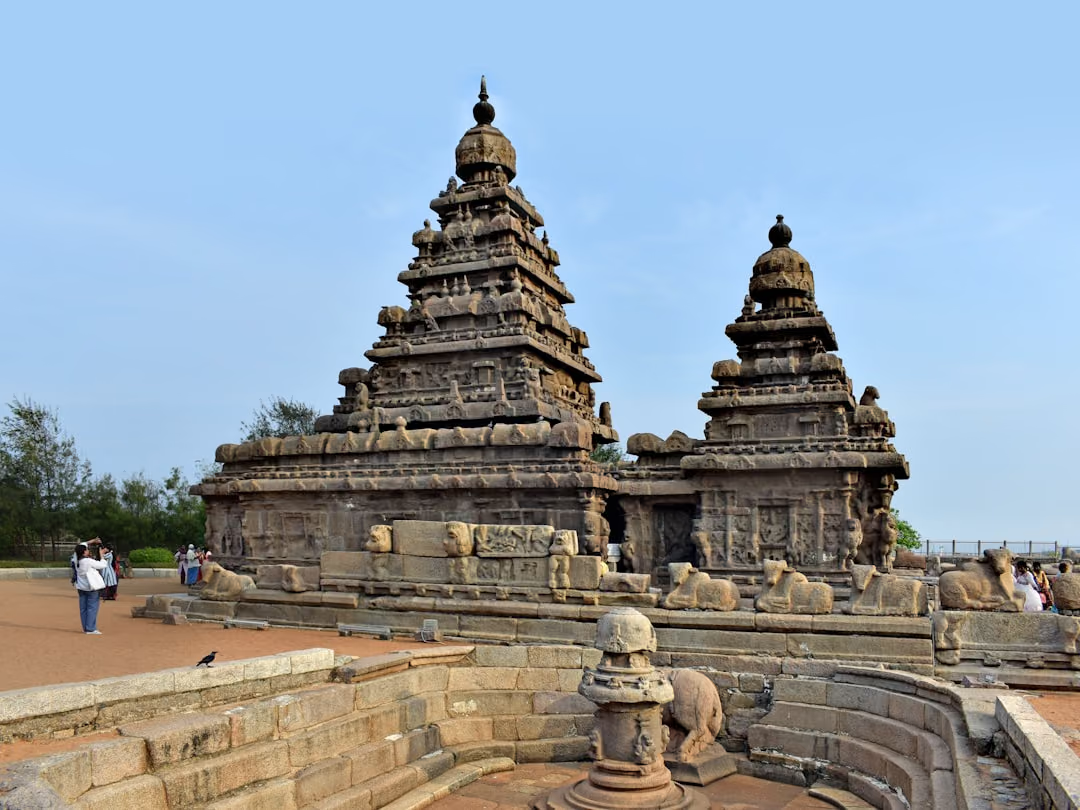
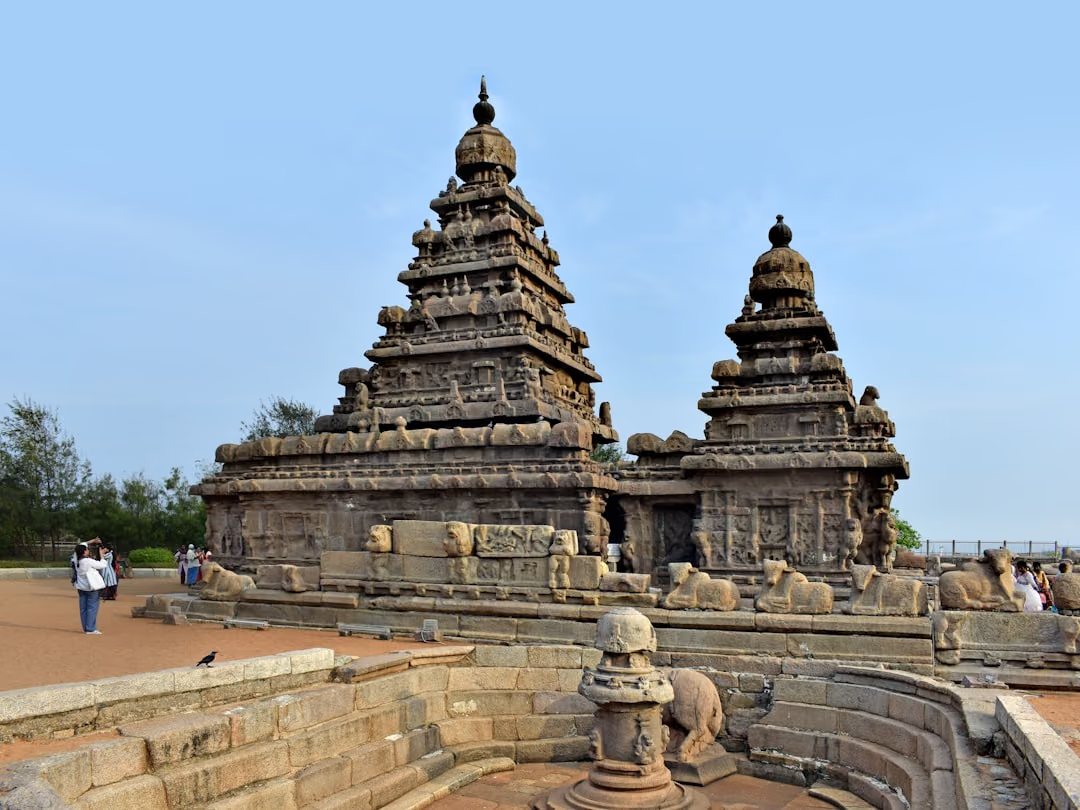
This structural temple, one of the oldest stone temples in South India, was built during the reign of Narasimhavarman II (Rajasimha). It represents a shift from rock-cut to structural architecture and became an iconic landmark, symbolizing Pallava maritime power.
Decline of Pallava power and rise of the Cholas
With the fall of the Pallavas, Mahabalipuram lost its status as a royal port. The focus of maritime trade shifted to other Chola ports, leading to the gradual decline of the town's importance, though its monuments remained.
First detailed European documentation by Colin Mackenzie
The British surveyor and antiquarian documented the monuments of Mahabalipuram, bringing them to the attention of the Western world. His work laid the foundation for later archaeological studies and preservation efforts.
Inscription as a UNESCO World Heritage Site
The Group of Monuments at Mahabalipuram was recognized for its outstanding universal value, ensuring international protection and funding for conservation. This boosted tourism and global awareness of the site.
India-China Informal Summit
The town hosted a high-profile diplomatic meeting between Prime Minister Narendra Modi and President Xi Jinping, highlighting Mahabalipuram's cultural significance and its role as a symbol of India's ancient heritage.
Historical Sites
Shore Temple
A 7th-8th century structural temple complex of granite, dedicated to Shiva. It stands on the seashore, with two spires and a smaller temple to Vishnu. It is one of the oldest structural stone temples in South India and has weathered centuries of sea spray.
Pancha Rathas
Five monolithic rock-cut temples, each carved from a single granite boulder in the shape of a temple chariot (ratha). They are named after the Pandava brothers and Draupadi from the Mahabharata, though they are not dedicated to them. They showcase different styles of Dravidian architecture.
Arjuna's Penance (Descent of the Ganges)
A massive open-air bas-relief carved into two large boulders, depicting scenes from Hindu mythology. A natural cleft in the rock represents the Ganges descending to earth. It is one of the largest rock reliefs in the world, measuring about 27 metres long and 9 metres high.
Krishna's Butterball
A giant granite boulder, about 6 metres in diameter, resting on a smooth slope at a steep angle. Its precarious balance defies explanation, and it is a popular tourist attraction. It is also known as 'Vaanirai Kal' or 'Stone of the Sky God'.
Notable Figures
Narasimhavarman I (Mamalla)
Narasimhavarman II (Rajasimha)
Colin Mackenzie
Alexander Rea
Pilgrimage History
Mahabalipuram has been a site of Hindu pilgrimage for centuries, owing to its ancient temples and sacred sculptures. The Shore Temple, dedicated to Shiva, is an active place of worship, and devotees perform rituals and offer prayers there. The Pancha Rathas, though not consecrated, are revered as representations of divine chariots. The Descent of the Ganges relief is considered holy, as it depicts the river Ganges descending to earth, and pilgrims often bathe in the nearby sea to purify themselves. The Mahishasuramardini Cave Temple, with its powerful image of Durga slaying the buffalo demon, attracts devotees seeking blessings of the goddess. The town is also associated with the legend of the demon king Mahishasura, from whom the name Mahabalipuram is derived. Pilgrims often combine a visit to Mahabalipuram with nearby sacred sites such as Kanchipuram and Thirukkalukundram. The annual Mahamaham festival, held in nearby Kumbakonam, sometimes draws pilgrims to the coast, but Mahabalipuram itself does not have a major festival of its own, except for the classical dance festival which is a cultural event rather than a religious one.
Tour Packages for Mahabalipuram




Explore More of Mahabalipuram
Destination Hub
Mahabalipuram OverviewSpiritual & Temple Guides
Places to Explore
Discover attraction
Discover attraction
Discover attraction
Discover attraction
Discover attraction
Discover attraction
Discover attraction
Discover attraction
Discover attraction
Discover attraction
Discover attraction
Discover attraction
Discover attraction
Discover attraction
Discover attraction
Discover attraction
Discover attraction
Discover attraction
Discover attraction
Discover attraction
Discover attraction
Discover attraction
Discover attraction
Discover attraction
Discover attraction
Discover attraction
Discover attraction
Discover attraction
Discover attraction
Discover attraction
Discover attraction
Discover attraction
Discover attraction
Discover attraction
Discover attraction
Discover attraction
Discover attraction
Discover attraction
Discover attraction
Discover attraction
Discover attraction
Discover attraction
Discover attraction
Discover attraction
Discover attraction
Discover attraction
Discover attraction
Discover attraction
Discover attraction
Discover attraction
Discover attraction
Discover attraction
Discover attraction
Discover attraction
Discover attraction
Discover attraction
Discover attraction
Discover attraction
Discover attraction
Discover attraction
Discover attraction
Discover attraction
Discover attraction
Discover attraction
Discover attraction
Discover attraction
Discover attraction
Discover attraction
Discover attraction
Discover attraction
Discover attraction
Discover attraction
Discover attraction
Discover attraction
Discover attraction
Discover attraction
Discover attraction
Discover attraction
Discover attraction
Discover attraction
Discover attraction
Discover attraction
Discover attraction
Discover attraction
Discover attraction
Discover attraction
Discover attraction
Discover attraction
Discover attraction
Discover attraction
Discover attraction
Discover attraction
Discover attraction
Discover attraction
Discover attraction
Discover attraction
Discover attraction
Discover attraction
Discover attraction
Discover attraction
Discover attraction
Discover attraction
Discover attraction
Discover attraction
Discover attraction
Discover attraction
Discover attraction
Discover attraction
Discover attraction
Discover attraction
Discover attraction
Discover attraction
Discover attraction
Discover attraction
Discover attraction
Discover attraction
Discover attraction
Discover attraction
Discover attraction
Discover attraction