
Shore Temple, Mahabalipuram
Overview
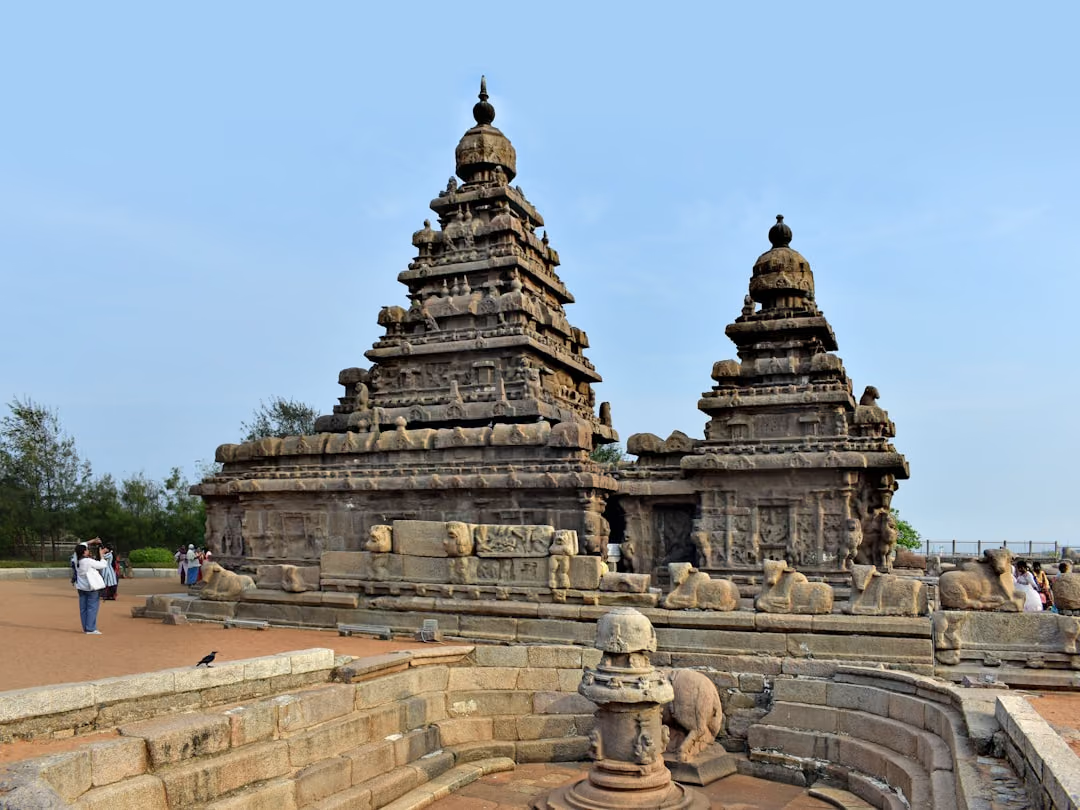
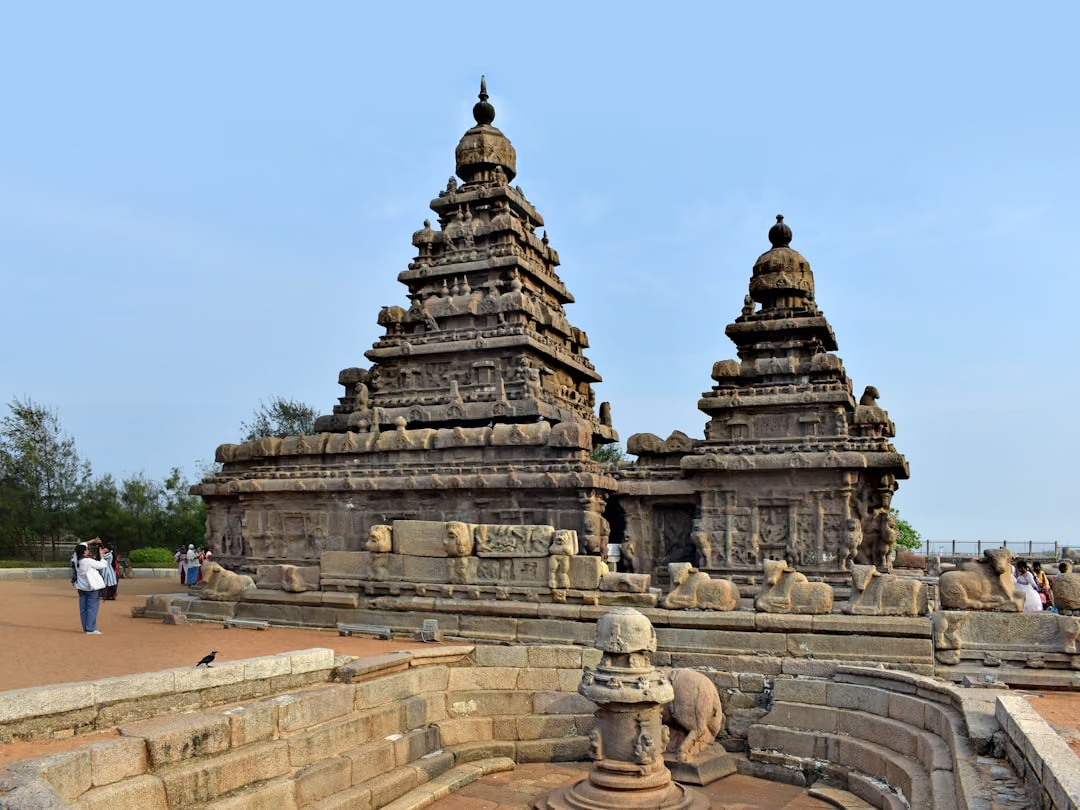
- •The Shore Temple is a stunning example of Pallava architecture, built in the 7th century CE.
- •It stands as a sentinel on the beach, its weathered granite walls telling tales of maritime trade and religious devotion.
- •The complex consists of three shrines: two dedicated to Shiva (one facing east, one west) and a middle shrine to Vishnu, which is unique among Pallava temples.
- •The temple's design includes a pyramidal vimana (tower) and a series of sculptures depicting scenes from Hindu mythology.
- •The location, once a bustling port, now offers a serene atmosphere with the sound of waves and the scent of salt air.
Highlights
- Sunrise view with the temple silhouetted against the Bay of Bengal
- Intricate granite carvings of deities, including a rare reclining Vishnu
- Twin Shiva shrines with pyramidal vimanas
- Weather-worn sculptures that reveal centuries of sea spray
- Proximity to other Pallava monuments like the Five Rathas and Arjuna's Penance
Religious Significance
The Shore Temple holds immense religious, historical, and architectural significance. It is a living symbol of the Pallava dynasty's devotion to Lord Shiva and their architectural innovation. It is one of the earliest structural temples in South India, marking a transition from rock-cut to free-standing structures. Its location on the shore makes it unique, as it was a beacon for sailors and a testament to the maritime trade of ancient India. The temple is also a key part of the UNESCO World Heritage Site, attracting pilgrims and tourists from around the world.
Dress Code
As a place of worship, modest dress is recommended. Both men and women should wear clothing that covers the shoulders and knees. Traditional Indian attire is welcome, but not mandatory. Visitors are required to remove their shoes before entering the sanctums. It is advisable to carry a pair of socks, as the ground can be hot during the day.
Facilities
The Shore Temple has basic facilities for visitors, including a ticket counter, drinking water, and restrooms. There are several small shops and food stalls nearby, but no large restaurants within the complex. The nearest major facilities are in the town of Mahabalipuram, which is about 1 kilometer away. Wheelchair access is limited due to the uneven terrain, but the main path is relatively flat. Parking is available near the entrance, and there are guides available for hire at the ticket counter.
Rituals
- •Although the temple is a protected monument, it is still an active place of worship.
- •Daily rituals are performed by local priests, including the abhishekam (ritual bathing) of the Shiva Linga with milk, water, and other sacred substances.
- •On Mondays, which are considered auspicious for Shiva, special pujas are held.
- •During the Tamil month of Aippasi (October-November), the temple hosts the Tirukarthikai festival, where lamps are lit.
- •Maha Shivaratri is the most significant festival, with night-long vigils and chanting of 'Om Namah Shivaya'.
Festivals
- •The most important festival celebrated at the Shore Temple is Maha Shivaratri, which falls in February or March.
- •On this day, thousands of devotees gather to offer prayers and participate in special rituals.
- •The temple is illuminated with oil lamps, and the atmosphere is filled with devotional music and chanting.
- •Another local festival is the Mamallapuram Dance Festival, held annually from December to January, where classical dance performances are staged against the backdrop of the temple, celebrating the region's cultural heritage.
Darshan Guide
- •The main darshan (viewing) of the Shore Temple involves visiting the three sanctums.
- •The eastern Shiva shrine is the primary focus, where devotees can offer prayers to the Shiva Linga.
- •The western Shiva shrine is also accessible.
- •The Vishnu shrine, located in the middle, is small but significant, and visitors can view the reclining Vishnu.
- •There is no elaborate ritual, but many visitors offer flowers and incense.
- •The best time for darshan is early morning or late afternoon, when the temple is less crowded and the light is soft.
- •During festivals like Maha Shivaratri, special pujas are conducted, and the temple is beautifully decorated.
Rituals
- •Although the temple is a protected monument, it is still an active place of worship.
- •Daily rituals are performed by local priests, including the abhishekam (ritual bathing) of the Shiva Linga with milk, water, and other sacred substances.
- •On Mondays, which are considered auspicious for Shiva, special pujas are held.
- •During the Tamil month of Aippasi (October-November), the temple hosts the Tirukarthikai festival, where lamps are lit.
- •Maha Shivaratri is the most significant festival, with night-long vigils and chanting of 'Om Namah Shivaya'.
History
- •The Shore Temple was constructed during the reign of Narasimhavarman II (also known as Rajasimha), who ruled the Pallava dynasty from approximately 700 to 728 CE.
- •It was built at the height of Pallava power, when Mahabalipuram was a major port city trading with Southeast Asia.
- •The temple is believed to have been part of a larger complex of temples and monuments that included the 'Seven Pagodas'—a legend that suggests six other temples have been submerged by the sea.
- •Evidence of submerged structures has been found in offshore excavations, supporting this legend.
- •The temple survived centuries of coastal erosion and cyclones, and it was restored in the 20th century by the Archaeological Survey of India.
Architecture
- •The Shore Temple is a structural temple, meaning it is built from stone blocks rather than carved out of rock.
- •It is constructed entirely of granite, which was likely quarried from nearby areas.
- •The main vimana (tower) is 60 feet tall and has a pyramidal shape with multiple tiers, each decorated with miniature shrines.
- •The temple complex includes a smaller vimana to the west, and a large courtyard with a perimeter wall.
- •The inner sanctums house a large Shiva Linga in both Shiva shrines, while the Vishnu shrine contains a beautiful reclining Vishnu sculpture.
- •The walls are adorned with intricate carvings of deities, mythical creatures, and scenes from the Mahabharata and Ramayana.
- •The temple's orientation is east-west, with the main entrance facing the sea, symbolizing the sun's path and the ocean's importance.
Temple Layout
- •The Shore Temple complex is composed of three main shrines arranged in a row.
- •The eastern shrine, dedicated to Shiva, is the largest and most prominent, with a pyramidal vimana that dominates the skyline.
- •The western shrine, also dedicated to Shiva, is smaller and faces west.
- •Between these two, there is a small shrine dedicated to Vishnu, where a reclining Vishnu is carved from a single rock.
- •The entire complex is enclosed by a perimeter wall with a small entrance gate.
- •The temple sits on a raised platform of granite, and the ground around it is scattered with large boulders and remnants of other structures.
- •The courtyard also contains a small Nandi (bull) statue and several other minor shrines.
Travel Tips
- Visit during the winter months (November to February) for pleasant weather.
- Wear comfortable walking shoes as the ground around the temple is rocky.
- Carry water and sun protection, as there is limited shade.
- Respect the sanctity of the temple; remove footwear before entering the inner sanctums.
- Combine your visit with nearby attractions like the Five Rathas and the lighthouse for a full day of exploration.
Things to Do
Guided Heritage Walk
1-2 hoursJoin a local guide to explore the temple's architectural details, iconography, and history.
Sunrise Photography
1 hourArrive early to capture the temple's silhouette against the golden sunrise over the ocean.
Meditation by the Shore
30-60 minutesFind a quiet spot on the rocks near the temple to meditate, listening to the waves.
Explore the Rock Sculptures
1 hourWander around the temple complex to see the various bas-reliefs and sculptures, including the famous 'Mahabharata' panel.
Frequently Asked Questions
Early morning (around 6-8 AM) is ideal to avoid crowds and heat, and to witness a stunning sunrise. The temple is also beautiful during the full moon nights when it is illuminated.
Yes, the temple is a protected monument under the Archaeological Survey of India, but it is still used for worship, especially during the Maha Shivaratri festival.
It is named for its location directly on the shores of the Bay of Bengal. Historically, it served as a landmark for sailors and was part of a major port city.
Yes, Mahabalipuram has several other rock-cut temples and cave sanctuaries, such as the Pancha Rathas (Five Chariots) and the Varaha Cave Temple, but the Shore Temple is the most prominent structural temple.
Photography is allowed for personal use, but using a tripod or flash may require special permission. Drones are strictly prohibited.
Quick Information
Best Time
October to March
Timings
Open all days from 6:00 AM to 6:00 PM.
Entry Fee
₹40 for Indian citizens, ₹600 for foreign nationals, and ₹25 for children (up to 15 years). Free entry for children below 15 years.
Related Topics
Tour Packages for Mahabalipuram





Explore More of Mahabalipuram
Destination Hub
Mahabalipuram OverviewSpiritual & Temple Guides
Places to Explore
Discover attraction
Discover attraction
Discover attraction
Discover attraction
Discover attraction
Discover attraction
Discover attraction
Discover attraction
Discover attraction
Discover attraction
Discover attraction
Discover attraction
Discover attraction
Discover attraction
Discover attraction
Discover attraction
Discover attraction
Discover attraction
Discover attraction
Discover attraction
Discover attraction
Discover attraction
Discover attraction
Discover attraction
Discover attraction
Discover attraction
Discover attraction
Discover attraction
Discover attraction
Discover attraction
Discover attraction
Discover attraction
Discover attraction
Discover attraction
Discover attraction
Discover attraction
Discover attraction
Discover attraction
Discover attraction
Discover attraction
Discover attraction
Discover attraction
Discover attraction
Discover attraction
Discover attraction
Discover attraction
Discover attraction
Discover attraction
Discover attraction
Discover attraction
Discover attraction
Discover attraction
Discover attraction
Discover attraction
Discover attraction
Discover attraction
Discover attraction
Discover attraction
Discover attraction
Discover attraction
Discover attraction
Discover attraction
Discover attraction
Discover attraction
Discover attraction
Discover attraction
Discover attraction
Discover attraction
Discover attraction
Discover attraction
Discover attraction
Discover attraction
Discover attraction
Discover attraction
Discover attraction
Discover attraction
Discover attraction
Discover attraction
Discover attraction
Discover attraction
Discover attraction
Discover attraction
Discover attraction
Discover attraction
Discover attraction
Discover attraction
Discover attraction
Discover attraction
Discover attraction
Discover attraction
Discover attraction
Discover attraction
Discover attraction
Discover attraction
Discover attraction
Discover attraction
Discover attraction
Discover attraction
Discover attraction
Discover attraction
Discover attraction
Discover attraction
Discover attraction
Discover attraction
Discover attraction
Discover attraction
Discover attraction
Discover attraction
Discover attraction
Discover attraction
Discover attraction
Discover attraction
Discover attraction
Discover attraction
Discover attraction
Discover attraction
Discover attraction
Discover attraction
Discover attraction