
Things to Do in Mahabalipuram
Mahabalipuram, also known as Mamallapuram, is a coastal town in Tamil Nadu famed for its 7th-century Pallava rock-cut architecture and a UNESCO World Heritage Site. Once a bustling
Overview
Mahabalipuram, also known as Mamallapuram, is a coastal town in Tamil Nadu famed for its 7th-century Pallava rock-cut architecture and a UNESCO World Heritage Site. Once a bustling port of the Pallava dynasty, it offers a unique blend of ancient temples, monolithic sculptures, and ocean-side charm. Explore the Shore Temple, Pancha Rathas, and the giant open-air relief of Arjuna's Penance, all set against the Bay of Bengal.
Experiences
Explore the Shore Temple Complex
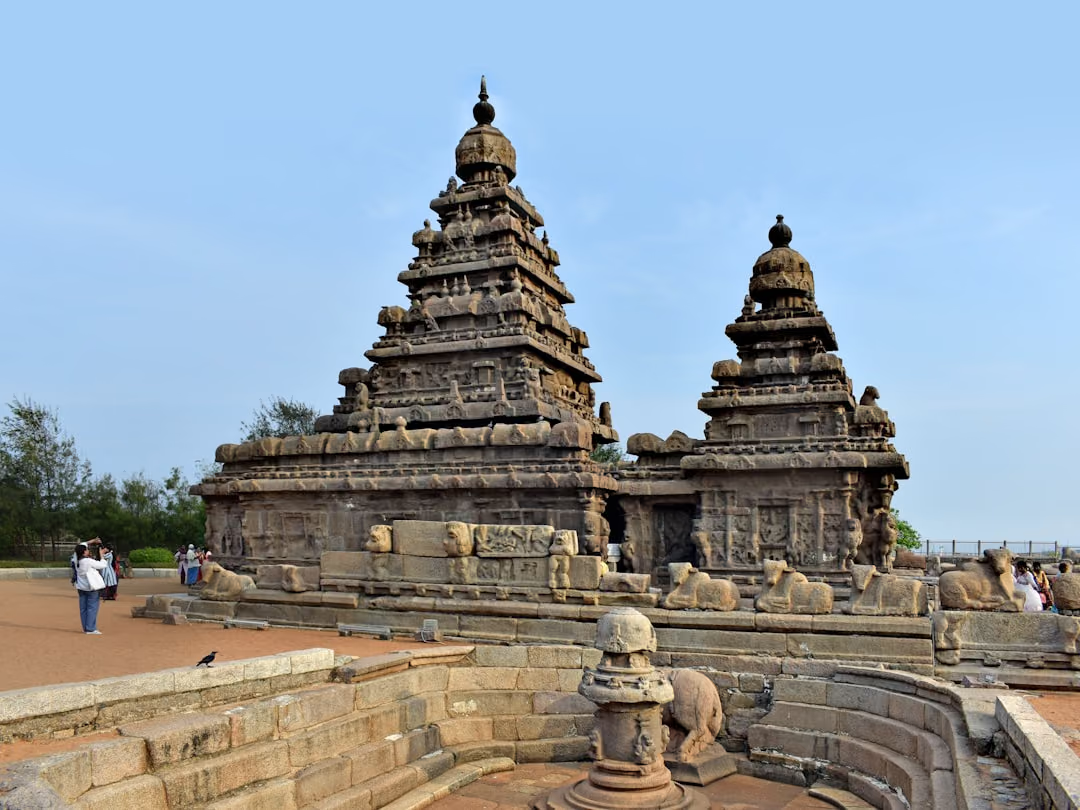
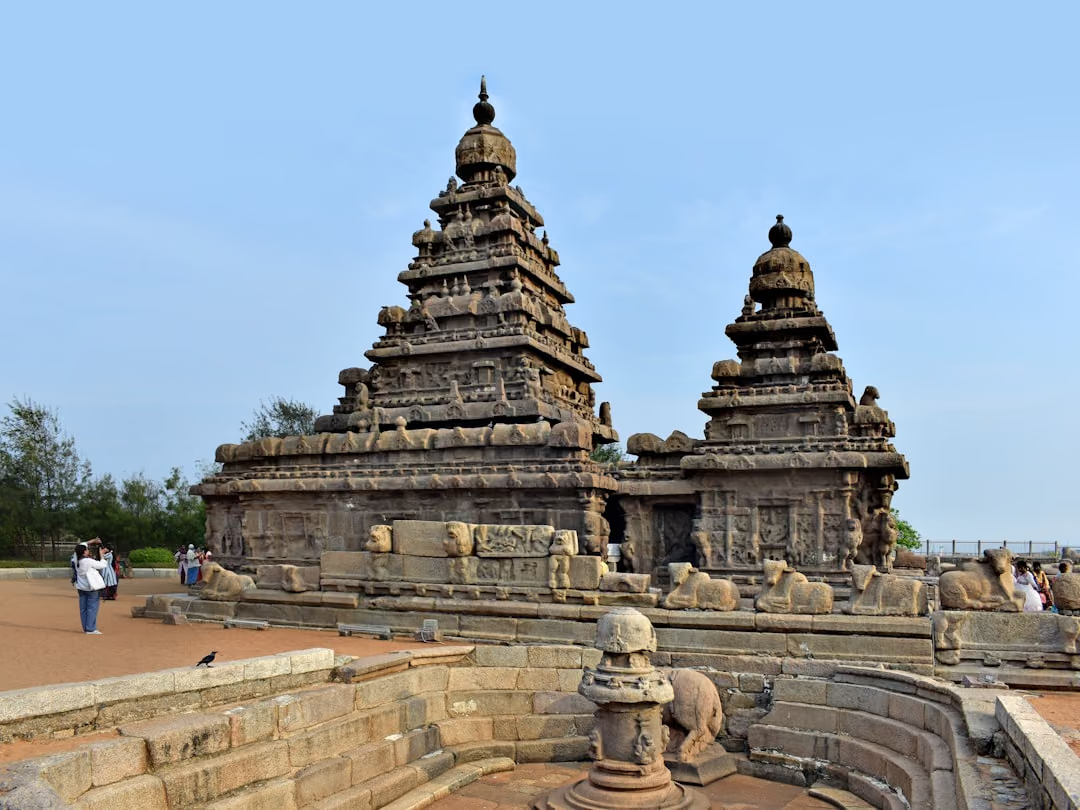
1–2 hoursStanding sentinel on the Coromandel coast, the Shore Temple is a stunning structural temple complex built in the 7th–8th century CE, one of the oldest stone temples in South India. Unlike the rock-cut marvels nearby, this temple is carved from granite blocks and dedicated to Shiva, with two spires and a smaller shrine to Vishnu. As you walk barefoot on the warm sandstone, you'll feel the salt-laden breeze and hear the crash of waves against the ancient walls. The temple has weathered centuries of sea spray, and its weathered sculptures depict scenes from Hindu mythology. Visit at sunrise when the golden light illuminates the weathered stone, or at sunset when the temple silhouettes against the orange sky. The entry fee is ₹40 for Indians and ₹600 for foreign tourists (as of 2025), with an additional ₹25 for a camera. Allow at least 1–2 hours to explore the complex, including the small museum and the adjacent beach. The site is wheelchair-accessible via a ramp, but be prepared for uneven stone surfaces.
Admire the Pancha Rathas
45 minutesThe Pancha Rathas, or Five Rathas, are a cluster of five monolithic rock-cut temples, each carved from a single granite boulder. Named after the Pandava brothers and Draupadi, these structures resemble temple chariots and showcase the evolution of Dravidian architecture. The largest, Dharmaraja Ratha, stands three stories high, while the smallest, Draupadi Ratha, resembles a simple hut. As you wander between them, notice the intricate carvings of deities, animals, and geometric patterns that adorn the exteriors. The site is remarkably well-preserved, and you can walk around and even climb onto some of the rathas (though climbing is now restricted to protect the carvings). The rathas are not dedicated to the Pandavas but are named after them, a testament to the artistic imagination of the Pallava sculptors. The site is open from 6:00 AM to 6:00 PM, and the entry fee is included in the combined ticket for the Shore Temple (₹40 for Indians, ₹600 for foreigners). Plan to spend about 45 minutes here, and don't miss the nearby elephant sculpture and the Nandi bull.
Witness Arjuna's Penance
1 hourArjuna's Penance, also known as the Descent of the Ganges, is a colossal open-air bas-relief carved into two massive boulders. Measuring about 27 meters long and 9 meters high, it is one of the largest rock reliefs in the world. The natural cleft in the rock represents the Ganges river descending from the heavens, and the surrounding carvings depict a host of celestial beings, animals, and mythological scenes. As you stand before it, you'll notice the intricate details: elephants with raised trunks, a cat in a yogic pose, and the penance of Arjuna himself. The relief is remarkably lifelike, and you can spend hours tracing the stories with your eyes. The site is open from 6:00 AM to 6:00 PM, and entry is free, though a small fee for a guide (around ₹200–300) is worth it to understand the nuances. The best time to visit is early morning when the light is soft and the crowds are thin. The area is shaded by trees, making it comfortable even in the heat. Allow at least 1 hour to fully appreciate this masterpiece.
Pose with Krishna's Butterball
30 minutesPerched precariously on a smooth slope, Krishna's Butterball is a giant granite boulder about 6 meters in diameter that seems to defy gravity. Legend says it is a lump of butter dropped by the god Krishna, and despite its steep incline, it has never rolled down. Visitors love to sit or lean against it for photos, and you can even try to push it — though it won't budge. The rock is accessible via a short climb up the hill, and the surrounding area offers panoramic views of the town and the sea. The site is free to visit and open all day, but the best time is early morning or late afternoon to avoid the heat. There are no barriers, so you can touch the smooth, weathered surface and feel its ancient energy. The boulder is a popular spot for both tourists and locals, and you'll often see families having picnics nearby. Combine this visit with a walk to the nearby Ganesha Ratha and the cave temples. Allow about 30 minutes to enjoy the area and take in the views.
Visit the Mahishasuramardini Cave Temple
30 minutesCarved into a hillside, the Mahishasuramardini Cave Temple is a rock-cut sanctuary dedicated to the goddess Durga. The main attraction is the magnificent relief of Durga slaying the buffalo-demon Mahishasura, depicted with dramatic intensity — the goddess, with eight arms, thrusts her spear into the demon, who emerges from the buffalo's neck. The cave also features a relief of Vishnu reclining on the serpent Adisesha and another of the goddess Lakshmi. The cave is dimly lit, with natural light filtering through the entrance, creating a mystical atmosphere. The carvings are remarkably well-preserved, and you can see the fine details of the goddess's jewelry and the demon's expression. The temple is located near the lighthouse and offers a peaceful escape from the crowds. Entry is free, and it is open from 6:00 AM to 6:00 PM. The cave is small, so you can explore it in 20–30 minutes. The approach involves a short walk up a gentle slope, making it accessible to most visitors.
Climb the New Lighthouse for Panoramic Views
30–45 minutesThe new Mahabalipuram Lighthouse, built in the 19th century, stands near the Olakkanatha Temple and offers sweeping views of the Shore Temple and the Bay of Bengal. Climb the spiral staircase to the top, where you'll be rewarded with a 360-degree panorama of the coastline, the town, and the ancient monuments. The lighthouse is still operational, and the climb is about 50 meters, with several landings where you can catch your breath. The entry fee is a modest ₹20 for Indians and ₹50 for foreigners. The best time to visit is late afternoon when the sun begins to set, casting a golden glow over the sea and the temples. The lighthouse is open from 9:00 AM to 5:30 PM, but check locally as timings may vary. The climb is moderately strenuous, but the view is worth it. Don't forget your camera — the photo opportunities are spectacular. The nearby old lighthouse, a small stone structure, is also worth a quick look. Allow about 30–45 minutes for the climb and the views.
Relax on Mahabalipuram Beach
1–2 hoursMahabalipuram Beach, also known as Shore Temple Beach, is a stretch of golden sand that offers a relaxing break from temple-hopping. The beach is not ideal for swimming due to strong currents, but it is perfect for a leisurely stroll, building sandcastles, or simply sitting and watching the waves. The Shore Temple stands majestically at the southern end, and you can often see fishermen hauling in their colorful boats. The beach is dotted with local vendors selling seashell jewelry and snacks. The best time to visit is early morning or late afternoon, when the sand is cool and the light is beautiful. There is no entry fee, but be prepared for crowds on weekends and holidays. You can also take a camel ride along the shore for around ₹200–300. The beach is a great spot for photography, especially at sunrise when the temple is silhouetted against the sky. Remember to carry water and sunscreen, as there is limited shade. Allow at least 1–2 hours to enjoy the beach and the sea breeze.
Discover the Cave Temples of the Hill
2–3 hoursBeyond the famous monuments, Mahabalipuram is home to numerous rock-cut cave temples scattered across the hills. These lesser-known caves, such as the Varaha Cave Temple and the Trimurti Cave Temple, offer a glimpse into the Pallava sculptors' artistry. The Varaha Cave features a beautiful relief of Vishnu as a boar rescuing the earth goddess, while the Trimurti Cave houses three shrines dedicated to Brahma, Vishnu, and Shiva. Exploring these caves is like a treasure hunt — you'll climb over rocks and push through vegetation to find them. Many are free to enter, and you'll often have them to yourself. The caves are open from 6:00 AM to 6:00 PM. Wear sturdy shoes, as the terrain can be uneven. A guided tour (around ₹300–500) can help you locate and understand these hidden gems. The best time to visit is in the morning when the light is clear and the temperature is pleasant. Allow 2–3 hours to explore the various caves and the surrounding hill, which also offers panoramic views of the town and the sea.
Tour Packages for Mahabalipuram




Explore More of Mahabalipuram
Destination Hub
Mahabalipuram OverviewSpiritual & Temple Guides
Places to Explore
Discover attraction
Discover attraction
Discover attraction
Discover attraction
Discover attraction
Discover attraction
Discover attraction
Discover attraction
Discover attraction
Discover attraction
Discover attraction
Discover attraction
Discover attraction
Discover attraction
Discover attraction
Discover attraction
Discover attraction
Discover attraction
Discover attraction
Discover attraction
Discover attraction
Discover attraction
Discover attraction
Discover attraction
Discover attraction
Discover attraction
Discover attraction
Discover attraction
Discover attraction
Discover attraction
Discover attraction
Discover attraction
Discover attraction
Discover attraction
Discover attraction
Discover attraction
Discover attraction
Discover attraction
Discover attraction
Discover attraction
Discover attraction
Discover attraction
Discover attraction
Discover attraction
Discover attraction
Discover attraction
Discover attraction
Discover attraction
Discover attraction
Discover attraction
Discover attraction
Discover attraction
Discover attraction
Discover attraction
Discover attraction
Discover attraction
Discover attraction
Discover attraction
Discover attraction
Discover attraction
Discover attraction
Discover attraction
Discover attraction
Discover attraction
Discover attraction
Discover attraction
Discover attraction
Discover attraction
Discover attraction
Discover attraction
Discover attraction
Discover attraction
Discover attraction
Discover attraction
Discover attraction
Discover attraction
Discover attraction
Discover attraction
Discover attraction
Discover attraction
Discover attraction
Discover attraction
Discover attraction
Discover attraction
Discover attraction
Discover attraction
Discover attraction
Discover attraction
Discover attraction
Discover attraction
Discover attraction
Discover attraction
Discover attraction
Discover attraction
Discover attraction
Discover attraction
Discover attraction
Discover attraction
Discover attraction
Discover attraction
Discover attraction
Discover attraction
Discover attraction
Discover attraction
Discover attraction
Discover attraction
Discover attraction
Discover attraction
Discover attraction
Discover attraction
Discover attraction
Discover attraction
Discover attraction
Discover attraction
Discover attraction
Discover attraction
Discover attraction
Discover attraction
Discover attraction
Discover attraction