
Temples in Varanasi
Varanasi, also known as Kashi and Banaras, is one of the world's oldest continuously inhabited cities, nestled on the banks of the Ganges and revered as one of Hinduism's seven hol
Overview
Varanasi, also known as Kashi and Banaras, is one of the world's oldest continuously inhabited cities, nestled on the banks of the Ganges and revered as one of Hinduism's seven holiest cities. Its spiritual heart is the Kashi Vishwanath Temple, one of the twelve Jyotirlingas of Shiva, whose current structure was built in 1780 by Queen Ahilyabai Holkar and features a gold-plated spire donated in 1839 by Maharaja Ranjit Singh. The city's sacred geography unfolds along nearly 88 ghats, where the nightly Ganga Aarti at Dashashwamedh Ghat draws crowds, and the cremation ghats of Manikarnika and Harishchandra are believed to grant moksha, while nearby Sarnath marks the site of the Buddha's first sermon and BHU's New Vishwanath Temple welcomes all.
Temples
Annapurna Temple
Standing close to the Kashi Vishwanath Temple, Annapurna Temple is dedicated to Goddess Annapurna, worshipped as the provider of food and nourishment. Its gold-plated deity is normally kept covered and is displayed to the public only once a year during the Annapurna Jayanti festival, drawing large crowds of devotees. Annapurna Temple sits at an elevation of 92 m and is typically explored in about 30-60 minutes. The most favourable months to visit are February, November, December, and January, when conditions are best suited for sightseeing. Nearby points of interest include Hanuman Temple, Ganga Jal Kund, and Annapurna Devi Temple Main Shrine. Other notable highlights include golden idol of Goddess Annapurna with ladle, morning aarti with food offerings to deity, and annakut festival on fifth day of Diwali. For travellers planning the trip, the nearest railway station is Varanasi Junction (Varanasi Cantt), the closest airport is Lal Bahadur Shastri International Airport, Varanasi, and local buses run via Kashi Gate Bus Stand. It falls within Varanasi, Varanasi district, and Uttar Pradesh, India.
Bharat Mata Temple
Inaugurated by Mahatma Gandhi in 1936, Bharat Mata Temple is unlike any other in Varanasi: rather than a traditional deity, it houses a large marble relief map of undivided India, showing mountains, rivers and plains in painstaking topographical detail. Conceived as a tribute to the idea of the nation as mother (Bharat Mata), it remains a striking stop for visitors interested in the freedom movement’s cultural legacy. Bharat Mata Temple sits at an elevation of 81 m and is typically explored in about 30-60 minutes. The most favourable months to visit are February, November, December, and January, when conditions are best suited for sightseeing. Nearby points of interest include Floor of the Saints, Floor of the Freedom Fighters, and Panoramic View of the Ganges. Other notable highlights include view India's topography from elevated gallery, spot Himalayan ranges carved in stone, and trace Ganges river route on floor map. For travellers planning the trip, the nearest railway station is Varanasi Junction (Varanasi Cantt), the closest airport is Lal Bahadur Shastri International Airport, Varanasi, and local buses run via Kashi Gate Bus Stand. It falls within Uttar Pradesh.
Durga Kund Temple
Painted in a distinctive deep ochre-red, Durga Kund Temple dates to the 18th century and stands beside a large rectangular sacred tank that was once connected to the Ganga. Dedicated to Goddess Durga, it is an important stop on Varanasi’s pilgrimage circuit and draws especially large crowds during Navratri. Durga Kund Temple sits at an elevation of 80 m and is typically explored in about 30-60 minutes. The most favourable months to visit are February, November, December, and January, when conditions are best suited for sightseeing. Nearby points of interest include Durga Bari Courtyard, Temple Bell Tower, and Ancient Banyan Tree. Other notable highlights include red sandstone Durga idol with ten arms, sacred kund steps for ritual bathing, and monkey troops on temple ramparts. For travellers planning the trip, the nearest railway station is Varanasi Junction (Varanasi Cantt), the closest airport is Lal Bahadur Shastri International Airport, Varanasi, and local buses run via Kashi Gate Bus Stand. It falls within Uttar Pradesh, India.
Kashi Vishwanath Temple
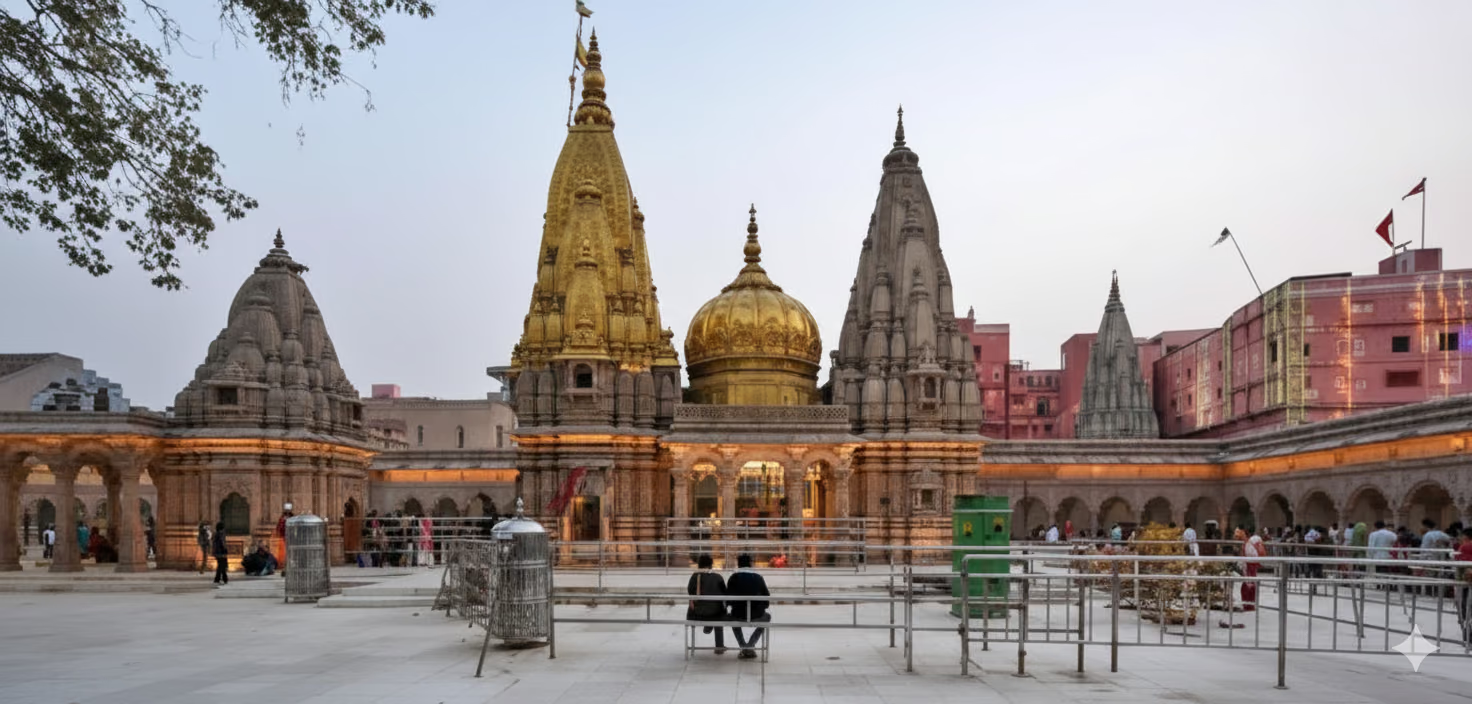
The Kashi Vishwanath Temple is among the holiest of Hindu temples, enshrining Lord Shiva as one of the twelve Jyotirlingas. The current structure was built in 1780 by the Maratha queen Ahilyabai Holkar, with its distinctive gold-plated spire donated by Maharaja Ranjit Singh of Punjab in 1839. The temple now sits at the heart of the Kashi Vishwanath Corridor, a landscaped pedestrian route connecting it directly to the ghats of the Ganga, and draws millions of pilgrims through the year, especially during Maha Shivratri and the month of Shravan. Kashi Vishwanath Temple sits at an elevation of 95 m and is typically explored in about 1-2 hours. The most favourable months to visit are February, November, December, and January, when conditions are best suited for sightseeing. Nearby points of interest include Annapurna Temple, Kashi Vishwanath Jyotirlinga, and Gyanvapi Well. Other notable highlights include dawn Ganga aarti at Dashashwamedh Ghat, gold-plated spire and sanctum dome viewing, and corridor walk to Gyanvapi well's sacred water. For travellers planning the trip, the nearest railway station is Varanasi Junction (Varanasi Cantt), the closest airport is Lal Bahadur Shastri International Airport, Varanasi, and local buses run via Kashi Gate Bus Stand. It falls within Varanasi, Varanasi district, and Uttar Pradesh, India.
New Vishwanath Temple (BHU)
Also known as the Birla Temple, the New Vishwanath Temple stands within the leafy campus of Banaras Hindu University. Built entirely of white marble by the Birla family, it was conceived as a temple open to people of every caste, creed and faith, with its walls inscribed with verses from the Bhagavad Gita. Its tallest of all Shiva temples in India, and its calm campus setting offers a peaceful contrast to the busier temples of the old city. New Vishwanath Temple (BHU) sits at an elevation of 84 m and is typically explored in about 1 hour. The most favourable months to visit are February, November, December, and January, when conditions are best suited for sightseeing. Nearby points of interest include Main Corridor & Pillared Hall, Seven Temples Complex, and Nandi Bull Statue. Other notable highlights include gleaming white marble exterior with intricate carvings, peaceful prayer hall with continuous Shiva chants, and close-up view of the towering 5-spire shikhara. For travellers planning the trip, the nearest railway station is Varanasi Junction (Varanasi Cantt), the closest airport is Lal Bahadur Shastri International Airport, Varanasi, and local buses run via Kashi Gate Bus Stand. It falls within Varanasi, Varanasi district, and Uttar Pradesh.
Sankat Mochan Hanuman Temple
Sankat Mochan Hanuman Temple, founded by Goswami Tulsidas, is one of Varanasi’s most visited temples, particularly thronged on Tuesdays and Saturdays — days considered auspicious for worshipping Hanuman. The temple complex is also home to resident monkeys and hosts the annual Sankat Mochan Sangeet Samaroh, a five-night classical music and dance festival that draws performers from across India. Sankat Mochan Hanuman Temple sits at an elevation of 80 m. The most favourable months to visit are February, November, December, and January, when conditions are best suited for sightseeing. Nearby points of interest include Sankat Mochan Aarti Platform, Ram Darbar, and Ancient Banyan Tree. Other notable highlights include morning aarti amidst ringing bells and chants, tulsidas’s original idol of Lord Hanuman, and tuesdays and Saturdays draw long, vibrant queues. For travellers planning the trip, the nearest railway station is Varanasi Junction (Varanasi Cantt), the closest airport is Lal Bahadur Shastri International Airport, Varanasi, and local buses run via Kashi Gate Bus Stand. It falls within Uttar Pradesh.
Sankat Mochan Temple
Founded by the poet-saint Tulsidas, Sankat Mochan Hanuman Temple is one of Varanasi’s most visited shrines, especially crowded on Tuesdays and Saturdays, and known for the free community meals served in its dining hall. The best time to visit is October to March. Nearby points of interest include Main Hanuman Shrine and Community Dining Hall. Other notable highlights include significant Pilgrimage destination in Varanasi, rich historical and cultural heritage, and important spiritual or architectural significance. It falls within Uttar Pradesh, India.
Tour Packages for Varanasi




Explore More of Varanasi
Destination Hub
Varanasi OverviewSpiritual & Temple Guides
Places to Explore
Discover attraction
Discover attraction
Discover attraction
Discover attraction
Discover attraction
Discover attraction
Discover attraction
Discover attraction
Discover attraction
Discover attraction
Discover attraction
Discover attraction
Discover attraction
Discover attraction
Discover attraction
Discover attraction
Discover attraction
Discover attraction
Discover attraction
Discover attraction
Discover attraction
Discover attraction