
Sarnath
Overview
- •Just a short drive from the clamor of Varanasi, Sarnath unfurls as a serene oasis of ancient silence, where the air still hums with the first echoes of Buddhist teaching.
- •Here, beneath the vast Uttar Pradesh sky, pilgrims and travelers alike step into a landscape that cradled the very genesis of a global spiritual tradition, marked by crumbling stupas and the quiet grace of deer wandering the park.
Highlights
- One of Buddhism’s four most sacred pilgrimage sites
- Site of Buddha’s first sermon after attaining enlightenment
- Home to the Dhamek Stupa and the Ashoka Pillar, source of India’s national emblem
- Easy half-day trip from central Varanasi
Religious Significance
Sarnath holds a place of supreme importance in Buddhism as the site of the first sermon, making it one of the eight most sacred pilgrimage destinations for followers worldwide. This event, known as the First Turning of the Wheel of Dharma, not only established the foundational doctrines of the Four Noble Truths and the Eightfold Path but also marked the formal beginning of the Buddhist community. Its nomination for UNESCO World Heritage status reflects its outstanding universal value, not just for Buddhists but for all who seek to understand the roots of one of humanity's great spiritual traditions.
Dress Code
As a revered pilgrimage site, visitors are advised to dress modestly, covering shoulders and knees, in keeping with the sanctity of the place. Comfortable, respectful attire is recommended, as you may wish to sit on the ground during meditation or prayer sessions.
Facilities
The site offers basic amenities including a well-maintained archaeological museum, restrooms, drinking water, and a small cafeteria. Guides are available for hire at the entrance, and several shops nearby sell books, souvenirs, and offerings, ensuring a comfortable visit for pilgrims and tourists alike.
Festivals
- •The most significant celebration at Sarnath is Buddha Purnima, which commemorates the Buddha's birth, enlightenment, and death, drawing pilgrims from across the globe for prayers and processions.
- •The annual Sarnath Festival, often held in December, showcases Buddhist culture through exhibitions, cultural performances, and a vibrant craft fair.
- •During these times, the Deer Park becomes a living tableau of devotion, with monks in saffron robes leading chants and meditation sessions that echo the first teachings given here.
History
- •Sarnath's story is inextricably woven with the life of Siddhartha Gautama, who, after his profound enlightenment at Bodh Gaya, journeyed here circa 528 BCE to share his insights.
- •It was in this Deer Park that he delivered his inaugural sermon, the Dhammacakkappavattana Sutta, to his five former companions, setting in motion the First Turning of the Wheel of Dharma and establishing the first Buddhist sangha.
- •The site's significance was monumentalized centuries later in 250 BCE when Emperor Ashoka erected a grand pillar and lion capital to commemorate this pivotal event.
- •The hagiographic Buddhavamsa also links Sarnath to a previous Buddha, Kassapa, who was born here and likewise gave his first teaching, underscoring the location's deep-rooted sanctity in Buddhist cosmology.
Architecture
- •The architectural remnants of Sarnath are a testament to centuries of devotion, with the most iconic being the Lion Capital of Ashoka, now the State Emblem of India, which once crowned a polished sandstone pillar.
- •The Dhamek Stupa, a massive cylindrical structure, marks the precise spot where the Buddha is believed to have given his first sermon, its intricate stone carvings narrating tales of the Jataka.
- •The ruins of monasteries, votive stupas, and the Ashokan pillar fragments reveal a sprawling complex that flourished as a major monastic and educational center.
- •The Sarnath Archaeological Museum houses the original Lion Capital and a remarkable collection of sculptures, offering a closer look at the site's artistic and architectural grandeur.
Travel Tips
- Use the Wheelchair and Battery Cart Services: The Archaeological Survey of India provides free wheelchairs at the main entrance, and battery-operated carts are available for a small fee to cover the large site. Request these at the ticket counter first, as they are limited and get booked quickly by group tours.
- Start Early to Beat the Heat and Crowds: Arrive right at 8:00 AM when the archaeological site opens, as the marble and brick paths get very hot by late morning. This also lets you explore the main stupa and ruins with fewer tour groups, making it easier for seniors to move at their own pace.
- Carry Your Own Water and Use the Restrooms Before Entering: There are no drinking water fountains inside the excavated area, and the nearest clean restrooms are near the ticket office and the museum. Fill your bottles at the hotel and use the facilities before you start walking, as the nearest shops are a 10-minute walk outside the gate.
- Book a Local Guide in Advance for Group Storytelling: Hire an ASI-approved guide before you arrive, ideally through your hotel, so they can split the group into slow and fast walkers. A good guide will also know where to park the bus close to the entrance, saving seniors from a long walk from the main parking lot.
- Plan for Shade at the Deer Park and Mulagandha Kuti Vihara: The open ruins have little shade, so schedule a rest break at the Deer Park’s tree-lined benches and inside the cool, frescoed temple. This is a good spot for seniors to sit for 15 minutes while the group splits into smaller walking parties.
Things to Do
Attend the evening aarti at the Mulagandha Kuti Vihara
1 hourSit in the peaceful garden of this modern temple, built over the site of Buddha’s residence, and watch the monks perform a gentle, melodic evening prayer with lamps. The temple’s frescoes depicting Buddha’s life are best seen before the aarti begins.
Visit the Thai Temple and its serene garden
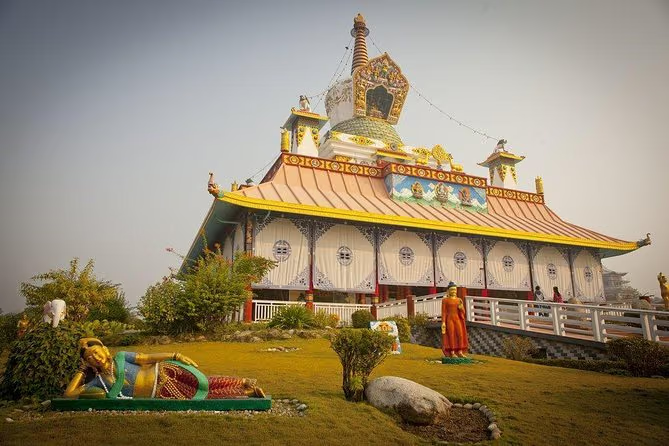
45 minutesEnter the ornate, gold-roofed Wat Thai temple, which offers a quiet, cool prayer hall and a manicured garden with a small pond. Many senior travellers enjoy sitting on the benches here, watching local devotees offer lotus flowers and incense.
Visit the Ashoka Pillar fragment at the Sarnath Archaeological Museum
1 hourSee the original, broken Ashoka Pillar capital with its famous four-lion emblem (India’s national symbol) inside the museum’s modest, well-lit hall. The museum also houses a fine collection of Buddhist sculptures, but the pillar fragment is the unmissable highlight.
Walk through the excavated remains of the ancient monastic complex
1.5 hoursFollow the marked pathways through the ruins of monasteries, stupas, and courtyards that date back to the Mauryan and Gupta periods. The site is flat, well-maintained, and dotted with shade trees, making it ideal for a slow, contemplative stroll.
Shop for Buddhist thangkas and brass idols at the Sarnath Bazaar
1 hourBrowse the small, shaded market lane opposite the main temple complex, where shops sell hand-painted thangkas, brass Buddha statues, and prayer beads. The shopkeepers are used to unhurried browsers, and bargaining is gentle — perfect for picking up a souvenir without stress.
Explore the Dhamek Stupa and its circular walkway
1.5 hoursWalk around the massive, 43.6-meter-high Dhamek Stupa, where Buddha delivered his first sermon, and join the elderly-friendly clockwise pradakshina path. The ancient brickwork and carved floral motifs are best appreciated from the clean, shaded walkway.
Frequently Asked Questions
Sarnath is about 10 kilometers northeast of Varanasi city center. The easiest and most comfortable option is to hire a prepaid taxi or an auto-rickshaw for the day, which takes roughly 30–45 minutes depending on traffic. Alternatively, you can take a local city bus from Varanasi Junction, but for senior travellers, a private car is recommended for comfort.
Yes, the Archaeological Survey of India (ASI) manages the main excavated site and the Sarnath Museum. The site is open from sunrise to sunset (typically 6:00 AM to 6:00 PM), and the museum is open from 9:00 AM to 5:00 PM, closed on Fridays. Entry fees are ₹25 for Indian citizens and ₹300 for foreign nationals, with no charge for children under 15; the museum has a separate small ticket (₹5 for Indians, ₹100 for foreigners).
The main excavated area has flat, paved pathways, but some sections are uneven gravel, so comfortable, non-slip shoes are essential. Wheelchairs are not available for rent on site, but the paths are mostly accessible if you have your own. The museum has ramps and elevators, and benches are placed along the walkways for rest; plan for about 2 hours of easy walking.
The must-sees are the Dhamek Stupa (the main 34-meter-high stupa), the Ashoka Pillar (original capital is in the museum), the ruins of the ancient monasteries, and the Sarnath Museum, which houses the famous Lion Capital. Allocate at least 2.5 to 3 hours for a relaxed visit, including time to sit in the peaceful gardens and see the deer park area. If you wish to attend the evening aarti at the nearby Mulagandha Kuti Vihara temple, add another 45 minutes.
Yes, there are clean public restrooms near the ticket office and museum, though they may require a small fee (₹5–10). There is a small canteen at the ASI site serving tea, coffee, and simple snacks, and several modest restaurants and juice stalls just outside the main entrance. Shade is limited inside the excavated area, so carry a hat, umbrella, and water bottle; the museum and temple courtyards offer shaded seating for breaks.
Quick Information
Best Time
October to March
Related Topics
Tour Packages for Varanasi





Explore More of Varanasi
Destination Hub
Varanasi OverviewSpiritual & Temple Guides
Places to Explore
Discover attraction
Discover attraction
Discover attraction
Discover attraction
Discover attraction
Discover attraction
Discover attraction
Discover attraction
Discover attraction
Discover attraction
Discover attraction
Discover attraction
Discover attraction
Discover attraction
Discover attraction
Discover attraction
Discover attraction
Discover attraction
Discover attraction
Discover attraction
Discover attraction
Discover attraction