
Godowlia Market
Overview
- •In the heart of Varanasi, where the city's ancient lanes pulse with life, Godowlia Market unfolds as a sensory kaleidoscope of color, sound, and scent.
- •This bustling bazaar serves as the grand threshold to the sacred ghats, drawing pilgrims and travelers alike into its labyrinth of narrow alleys lined with offerings of marigolds, incense, and shimmering silks.
- •Here, the eternal city of Kashi reveals its most vibrant, everyday soul, a place where devotion and commerce intertwine in a timeless dance.
Highlights
- Silk sarees and brocade at Shri Sumangal Silks
- Kachori sabzi at Kashi Chat Bhandar
- Wooden toys and trinkets at lane stalls
- Evening aarti walk to Dashashwamedh Ghat
- Banarasi paan at iconic Sharma Ji Paan
- Brass diyas and idols near Godowlia crossing
Religious Significance
Godowlia Market holds profound significance as the primary approach to the sacred Vishwanath Temple, making it a pivotal point in the spiritual geography of Varanasi. For pilgrims, the journey through this bustling bazaar is a rite of passage, a final worldly immersion before the divine encounter at the temple. The market also embodies Varanasi's living heritage, where the city's famed silk weaving, handicrafts, and culinary traditions thrive, connecting the sacred with the everyday in a uniquely intimate way.
Dress Code
As you approach the sacred precincts of the Vishwanath Temple, modest and respectful attire is advised. Lightweight, breathable fabrics are recommended due to the heat and crowds, and it is customary to remove shoes before entering the temple, so slip-on footwear is practical.
Facilities
The market offers basic facilities including small eateries, sweet shops, and tea stalls, as well as shops selling puja items, souvenirs, and clothing. Public restrooms are scarce, so visitors should plan accordingly, and the narrow lanes can be challenging for those with mobility issues.
Festivals
- •During major Hindu festivals, Godowlia Market transforms into a spectacular tableau of devotion and celebration.
- •For Dev Deepawali, the market is illuminated with countless oil lamps and colorful lights, creating a magical atmosphere that draws massive crowds.
- •During Maha Shivaratri, the market becomes a sea of pilgrims, many carrying offerings for the Vishwanath Temple, and the air thickens with the sound of devotional songs and chants.
- •The market also buzzes with activity during the month of Shravan, when devotees throng to collect Ganga jal and other ritual items for their worship.
History
- •Godowlia's history is inseparable from Varanasi's own ancient narrative, evolving over centuries as a vital artery linking the city's residential quarters to its ritual heart along the Ganges.
- •As the city grew as a center of Hindu pilgrimage, this market area developed as a staging ground for devotees, who would gather supplies and offerings before descending to the ghats.
- •The name 'Godowlia' is believed to derive from the Hindi word for a cow shed, reflecting its historical role as a resting place for cattle and, later, a bustling commercial hub.
- •Over time, it became a melting pot of cultures, mirroring Varanasi's syncretic traditions, where Hindu and Muslim artisans have long coexisted, contributing to the city's rich craft heritage.
Architecture
- •The architecture of Godowlia Market is a dense, organic tapestry of old buildings, many dating back over a century, with ornate balconies and wooden facades leaning over the narrow lanes.
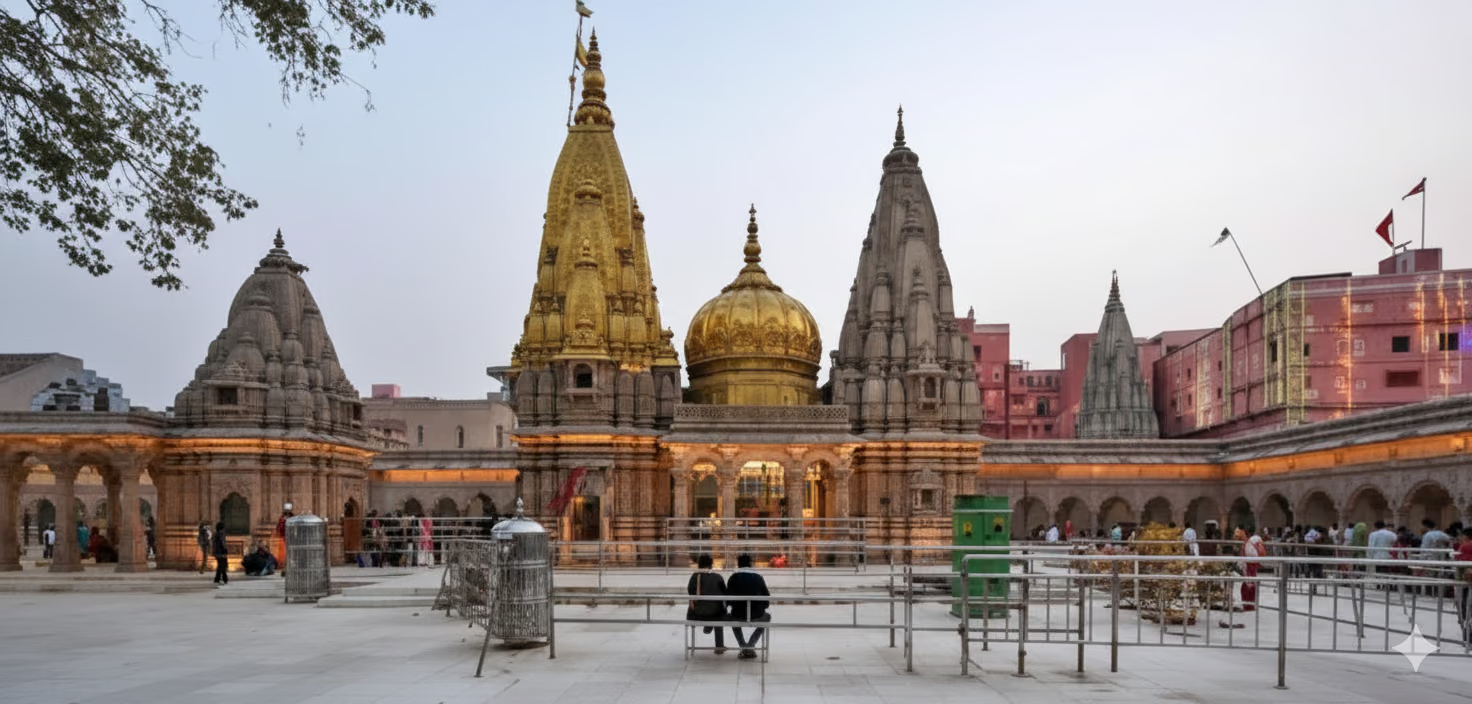
- •The market is dominated by the imposing spire of the Shri Kashi Vishwanath Temple, whose golden pinnacle rises above the crowded shops, serving as a constant visual anchor.
- •The labyrinthine alleys, some barely wide enough for two people to pass, are lined with small storefronts stacked high with goods, their colorful awnings creating a patchwork of shade.
- •This is not a place of grand monuments but of vernacular architecture, where every corner reveals a layer of history etched into weathered stone and intricately carved wood.
Travel Tips
- Go early morning to beat the crowd and heat: Visit between 7 am and 9 am when the narrow lanes are less packed and the temperature is cooler. This makes walking and browsing much easier for seniors and keeps the group together.
- Hold onto your bags and keep them in front: The market is extremely crowded, so pickpockets can operate easily. Keep wallets, phones, and passports in a front-zip bag or an inner pocket, and avoid dangling shoulder bags.
- Wear flat, non-slip shoes and take slow steps: The lanes are uneven, with occasional loose stones and spilled liquids. Sturdy, closed-toe footwear with good grip reduces the risk of slips, and walking slowly helps you enjoy the chaos safely.
- Agree on a fixed meeting point and time before splitting up: With many stalls and winding lanes, groups often get separated. Choose a landmark like the main gate or a specific sweet shop, and set a clear return time to avoid panic.
- Carry small change and avoid bargaining too hard: Most vendors prefer cash and may not have change for large notes. Keep ₹50 and ₹100 notes handy, and for seniors, a polite smile and a small discount is often offered — but don't push too long, as standing tires you out.
Things to Do
Taste kachori-sabzi and jalebi at a local stall
45 minutesStop at a bustling street-side eatery like the famous Kachori Gali (just off Godowlia) for a hot, crispy kachori served with spicy potato curry, followed by melt-in-the-mouth jalebis. This is a quintessential Varanasi breakfast or snack experience, best enjoyed while standing with locals.
Shop for wooden toys and brass idols at the side alleys
1.5 hoursBranch off the main Godowlia road into the small gullies where artisans sell hand-carved wooden toys, brass diyas, and small idols of Ganesha and Shiva. These make authentic, lightweight souvenirs, and shopkeepers are happy to explain the craft.
Walk through the lane of Banarasi silk sarees
2 hoursStroll down the main thoroughfare of Godowlia Market, where dozens of family-run shops display shimmering Banarasi silk sarees, dupattas, and fabrics. You can watch weavers at work in small workshops behind some stores, and bargain for a keepsake or gift.
Watch the evening aarti procession from the market edge
1 hourAs dusk falls, join the crowd gathered at the point where Godowlia meets the steps leading down to Dashashwamedh Ghat. From here you get a partial view of the famous Ganga aarti, with the sound of conch shells and temple bells rising up from the river. It’s a less crowded spot than the ghat itself.
Visit the Shri Vishwanath Temple (Golden Temple) approach
1 hourFrom Godowlia, follow the narrow, lively lane that leads towards the Kashi Vishwanath Temple, passing through a dense bazaar of flower garlands, sweets, and puja items. Even if you don’t enter the temple (due to queues or crowd), the approach itself is a vibrant sensory walk of bells, chants, and incense.
Try a lassi or thandai at the old Blue Lassi Shop
30 minutesA short walk from Godowlia’s main crossing, this legendary shop (near the lane to the ghat) serves thick, creamy lassi in clay cups, topped with fresh fruit or dry fruits. Also try their traditional thandai, a sweet, spiced milk drink with almonds and saffron—perfect for a quick break from the crowd.
Frequently Asked Questions
The market is most active from 10:00 AM to 9:00 PM, though many shops open by 9:30 AM and close around 8:30 PM. For senior travellers, it is best to visit between 10:30 AM and 1:00 PM, when the crowd is thinner and the lanes are easier to walk through.
The market is a narrow, crowded bazaar with uneven paving, so wheelchairs and walkers are not practical. However, you can hire a cycle-rickshaw or e-rickshaw to take you slowly through the main stretch, and most shops have a small step at the entrance. It is advisable to wear comfortable, non-slip shoes and take frequent breaks at the few tea stalls.
The market is famous for Banarasi silk sarees, brocade fabrics, wooden toys, and sweet treats like peda and jalebi. Be cautious of sellers who quote high prices for tourists; always ask for a printed price or bargain politely, and check the fabric for a genuine silk mark. Avoid buying gold or silver jewellery from street vendors as quality is not guaranteed.
Yes, there are several small, clean eateries like the famous Kashi Chat Bhandar and Blue Lassi Shop, which offer seating and simple, safe food. For a longer rest, you can walk five minutes to the Dashashwamedh Ghat area, where there are benches and cafes with a view of the Ganges. Carry your own water bottle, and stick to bottled or boiled drinks.
From Varanasi Junction, an auto-rickshaw ride takes about 20 minutes and costs around 150-200 rupees; from most hotels near the ghats, it is a 10-minute walk or a short e-rickshaw ride. Avoid taking a private car into the market itself, as the lanes are pedestrian-only and very narrow. For group travellers, it is easiest to hire a shared auto or a pre-booked taxi to drop you at the main entrance near the Godowlia crossing.
Quick Information
Best Time
October to March
Related Topics
Tour Packages for Varanasi




Explore More of Varanasi
Destination Hub
Varanasi OverviewSpiritual & Temple Guides
Places to Explore
Discover attraction
Discover attraction
Discover attraction
Discover attraction
Discover attraction
Discover attraction
Discover attraction
Discover attraction
Discover attraction
Discover attraction
Discover attraction
Discover attraction
Discover attraction
Discover attraction
Discover attraction
Discover attraction
Discover attraction
Discover attraction
Discover attraction
Discover attraction
Discover attraction
Discover attraction