
New Vishwanath Temple (BHU)
Overview
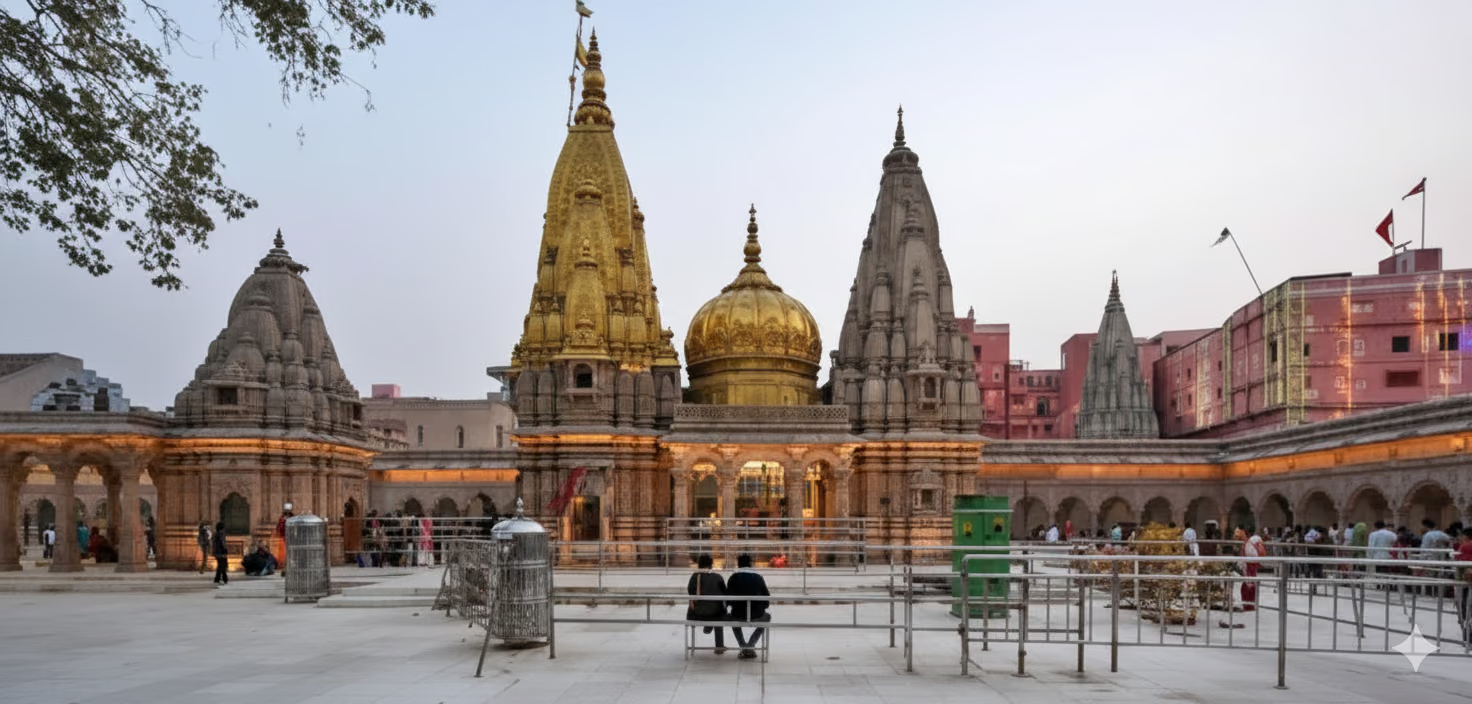
- •Rising like a white marble beacon above the sacred precincts of Banaras Hindu University, the New Vishwanath Temple offers pilgrims a serene and expansive space to honor Lord Shiva.
- •Conceived as a modern echo of the ancient Kashi Vishwanath, this grand shrine invites devotees to seek blessings for family well-being and ancestral peace.
- •Its towering shikhara, visible from afar, marks a spiritual anchor within the academic heart of Varanasi.
Highlights
- Gleaming white marble exterior with intricate carvings
- Peaceful prayer hall with continuous Shiva chants
- Close-up view of the towering 5-spire shikhara
- Sacred Nandi bull statue facing the main shrine
- Quiet courtyard ideal for sitting and reflection
- Clean, well-maintained shoe storage and walkways
Religious Significance
As a sacred site within the holy city of Varanasi, the temple holds deep significance for Hindus seeking to perform ritual homage for departed ancestors, a duty that requires pilgrimage to this city. Dedicated to Lord Vishwanath, the 'Lord of the Universe', it is believed that offering prayers here brings peace to one's family and liberation to the soul. Its location within BHU makes it a spiritual center for students and scholars, blending knowledge with devotion.
Dress Code
Visitors are expected to dress modestly in traditional Indian attire, covering shoulders and knees. While there is no strict color code, white or light-colored clothing is preferred as a mark of purity.
Facilities
The temple provides clean shoe storage, drinking water, and restrooms for pilgrims. A large open courtyard can accommodate many devotees, and prasad is distributed after major ceremonies.
Rituals
- Perform Rudrabhishek with milk, water, and bilva leaves on the Jyotirlinga.
- Offer prayers to Lord Vishwanath for the well-being of family members.
- Conduct Pind Daan rituals for departed ancestors within the temple premises.
- Participate in the daily Mangala Aarti at dawn.
- Chant 'Om Namah Shivaya' while circumambulating the sanctum.
Festivals
- •Mahashivaratri is the most significant festival celebrated here, drawing thousands of devotees who throng the temple for night-long vigils and abhishekam.
- •During the holy month of Shravan, special Rudrabhishek and chanting programs are held daily.
- •The temple also observes other Shaivite occasions like Kartik Purnima and the annual Annakut festival with great fervor.
Darshan Guide
- •Darshan is open daily from early morning until evening, with a break during midday.
- •The best time to visit is during the early morning aarti (around 5:30 AM) when the temple is serene and less crowded.
- •Avoid visiting during university examination periods if you prefer fewer students, though the temple remains a peaceful retreat at all times.
History
- •The temple was envisioned by Pandit Madan Mohan Malaviya, the founder of Banaras Hindu University, who desired a grand Shiva temple accessible to all, including those from lower castes who were historically barred from the original Kashi Vishwanath.
- •Construction began in 1931 and was completed in 1966, funded largely by the Birla family.
- •The temple was consecrated and opened to the public, and it has since been administered directly by the university.
- •Known colloquially as 'VT', it has become a vital part of Varanasi's spiritual and academic life.
Architecture
- •The temple is a masterpiece of modern Hindu architecture, built entirely of white marble and designed to mirror the style of the original Kashi Vishwanath.
- •Its most striking feature is the tallest temple tower in the world, with a shikhara rising to an astonishing 250 feet.
- •The complex includes nine smaller shrines dedicated to various deities, arranged around a central courtyard.
- •Intricate carvings and a spacious mandapa provide a majestic yet tranquil atmosphere for worship.
Temple Layout
- •The main sanctum houses the Jyotirlinga of Lord Vishwanath, facing east, and is surrounded by a spacious circumambulatory path.
- •The complex is laid out in a rectangular courtyard with nine subsidiary shrines dedicated to deities like Ganesha, Parvati, Hanuman, and others.
- •The entrance is marked by a grand gateway leading to a wide mandapa with carved pillars.
- •The temple's height and white marble facade make it a landmark visible across the university campus.
Travel Tips
- Carry a small foldable stool and avoid peak festival days: Senior travellers often find standing in line tiring, so bring a lightweight stool to sit on during the 30–45 minute wait on normal days. Avoid visiting on Mondays, full moon days, or during Navratri, when queues can stretch to 3 hours and crowd pressure becomes unsafe.
- Use the dedicated senior citizen and wheelchair assistance counter: At the main gate, ask for the free wheelchair service and priority entry pass for those above 60 years or with mobility issues. One companion is allowed to accompany, but you must show a valid photo ID for each person.
- Arrange a group meeting point and use the pre-booked guide service: For groups of 10 or more, book a licensed guide in advance through the temple office (phone: 0542-236-8989) to avoid haggling at the gate. Fix a clear meeting spot, like the large banyan tree near the exit, in case the group gets separated in the crowd.
- Keep mobile phones, cameras, and leather items in the cloakroom: All electronics and leather goods (belts, wallets, bags) must be deposited at the free cloakroom near the entrance. Carry only a small cloth pouch with cash, ID, and essential medicines, as you will be walking barefoot inside the temple complex.
- Plan for early morning darshan to avoid crowds and heat: Reach the temple by 5:30 AM, as queues are shortest before 8 AM and the summer heat is manageable. Senior travellers should carry a water bottle and wear comfortable footwear, as the walk from the parking area is about 400 metres.
Things to Do
Admire the intricate marble carvings and architecture
30 minutesTake a slow circuit around the temple’s exterior and inner pillars to observe the detailed floral motifs, miniature idols, and the pure white Makrana marble work that mirrors the style of the older Vishwanath Temple. The craftsmanship is best appreciated in the morning light.
Attend the evening aarti (prayer ceremony)
1 hourReturn in the early evening to witness the aarti, when the temple fills with the sound of bells, conch shells, and Vedic chants. The marble glows under the oil lamps, creating a deeply moving and visually stunning experience.
Visit the surrounding smaller shrines in the complex
40 minutesThe temple complex houses several subsidiary shrines dedicated to Lord Hanuman, Goddess Durga, and other deities. Spend time paying respects at each, and note the peaceful, tree-lined courtyard that separates them from the main shrine.
Rest and reflect at the temple’s open veranda
20 minutesAfter your darshan, sit on the shaded marble benches on the outer veranda to observe the mix of devotees, students, and families. This is a perfect spot to rest your legs, sip some water, and absorb the tranquil energy before heading out.
Walk through the BHU campus to the temple gate
20 minutesApproach the temple on foot from the main university road, passing through the leafy, landscaped campus of Banaras Hindu University. This short walk gives you a feel of the academic atmosphere and the daily life of students mingling with pilgrims.
Offer prayers at the main Shiva Linga
45 minutesWalk into the sanctum sanctorum to offer water, milk, and bel patra on the central marble Shiva Linga, which is the heart of the temple. The atmosphere is serene, and the priests guide you through the ritual if you wish.
Frequently Asked Questions
The temple is busiest during early morning (6-9 AM) and on Mondays, which are considered highly auspicious. For a quieter darshan, visit between 11 AM and 2 PM on weekdays, or after 4 PM when most tour groups have left. Avoid major festivals like Mahashivratri and Shravan Mondays entirely if you want a peaceful visit.
Yes, modest, traditional Indian attire is preferred—men should wear shirts and trousers or dhoti-kurta, while women should wear sarees, salwar suits, or long skirts. Shorts, sleeveless tops, and revealing clothes are not allowed. You must remove your shoes and leather items at the designated counters before entering the temple complex.
The temple is located inside the Banaras Hindu University campus and has a ramp for wheelchair access at the main entrance, but there are several steps leading to the inner sanctum. You can request assistance from the temple staff for a wheelchair or help with climbing steps. It is advisable to carry a doctor’s note if you need priority darshan, as the management provides a separate queue for elderly and disabled visitors.
The temple is about 8 km from Varanasi Junction (Cantt) railway station, which takes roughly 30-40 minutes by auto-rickshaw or taxi. You can also take a city bus towards BHU, but shared autos are more convenient and cost about ₹50-80 per person. For a direct ride, hire a prepaid taxi from the station for around ₹250-300.
Photography, video recording, and mobile phones are strictly banned inside the temple sanctum and the main courtyard. You can deposit your phone, camera, and bags at the free cloakroom located near the entrance. However, you are allowed to take photos of the temple’s exterior and the surrounding gardens from the outer courtyard, so plan to capture your shots before entering the inner sanctum.
Quick Information
Best Time
October to March
Related Topics
Tour Packages for Varanasi




Explore More of Varanasi
Destination Hub
Varanasi OverviewSpiritual & Temple Guides
Places to Explore
Discover attraction
Discover attraction
Discover attraction
Discover attraction
Discover attraction
Discover attraction
Discover attraction
Discover attraction
Discover attraction
Discover attraction
Discover attraction
Discover attraction
Discover attraction
Discover attraction
Discover attraction
Discover attraction
Discover attraction
Discover attraction
Discover attraction
Discover attraction
Discover attraction
Discover attraction